The Root of the Problem: Why Your Sewer Line is Failing
Joe Rushing
Discover sewer line problems and what causes them: roots, grease, aging pipes. Spot signs, prevention tips & Lubbock trenchless repairs.
The Root of the Problem: Why Your Sewer Line is Failing
Why Sewer Lines Fail — and What Every Homeowner Should Know
Sewer line problems and what causes them are more common than most homeowners realize — and by the time you notice something is wrong, the damage underground may already be serious.
Here is a quick look at the most common causes of sewer line failure:
| Cause | What Happens |
|---|---|
| Tree root intrusion | Roots enter joints or cracks, grow inside the pipe, and block flow |
| Grease and debris buildup | Fats, oils, and wipes accumulate and narrow or block the line |
| Aging or corroded pipes | Old clay, cast iron, or Orangeburg pipe weakens and collapses over time |
| Ground movement or settling | Soil shifts crack or displace pipe sections underground |
| Bellied (sagging) pipe | A low spot forms where waste pools and clogs repeatedly |
| Poor installation | Bad slope or bedding causes chronic drainage failure |
| Heavy rain or flooding | Overloaded lines back up into the home |
| External damage | Construction equipment or digging breaks or shifts the line |
Most homeowners never think about their sewer line — until water backs up into a sink, tub, or toilet. At that point, the question changes fast: is this a simple clog, or is something more serious happening underground? The answer depends on knowing what to look for, and understanding the real causes hiding beneath your yard.
In this guide, we will walk through every major cause of sewer line failure, how to spot the warning signs early, and what your options are when things go wrong.
I am Ronda Rushing Brown, a third-generation leader at Joe Rushing Plumbing, Heating & Air Conditioning, and over the decades I have seen just about every variation of sewer line problems and what causes them — from root-choked clay pipes in older Lubbock homes to collapsed lines that looked fine from the surface. If your drains are giving you trouble, you are in the right place.
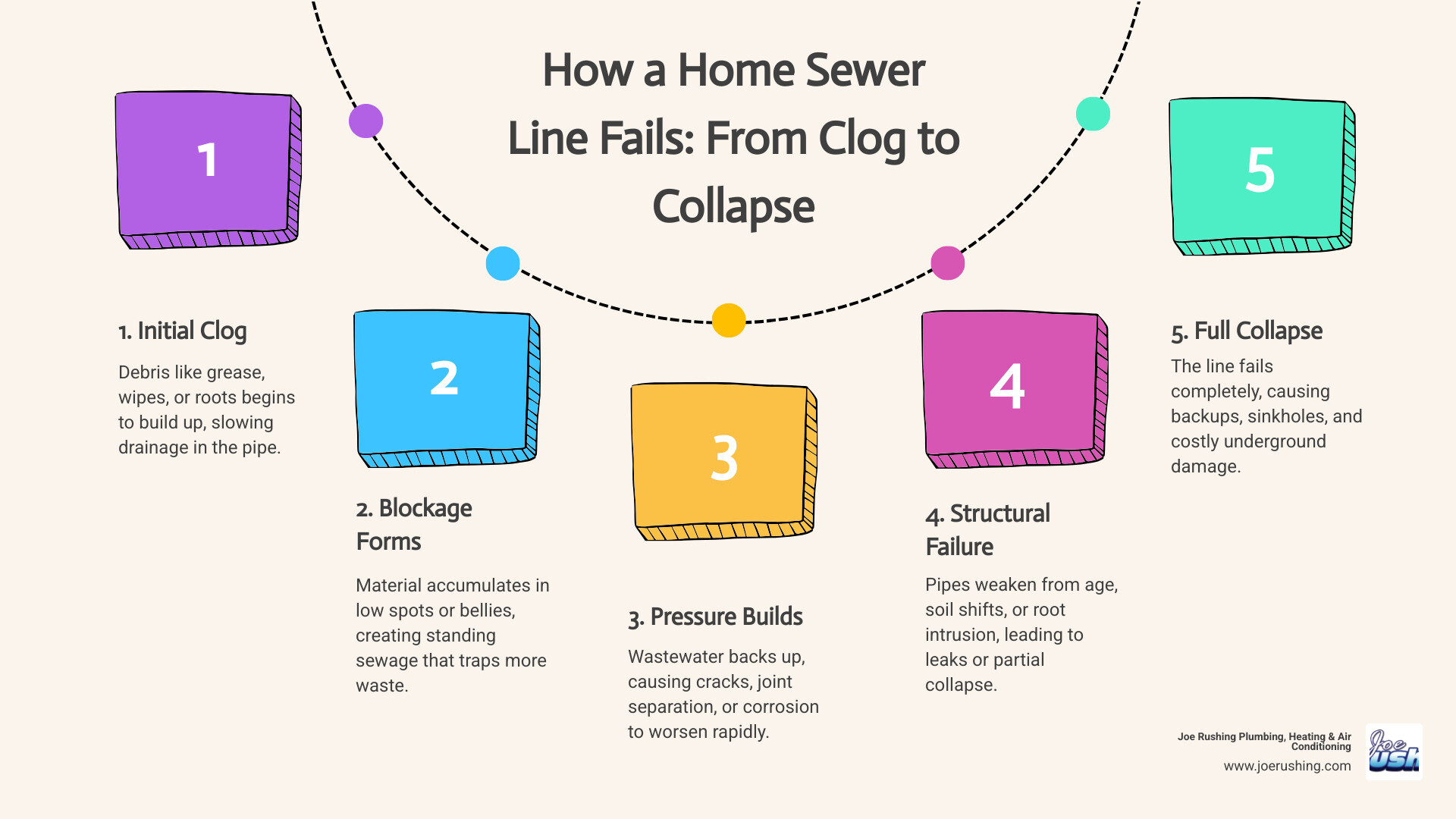
Sewer Line Problems and What Causes Them: The Most Common Reasons Lines Fail
When we talk about sewer line problems and what causes them, it is rarely just one thing. Often, it is a combination of the age of your home, the environment in West Texas, and what goes down your drains every day. Whether you live in a historic home in Lubbock or a newer build in Levelland, your underground pipes are under constant pressure from soil, temperature changes, and usage.
The most frequent culprits include:
- Tree Root Intrusion: The #1 cause of structural damage in older lines.
- Grease and Debris: The silent killer of drain capacity.
- Pipe Age: Materials like clay and cast iron have a finite lifespan.
- Ground Movement: West Texas soil can shift, causing pipes to snap or displace.
- Pipe Bellies: Sagging sections that trap waste.
Tree roots are one of the biggest causes of sewer line damage
It might surprise you, but tree roots are incredibly "smart." They can sense the moisture and nutrients inside your sewer line from a distance. Even if a tree isn't directly above the pipe, its roots can travel long distances to find a tiny crack or a loose joint. Once they find a way in, they thrive in the nutrient-rich environment, growing into massive root balls that act like a net, catching toilet paper and waste.
In older Lubbock neighborhoods, we often see Vitrified Clay Pipe (VCP). While durable, clay pipes have joints every few feet that can loosen over time, inviting roots. Once roots enter, they can expand and eventually crush the pipe from the inside out. Even if you clear them, root regrowth often restores the obstruction within 12 to 24 months. To see exactly what is happening in your line, we recommend a Deep Dive into Mainline and Lateral Line Camera Inspections.

Grease, wipes, and food waste create sewer line problems and what causes them to worsen fast
We have all been tempted to pour a little bacon grease down the sink or flush a "flushable" wipe. However, these are leading contributors to sewer line problems and what causes them to become emergency backups.
Grease may be liquid when it’s hot, but as soon as it hits the cooler underground pipes, it solidifies into a hard, waxy substance. This buildup narrows the pipe's diameter, making it easier for other debris to snag. "Flushable" wipes are another major offender; unlike toilet paper, they do not break down in water. Some plumbers have pulled wipes out of drains that stretched up to 30 feet in length! When wipes meet grease, they create "fatbergs" that can completely seal off your main line.
Aging pipe materials, corrosion, and shifting soil weaken sewer lines over time
The material of your sewer line plays a huge role in its longevity. In West Texas, we see a wide variety of materials depending on when the home was built.
| Pipe Material | Common Years Used | Typical Lifespan | Common Problems |
|---|---|---|---|
| Clay Tile | 1900–1970 | 50–100 Years | Brittle, loose joints, root intrusion |
| Cast Iron | 1900–1980 | 50–100 Years | Corrosion, rust (tuberculation), cracks |
| Orangeburg | 1945–1972 | 25–50 Years | Bituminous fiber; prone to flattening/collapse |
| PVC (Sch 40) | 1970–Present | 50–100 Years | Joint leaks, bellies from poor bedding |
Corrosion is a major factor for metal pipes. Over time, wastewater chemicals can eat away at cast iron, leading to leaks or "tuberculation," where rust deposits create a jagged interior surface that catches waste. Additionally, ground movement—caused by our West Texas freeze-thaw cycles or heavy rains—can cause pipes to shift or snap, especially if they weren't installed with proper bedding.
Early Warning Signs Your Sewer Line Is in Trouble
You don't have to wait for a total backup to know there is a problem. Your home will usually give you several "red flags." Ignoring these can lead to foundation damage, mold, and significant health hazards from raw sewage exposure.
- Slow Drains: If every sink and tub in the house is draining slowly, the problem is likely in the main sewer line, not an individual pipe.
- Gurgling Toilets: If your toilet bubbles when you run the bathroom sink or shower, air is being trapped by a blockage in the line.
- Sewer Odors: You should never smell "rotten eggs" or sewage inside or around your home. This indicates a crack or a vent issue.
- Lush Patches in the Yard: If one area of your lawn is suddenly much greener and faster-growing than the rest, it may be "fertilized" by a leaking sewer pipe.
How to tell the difference between a simple drain clog and a main sewer line problem
It is important to distinguish between a localized clog and a main line failure.
- Single Fixture: If only your kitchen sink is backed up, but the rest of the house is fine, you likely have a simple clog in that specific drain line.
- Multiple Fixtures: If you flush the toilet and water backs up into the shower, or if multiple drains across the house are slow, that is a classic sign of a main sewer line problem.
- Lowest Point: Check the lowest drain in your home (usually a basement floor drain or a tub on the ground floor). If waste is backing up there, the main line is obstructed.
Sewer line problems and what causes them often show up first as smells, sounds, and repeat backups
Recurring stoppages are a major warning sign. If you have to call a drain cleaner every few months, you aren't just dealing with a "clog"—you likely have a structural issue like a pipe belly or root intrusion. In slab homes, which are common in Lubbock, you might also notice warm spots on the floor or unexplained moisture, which could indicate a leak under the foundation.
Understanding the Different Types of Sewer Line Failure
Not all sewer failures are the same. Understanding the specific type of failure helps us determine if you need a simple cleaning or a more advanced repair.
- Mainline Clog: A physical blockage (grease, wipes, roots) that can often be cleared with professional equipment.
- Pipe Crack/Leak: A breach in the pipe wall that allows sewage to escape and soil to enter.
- Displaced Joint: When two sections of pipe move out of alignment, creating a "shelf" that catches debris.
- Full Collapse: The pipe wall has buckled or caved in completely, preventing any flow.
- Pipe Belly: A sag in the line that creates a permanent pool of standing water.
What a bellied or sagging sewer pipe is and why it keeps causing clogs
A "belly" occurs when a section of the sewer pipe sinks lower than the rest of the line. This is usually caused by soil erosion, shifting ground, or improper installation where the bedding wasn't packed correctly.
Because sewer lines rely on gravity to move waste, a belly creates a "dead zone" where water and solids pool. Over time, heavy debris settles in the bottom of the sag, eventually causing a total blockage. Even if you clear the clog, the belly remains, meaning the problem will inevitably return.
Cracks, leaks, and collapsed lines are different problems with different repair needs
A hairline crack might only cause a slow leak, but it serves as an open door for tree roots. A collapsed line is the most severe failure mode; it means the structural integrity of the pipe is gone. When a pipe collapses, the pathway is lost, and trenchless repair methods like CIPP (Cured-In-Place Pipe) may not be possible because there is no longer a "tunnel" to line. In these cases, traditional excavation or pipe bursting is often required.
How Professionals Diagnose Sewer Problems Without Guesswork
In the old days, plumbers had to dig up the entire yard just to find a leak. Today, we use advanced technology to see exactly what is happening 10 feet underground.
Video camera inspections pinpoint roots, breaks, bellies, and buildup
Our high-definition waterproof cameras are fed through your cleanout or a drain to provide live footage of the interior of your pipes. This allows us to see the exact location and nature of the problem—whether it's a mass of roots, a cracked joint, or a thick layer of grease. To understand how this saves you time and money, check out how to See What Your Plumber Sees with Camera Tech and why you should Stop Guessing and Start Seeing with Lubbock Sewer Camera Inspections.
Smoke testing and other advanced methods help find hidden sewer leaks
Sometimes, a camera can't find every issue, especially if there are leaks in the vent stacks or hidden cracks that only leak when the system is under pressure. Smoke testing involves pumping non-toxic, odorless smoke into the sewer system. If smoke emerges from your yard or from behind a wall, we’ve found the leak. For a comparison of these methods, read Sewer Camera Inspection vs Exploratory Digging The Ultimate Showdown or find out Who to Call for a Professional Sewer Camera Inspection in Lubbock TX.
What Homeowners Should Do: Prevention, DIY Limits, and Repair Options
While some plumbing issues are DIY-friendly, sewer line problems and what causes them usually require professional intervention. Handling raw sewage is a health risk, and using harsh chemical cleaners can actually make things worse by corroding your pipes from the inside out.
Preventive habits that help avoid sewer line backups and damage
Prevention is the best way to avoid a $1,000+ repair bill.
- The "P" Rule: Only flush human waste and toilet paper. No "flushable" wipes, paper towels, or feminine products.
- Cool the Grease: Pour cooking fats into a can and throw it in the trash once it solidifies.
- Root Barriers: If you are planting trees, keep them away from the sewer line or install physical root barriers.
- Annual Inspections: A quick camera check once a year can catch a small crack before it becomes a full collapse.
- Hard Water Awareness: West Texas is known for hard water. Over time, scale buildup can narrow your pipes. Learn more about the Red Flags That Hard Water is Ruining Your Pipes and check out The Homeowners Guide to Preventing Sewer Line Headaches.
When to stop DIY attempts and call for professional sewer help
If you have tried plunging and a basic hand-snake without success, stop. If you notice sewage backing up into your bathtub or multiple drains are failing at once, it is time to call Joe Rushing. Persistent foul odors or sinkholes in your yard are also emergencies that require immediate professional attention.
Trenchless repair vs full replacement: when each option makes sense
The good news is that a damaged sewer line doesn't always mean your entire yard has to be dug up.
- Trenchless Repair (Perma-Liner/CIPP): We can often "re-line" your existing pipe with a resin-coated sleeve that hardens into a new, seamless pipe inside the old one. This has a 50-year lifespan and requires almost no digging.
- Full Replacement: If the pipe has completely collapsed or has severe bellies, we may need to perform a traditional excavation to replace the line and reset the proper slope.
For more details on these services in your area, visit our Sewer Line Repair & Replacement Lubbock TX or Sewer Line Repair & Replacement Levelland TX pages.
Sewer Line Repair Help for Lubbock and Nearby Homeowners
Since 1948, Joe Rushing has been the trusted name for plumbing in West Texas. We understand the unique soil conditions and infrastructure of our local communities. Whether you are dealing with a root-clogged line in an older neighborhood or a shifted pipe in a newer development, we have the tools and experience to fix it right the first time.
Sewer repair and replacement options in nearby West Texas communities
We are proud to serve the following areas with expert camera inspections and trenchless repair options:
- Sewer Line Repair & Replacement Brownfield TX
- Sewer Line Repair & Replacement Shallowater TX
- Sewer Line Repair & Replacement Littlefield TX
- Sewer Line Repair & Replacement Wolfforth TX
- Sewer Line Repair & Replacement Plainview TX
- Sewer Line Repair & Replacement Slaton TX
Frequently Asked Questions About Sewer Line Problems and What Causes Them
Can tree roots damage a sewer line even if the tree is not directly above it?
Yes! Tree roots are opportunistic and will grow toward moisture. They can travel 30 feet or more from the trunk of the tree to reach a sewer line. Once they find a tiny leak or a loose joint, they will enter the pipe and expand.
Why do “flushable” wipes still cause sewer backups?
The term "flushable" only means it will clear your toilet bowl. It does not mean it will break down in the sewer system. These wipes are made of synthetic fibers that stay intact for years, snagging on pipe imperfections and creating massive clogs.
Is trenchless repair always possible for a damaged sewer line?
Not always. Trenchless CIPP (Cured-In-Place Pipe) requires the host pipe to have enough structural integrity to hold the liner. If the pipe is fully collapsed or has a severe belly that needs to be leveled, traditional digging may be the only solution.
Conclusion
Understanding sewer line problems and what causes them is the first step in protecting your home. From tree roots to aging cast iron, the threats to your plumbing are often hidden from view until they become an emergency. At Joe Rushing Plumbing, Heating & Air Conditioning, we use our 77 years of experience and advanced camera technology to take the guesswork out of sewer repairs.
If you are noticing slow drains, strange smells, or recurring clogs, don't wait for a total collapse. Contact us today for a professional inspection and let us help you find a long-term solution—like our Perma-Liner trenchless repair—that protects your home and your yard. Visit our plumbing services page to learn more.
Need HVAC Help?
Our certified technicians are ready to help with all your heating and cooling needs.
Get Free EstimateMore Articles
View All PostsRelated Articles
Ready to Get Started?
Whether you need a repair, maintenance, or a new system installation, our expert team is here to help.