Spot signs your hard water is damaging your plumbing: low pressure, leaks, scale buildup. Test hardness & protect pipes with Lubbock pros!
Red Flags That Hard Water is Ruining Your Pipes
Is Hard Water Quietly Destroying Your Plumbing Right Now?
The signs your hard water is damaging your plumbing are often hiding in plain sight — and if you know what to look for, you can catch the problem before it turns into a costly repair.
Here are the most common signs to watch for:
- White, crusty buildup on faucets, showerheads, and aerators
- Reduced water pressure throughout your home
- Rumbling or popping sounds from your water heater
- Frequent leaks or failing seals on fixtures
- Spotty, cloudy dishes after running the dishwasher
- Stiff, scratchy laundry and faded fabrics
- Dry, irritated skin after showering
- Unusual metallic taste or odor in your tap water
If any of those sound familiar, hard water is likely at work inside your pipes right now — even if you can't see it yet.
Hard water is a widespread problem. According to the U.S. Geological Survey, about 85% of American homes deal with it. Here in West Texas, the groundwater picks up heavy concentrations of calcium and magnesium as it filters through limestone and soil — which means homeowners in Lubbock and Levelland are especially exposed. Over time, those minerals build up inside your pipes, on your fixtures, and inside your appliances, slowly choking water flow and wearing everything down faster than it should.
The damage doesn't happen overnight. But it does happen — and it tends to stay quiet until it becomes a serious problem.
I'm Ronda Rushing Brown, a Registered Nurse turned third-generation family business leader with Joe Rushing Plumbing, Heating & Air Conditioning, and I've spent years helping homeowners in this region identify the signs your hard water is damaging your plumbing before the damage gets out of hand. In the sections below, I'll walk you through exactly what to look for and what you can do about it.
What is Hard Water and Why Does It Target Your Plumbing?
To understand how hard water damages your home, we first have to look at what it actually is. Hard water isn't "dirty" in the traditional sense; it’s simply water that contains high concentrations of dissolved minerals, specifically calcium and magnesium.
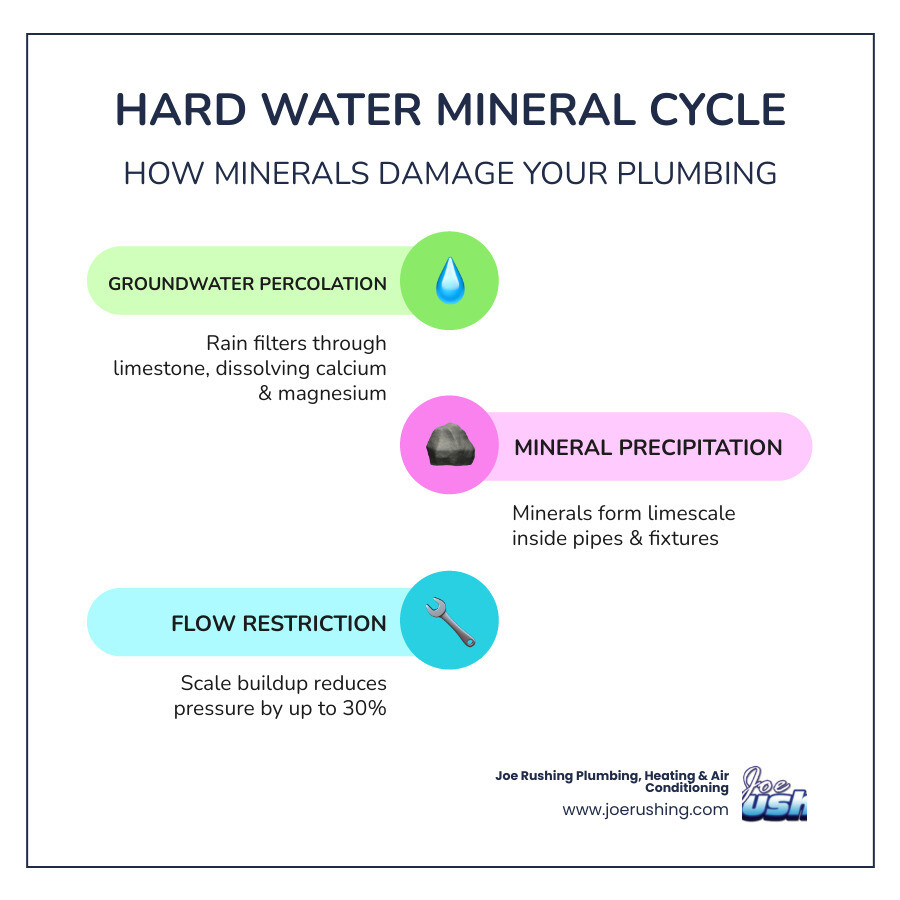
In West Texas, our water primarily comes from groundwater sources. As rain falls and moves through the earth, it percolates through layers of limestone and soil. During this journey, the water acts as a solvent, picking up mineral deposits along the way. By the time it reaches our taps in Lubbock or Levelland, it is often "very hard," measuring well above the standard 10.5 grains per gallon (GPG) threshold.
The real trouble starts with a process called mineral precipitation. When hard water is heated or left sitting in your pipes, these dissolved minerals solidify, forming a rock-hard substance known as limescale (or calcite). Hot water accelerates this process, which is why your water heater is often the first "victim" of hard water damage. Over time, this scale clings to the interior walls of your plumbing, leading to significant pipe diameter restriction.
If you're noticing issues with your home's water flow, our team at General Plumbing Lubbock TX can help diagnose whether mineral buildup is the culprit.
8 Critical Signs Your Hard Water is Damaging Your Plumbing

When hard water minerals begin to accumulate, they don't just sit there; they create a physical barrier that works against your home’s efficiency. Research shows that homes with hard water can experience a 25% decrease in water flow due to these mineral buildups. Knowing the Affordable Pipe Repair Lubbock Tips can help you stay ahead of these eight critical red flags.
1. Reduced Water Pressure and Flow
This is often the first sign that homeowners notice. As limescale builds up inside your pipes, it acts like cholesterol in an artery. Just 1/8 inch of scale can reduce the effective diameter of a pipe by 25% to 30%. You might notice that the kitchen sink takes longer to fill or the shower feels less powerful than it used to. If your home has older galvanized steel pipes, this restriction can eventually lead to a total blockage. For more on managing these issues, check out our Pipe Repairs Lubbock TX Guide.
2. Visible Mineral Deposits on Fixtures
Take a close look at your faucet aerators and showerhead nozzles. Do you see a white, crusty, or chalky residue? That’s calcite. These deposits don't just look ugly; they eventually clog the tiny holes in your showerhead, causing water to spray in odd directions or stop flowing entirely. If you can see it on the outside, you can bet it’s also building up on the inside where you can’t see it. This is a clear indicator that you may need Plumbing Repair Lubbock TX services to prevent further fixture damage.
3. Rumbling or Popping Water Heaters
Does your water heater sound like it’s making popcorn? That "rumbling" or "popping" noise is a classic sign of hard water damage. It happens when a thick layer of mineral sediment settles at the bottom of the tank. Steam bubbles from the heating element have to pop through that crusty layer to heat the water.
This sediment acts as an insulator, forcing the heater to work much harder. According to the U.S. Department of Energy, this can lead to a 25–30% loss in energy efficiency. Even worse, it slashes the lifespan of your unit. A standard water heater that should last 12–15 years might fail in just 7–10 years if left untreated. Tankless water heaters are even more vulnerable, as scale can coat the heat exchanger and cause a total system failure within just a few years.
4. Frequent Leaks and Corroded Seals
Hard water is surprisingly aggressive. The minerals can cause "pitting" corrosion in metal pipes and make rubber washers and seals brittle. When a seal becomes brittle and loses its flexibility, it can no longer hold back water, leading to persistent drips and leaks. If you suspect a hidden leak caused by mineral wear, our Leak Detection Lubbock TX experts use advanced technology to find the source. Ignoring these small drips can lead to major water damage, so it's best to consult The Best Leak Detection Specialists in Lubbock TX early on.
5. Premature Appliance Failure
Hard water is an "appliance killer." Research indicates that washing machines operating with hard water suffer a 30% reduction in lifespan. The minerals clog internal valves, wear out pump seals, and coat heating elements. Dishwashers face similar struggles; you’ll notice cloudy dishes and clogged spray arms that prevent proper cleaning. Over time, the cost of replacing these appliances every few years far exceeds the cost of water treatment.
6. Persistent Soap Scum and Pipe Biofilms
Hard water minerals react with the fatty acids in soap to create "soap scum" — an insoluble curd that sticks to everything. This scum doesn't just stay on your shower curtain; it coats the inside of your drains. This sticky residue can trap hair and debris, leading to frequent clogs. Furthermore, studies have shown that hard water scale can harbor microbial biofilms, providing a breeding ground for bacteria within your plumbing. If your drains are constantly sluggish, see our Best Pipe Repairs Lubbock TX Guide.
7. Stiff Laundry and Skin Irritation
If your towels feel like sandpaper and your clothes look faded after just a few washes, hard water is the culprit. The minerals prevent detergent from lathering properly, meaning you have to use up to four times as much soap to get things clean. For people with sensitive skin, these mineral deposits can trigger eczema or leave a film on the skin that causes persistent itching and dryness.
8. Unusual Water Taste or Odor
While hard water isn't usually dangerous to drink, it can have a distinct "metallic" tang if it contains high levels of iron or manganese. Sometimes, the scale buildup in pipes can trap organic matter or algae, leading to an earthy or "dirt-like" taste. If your water quality has changed, it’s a sign that your Plumbing system needs a professional evaluation.
How Mineral Deposits Accelerate Corrosion and Leaks
Many homeowners believe that mineral buildup actually "seals" pipes, but the opposite is true. Mineral deposits create an environment where oxidation and pitting can flourish. As scale builds up unevenly, it creates pockets where water can sit and eat away at the pipe material. This is particularly dangerous for metal pipes like copper and galvanized steel.
| Pipe Material | Hard Water Impact | Typical Lifespan (Hard Water) | Typical Lifespan (Soft Water) |
|---|---|---|---|
| Galvanized Steel | Heavy internal clogging; severe rust | 20–30 years | 40–50 years |
| Copper | Pitting corrosion; pinhole leaks | 30–40 years | 50+ years |
| PEX | Resists scale better, but valves fail | 40–50 years | 50+ years |
The thermal expansion stress caused by scale in water heaters can also lead to tank fractures. If you are dealing with sudden moisture in your home, our Leak Detection Lubbock TX team can identify if corrosion has finally breached your lines. For urgent situations, we provide Emergency Leak Repairs Lubbock Tips to help you minimize damage.
Signs Your Hard Water is Damaging Your Plumbing Materials
Different materials react differently to West Texas water. Galvanized steel is the most prone to "closing up" entirely with rust and scale. Copper is susceptible to pinhole leaks caused by mineral-induced corrosion. Even modern PEX piping, while resistant to internal scale, is often connected to metal valves and fixtures that fail prematurely due to hard water. If you're concerned about your pipe integrity, contact Pipe Repairs Contractors in Lubbock TX for an inspection.
Testing and Solving Hard Water Issues in 2026
How do you know for sure if your water is "hard"? In April 2026, there are more ways than ever to check. Water hardness is usually measured in Grains Per Gallon (GPG) or Parts Per Million (PPM).
- Soft Water: 0–3.5 GPG
- Moderately Hard: 3.5–7 GPG
- Hard: 7–10.5 GPG
- Very Hard: 10.5+ GPG
Signs Your Hard Water is Damaging Your Plumbing and How to Test
You can start with a simple DIY test. Fill a clear bottle halfway with tap water, add a few drops of basic dish soap, and shake it. If the water gets cloudy but doesn't create a thick layer of suds, you likely have hard water. For a more accurate reading, you can purchase DIY kits with color charts. However, for a comprehensive look at your water quality, including mineral and contaminant levels, professional analysis is best. You can find more Best Plumbing Repairs Lubbock TX Tips on our blog.
Water Softeners and Prevention Strategies
The most effective solution for hard water is a whole-home water softener. These systems use a process called ion exchange. Inside the tank are millions of tiny resin beads. As hard water flows through, the calcium and magnesium ions "stick" to the beads, which then release a tiny amount of sodium or potassium in their place.
Other prevention strategies include:
- Annual Water Heater Flushing: Draining your tank once or twice a year helps remove sediment before it hardens.
- Vinegar Descaling: Soaking showerheads and aerators in vinegar can dissolve surface scale.
- Professional Inspections: Scheduling a yearly plumbing evaluation can catch scale buildup before it causes a pipe burst.
For more advice on what to look for in a professional service, read our guide on Top Notch Plumbing Repairs in Lubbock What to Look For.
Frequently Asked Questions about Hard Water Damage
Can hard water damage to pipes be reversed?
Unfortunately, once severe corrosion or heavy limescale has taken hold inside a pipe, it cannot be easily "washed away." While professional descaling can help with minor buildup, permanent damage often requires pipe replacement. Installing a softener prevents future damage but won't fix a pipe that is already paper-thin from corrosion. If you're worried about old damage, check out Stop the Drip Before You Flip with Lubbock Leak Repairs.
How quickly does hard water damage plumbing?
Surface buildup on faucets can appear in just a few months. Significant efficiency loss in your water heater usually happens within 2 to 3 years. Major pipe restriction or appliance failure typically takes 5 to 10 years of consistent hard water exposure.
Is hard water safe to drink?
Yes, hard water is generally safe to drink. In fact, some studies suggest that the calcium and magnesium in hard water can contribute slightly to your daily mineral intake, potentially aiding bone and cardiovascular health. The "damage" hard water causes is strictly to your home's infrastructure and your skin/hair, not your internal health.
Conclusion
The signs your hard water is damaging your plumbing are a warning that your home’s "circulatory system" is under stress. From rumbling water heaters to reduced pressure, these red flags are your cue to take action before a pipe bursts or an appliance fails.
At Joe Rushing Plumbing, Heating & Air Conditioning, we’ve been serving the Lubbock and Levelland communities for generations. We specialize in identifying and fixing hard water issues using unique solutions like our underground camera inspections and Perma-Liner no-dig drain repairs. These tools allow us to see exactly what’s happening inside your pipes without tearing up your yard or floors.
Don't let West Texas minerals win the battle against your home. Whether you need a water softener installation, a water heater flush, or a professional pipe inspection, we are here to help. Protect your home and your wallet by addressing hard water today.
Need HVAC Help?
Our certified technicians are ready to help with all your heating and cooling needs.
Get Free EstimateMore Articles
View All PostsRelated Articles
Ready to Get Started?
Whether you need a repair, maintenance, or a new system installation, our expert team is here to help.