The Homeowner's Guide to Preventing Sewer Line Headaches
Joe Rushing
Discover drain cleaning and sewer line maintenance tips to prevent clogs, backups & costly repairs in Lubbock. Expert advice from Joe Rushing Plumbing!
The Homeowner's Guide to Preventing Sewer Line Headaches
Why Every Lubbock and Levelland Homeowner Needs a Sewer Line Plan
Drain cleaning and sewer line maintenance tips are something every homeowner in Lubbock and Levelland, TX should know — because a neglected sewer line doesn't just slow down your drains. It can cause sewage backups, water damage, and repairs that disrupt your entire home.
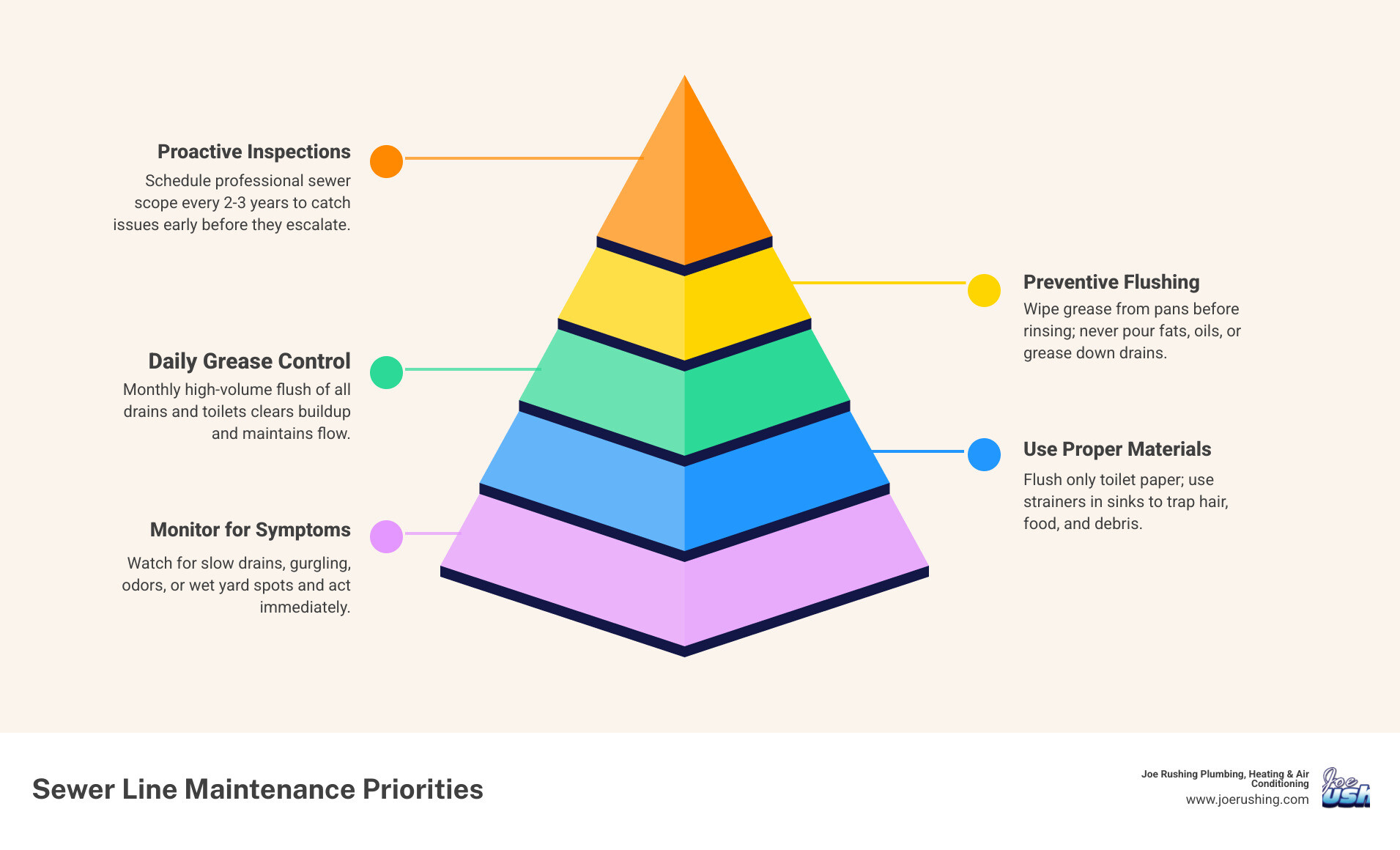
Here's a quick overview of the most important habits to protect your sewer line:
- Keep grease out of drains — wipe pans with a paper towel before rinsing
- Only flush toilet paper and human waste — no wipes, even if labeled "flushable"
- Use strainers in sinks and showers to catch hair and debris
- Run hot water down kitchen drains regularly to move buildup through
- Do a monthly flush — fill sinks and tubs, then drain them all at once while flushing toilets
- Use one-ply toilet paper — it dissolves faster and is gentler on pipes
- Schedule professional inspections every 2–3 years, or sooner if you notice warning signs
- Watch for early symptoms — slow drains, gurgling sounds, and foul odors are your first clues
Many homes in the Lubbock area are over 40 years old, which means aging pipes, years of grease buildup, and nearby tree roots can all quietly work against your plumbing system. The good news? A little routine attention goes a long way toward avoiding a very unpleasant — and expensive — surprise.
I'm Ronda Rushing Brown, a third-generation leader at Joe Rushing Plumbing, Heating & Air Conditioning, and I've spent years helping homeowners in this region understand the value of proactive care when it comes to drain cleaning and sewer line maintenance tips. In the sections below, I'll walk you through exactly what causes sewer problems, how to spot them early, and what you can do — both on your own and with professional help — to keep your system running smoothly.
Common Causes of Sewer Line Clogs and Backups

Understanding why your sewer line clogs is the first step in prevention. In West Texas, we see a few recurring villains in plumbing.
Fats, Oils, and Grease (FOG)
Think of your sewer line like an artery. Just as a steady diet of greasy food can clog a person's heart, pouring fats, oils, and grease (FOG) down the drain causes them to solidify and stick to the pipe walls. Over time, this buildup narrows the passage until even small bits of debris get stuck, leading to a total backup. This is the primary cause of sewage overloads in residential systems.
Tree Root Intrusion
In our semi-arid climate, tree roots are incredibly persistent in their search for moisture. They can sense the water inside your sewer lines and will probe for any tiny crack or loose joint to enter. Once inside, they feast on the nutrients and grow into thick, hair-like masses that act as a "cork" in your pipe. If you have an older home in Lubbock with clay or cast-iron pipes, you are at a higher risk for this.
The "Flushable" Wipe Myth
One of the biggest headaches we face in April 2026 is the continued use of "flushable" wipes. Despite the label, these wipes do not break down like toilet paper. They snag on pipe imperfections or tree roots, creating "fatbergs" that can shut down your entire system. Other common culprits include dental floss, feminine hygiene products, and paper towels.
Aging and Deteriorating Pipes
Many neighborhoods in Lubbock and Levelland feature homes built 40 or 50 years ago. Over time, cast iron pipes can corrode and develop "scale"—rough patches that catch toilet paper and waste. Clay pipes can shift with the soil, leading to "bellies" or low spots where waste settles instead of flowing away. When these structural issues combine with debris, you need Sewer Line Repair Replacement Lubbock TX to restore proper flow.
Essential Drain Cleaning and Sewer Line Maintenance Tips for Daily Life
Maintenance doesn't have to be a chore. Adopting a few simple daily and monthly habits can significantly extend the life of your plumbing.
The Power of the Monthly Flush
Once a month, we recommend a "high-volume flush." Fill every sink, bathtub, and even your washing machine with water. Then, release them all simultaneously while flushing your toilets. This surge of water helps push settled debris through the main line, especially if your pipes have slight low spots or "bellies."
Kitchen Best Practices
Your garbage disposal is not a trash can. Avoid putting stringy foods (like celery), eggshells, coffee grounds, or starchy foods (like pasta and potato peels) down the drain. These materials can create a paste that hardens inside your pipes. Always run cold water while using the disposal and for 30 seconds afterward to ensure everything reaches the main line.
Safe Household Solutions
Instead of reaching for harsh, corrosive chemical cleaners that can damage your pipes and kill beneficial bacteria in septic systems, try the baking soda and vinegar method.
- Pour 1/2 cup of baking soda down the drain.
- Follow it with 1/2 cup of white vinegar.
- Let it fizz for 15–30 minutes.
- Flush it with a gallon of boiling water.
This monthly ritual helps break down soap scum and minor grease buildup without harming your plumbing. For more localized issues, knowing Drain Cleaning Lubbock TX techniques can save you a lot of stress.
The Safe vs. Unsafe Drain Table
| Item | Status | Why? |
|---|---|---|
| Toilet Paper (One-Ply) | SAFE | Dissolves quickly and moves easily. |
| Human Waste | SAFE | It’s what the system is designed for! |
| "Flushable" Wipes | UNSAFE | They don't dissolve and cause major blockages. |
| Grease/Cooking Oil | UNSAFE | Hardens into "grease logs" inside pipes. |
| Coffee Grounds | UNSAFE | Acts like sand, settling in low spots and clumping. |
| Hair | UNSAFE | Binds with soap scum to form impenetrable mats. |
| Dental Floss | UNSAFE | Acts like a net, catching other debris. |
Recognizing Early Warning Signs and When to Call a Pro
Your plumbing system usually tries to tell you there is a problem long before a total backup occurs. Listening to these "signals" can save you from a messy cleanup.
Slow Drainage and Gurgling
If one sink is slow, it’s a local clog. But if multiple drains in the house are sluggish, or if you hear a "gurgling" or "burping" sound from the toilet when the shower drains, the blockage is likely in the main sewer line. This happens because air is being forced through the trap seals as water struggles to pass the obstruction.
Foul Odors
A healthy sewer system should be airtight. If you smell rotten eggs or raw sewage inside your home or near your yard, it indicates a leak or a backup that is pushing sewer gases into your living space.
Yard Changes
In West Texas, we don't often see lush, bright green patches of grass unless we're watering them heavily. If you notice a specific area of your lawn is suddenly greener or soggier than the rest, it’s a classic sign of a broken or leaking sewer line. The sewage acts as a fertilizer, but the underlying issue is a serious health hazard.
Recurring Clogs
If you find yourself using a plunger every week, you aren't fixing the problem—you're just pushing it further down the line. Frequent backups are a major red flag that you need to consult a professional. If the issue is specifically in your tub or shower, check out The Best Ways to Fix a Clogged Shower Drain in Lubbock for targeted advice.
Professional Solutions: Camera Inspections and Advanced Cleaning
When DIY methods aren't enough, it's time to bring in the technology. At Joe Rushing, we pride ourselves on using non-invasive diagnostics to see exactly what’s happening underground without digging up your yard.
Sewer Scope Inspections
A sewer scope involves feeding a high-definition, waterproof camera through your sewer line. This allows us to see tree roots, cracks, bellies, and grease buildup in real-time. It’s an essential tool for anyone buying an older home in Lubbock or Levelland. For a deeper look, see our guide on Pipe Camera Inspection in Lubbock TX: A Homeowner's Guide to Non-Invasive Diagnostics.
Hydro Jetting vs. Snaking
While a traditional drain snake (or "cabling") is great for punching a hole through a clog to get water moving, it doesn't actually clean the pipe walls. Hydro jetting uses high-pressure water (similar to a power washer) to scour the inside of the pipe. It blasts away grease, minerals, and even small tree roots, leaving the pipe nearly as clean as the day it was installed.
Enzyme Treatments
For ongoing maintenance, we often recommend professional-grade enzyme treatments. These contain "hungry" bacteria that eat away at organic matter like hair and grease. Unlike caustic chemicals, enzymes are safe for your pipes and the environment. This is especially useful for commercial properties; learn more about Everything You Need to Know About Grease Trap Maintenance in Lubbock.
Perma-Liner Trenchless Repair
If our camera inspection reveals a crack or a break, don't panic. We specialize in Perma-Liner, a "no-dig" solution. We can pull a resin-coated liner through your existing pipe and inflate it. Once it cures, it creates a brand-new, jointless pipe inside the old one. This technology is engineered to last 50 years or more and saves you from the destruction of traditional excavation.
Frequently Asked Questions about Drain Cleaning and Sewer Line Maintenance Tips
How often should I schedule professional drain cleaning and sewer line maintenance tips?
For most residential homes in Lubbock and Levelland, a professional inspection and cleaning every 2–3 years is ideal. However, if your home is over 40 years old or you have large trees near your sewer line, an annual checkup is a much safer bet to prevent emergency backups.
What are the best DIY drain cleaning and sewer line maintenance tips?
The best DIY tips focus on prevention. Use sink strainers to catch hair, never pour grease down the drain, and perform a monthly flush with hot water and baking soda. Also, switching to one-ply toilet paper can make a huge difference in how easily waste moves through older West Texas plumbing systems.
Why is a sewer scope inspection important for older homes?
Older homes often use cast iron or clay pipes which are prone to corrosion, shifting, and root intrusion. A sewer scope inspection is the only way to "see" the health of your pipes without digging. It can identify small issues—like a tiny root starting to enter a joint—before they turn into a multi-thousand-dollar disaster.
Conclusion
Managing your home’s plumbing doesn't have to be a source of anxiety. By following these drain cleaning and sewer line maintenance tips, you can keep your system flowing smoothly for decades. From the simple habit of wiping grease out of a pan to the high-tech precision of our underground camera inspections, every proactive step you take helps prevent water damage and costly repairs.
If you’re dealing with a stubborn clog, or if you just want the peace of mind that comes with knowing your sewer line is in good shape, we’re here to help. Joe Rushing Plumbing, Heating & Air Conditioning has been serving the Lubbock and Levelland communities for generations. Whether you need a routine cleaning or advanced Perma-Liner trenchless repair, our team is ready to provide efficient, non-invasive solutions tailored to West Texas homes.
Don't wait for a backup to happen. Contact us today to schedule your sewer line inspection and keep your home's "arteries" clear!
Need HVAC Help?
Our certified technicians are ready to help with all your heating and cooling needs.
Get Free EstimateMore Articles
View All PostsRelated Articles
Ready to Get Started?
Whether you need a repair, maintenance, or a new system installation, our expert team is here to help.