How to Understand Your Sewer Camera Inspection Needs
Joe Rushing
Learn when you need a sewer camera inspection to spot hidden pipe problems before they worsen in Lubbock homes.
How to Understand Your Sewer Camera Inspection Needs
Do You Know When You Need a Sewer Camera Inspection?
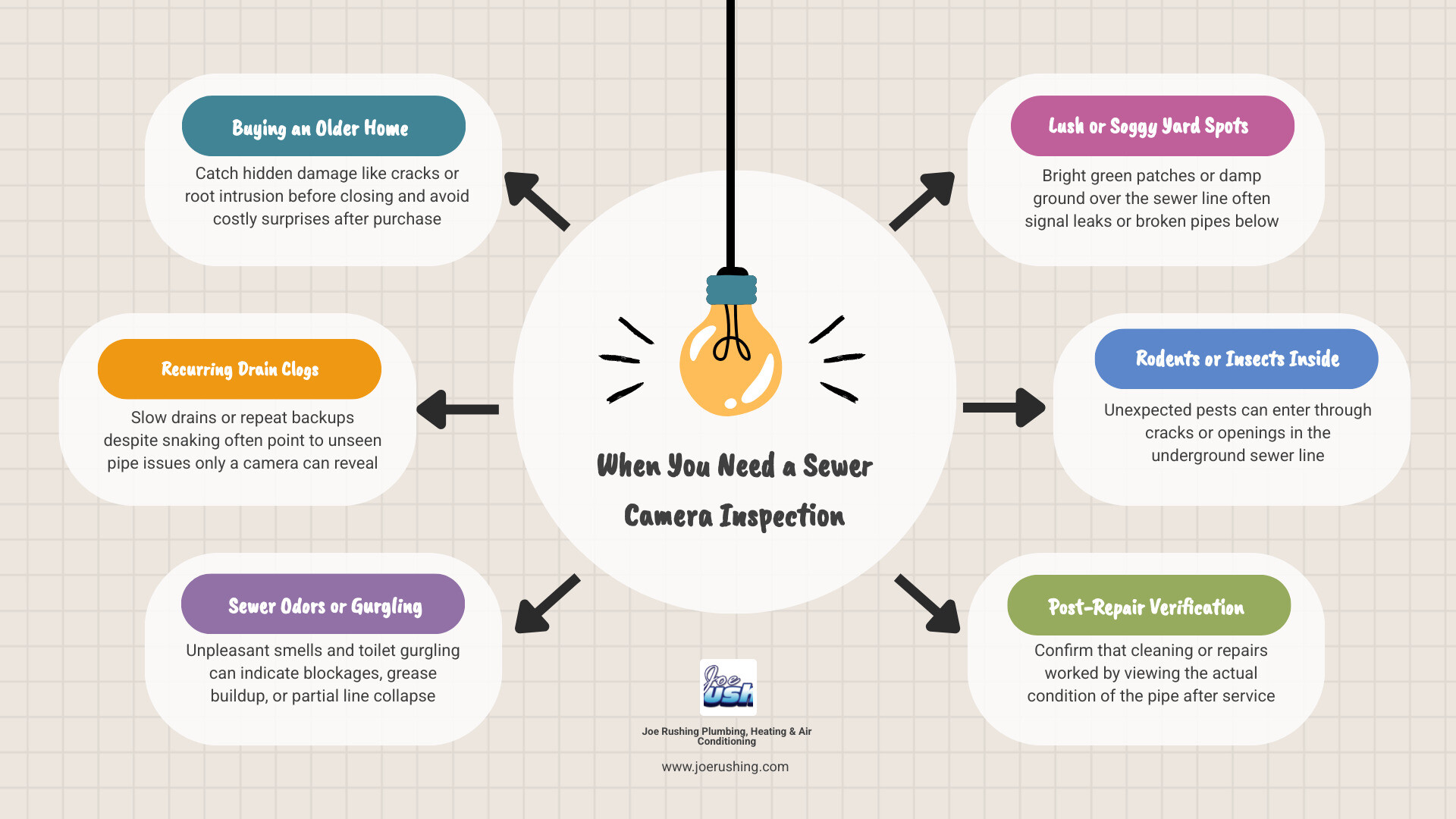
Knowing when you need a sewer camera inspection can be the difference between catching a small problem early and facing a major — and expensive — repair down the road. Here are the most common situations that call for one:
- You're buying a home, especially one that's 20 or more years old
- Your drains are slow or keep clogging, even after repeated snaking
- You smell sewer odors inside or outside your home
- Toilets gurgle or water backs up into tubs or showers
- You notice lush green patches in your yard above the sewer line
- Rodents or insects have appeared unexpectedly in the home
- The ground near your yard is soggy or shifting
- You want to verify that a recent sewer cleaning or repair actually worked
A standard home inspection won't show you what's happening inside your sewer line. Only a camera can do that — and what it finds could save you thousands.
Most homeowners don't think about their sewer line until something goes wrong. But by then, tree roots may have already cracked the pipe, or years of grease buildup may have narrowed the line to a trickle. A sewer camera inspection takes all the guesswork out of diagnosing what's really going on underground — without any digging.
I'm Ronda Rushing Brown, a third-generation leader at Joe Rushing Plumbing, Heating & Air Conditioning, and in my years of helping Lubbock and Levelland homeowners protect their homes, few tools have proven as valuable as the sewer camera when it comes to understanding when you need a sewer camera inspection before a small issue turns into a costly disaster. Keep reading for a complete guide to recognizing the signs, understanding the process, and knowing exactly what to do next.
What a Sewer Scope Inspection Actually Is
A sewer scope or camera inspection is a high-tech diagnostic service that we use to see exactly what is happening inside your home’s underground plumbing. For decades, plumbers had to rely on "best guesses" or destructive digging to find a leak or a clog. Today, we use a specialized, waterproof, high-definition camera attached to a long, flexible fiber-optic cable.
We typically access your system through a "cleanout"—a capped pipe located outside your home or in a basement that leads directly to the main sewer line. As we feed the camera through the pipe, it transmits a live video feed to a high-resolution monitor. This allows us to see the condition of the "lateral line" (the pipe connecting your house to the city main or septic tank) in real-time.
Modern equipment, like what we use here in West Texas, often includes a radio transmitter inside the camera head. This "sonde" allows us to use a locator wand above ground to pinpoint the exact depth and physical location of a problem. If we find a break, we don't have to guess where it is; we can mark the spot on your lawn with surgical precision. For a deeper look at this technology, check out our Pipe Camera Inspection in Lubbock, TX: A Homeowner's Guide to Non-Invasive Diagnostics.

What a sewer camera inspection shows inside the pipe
The camera provides a "fish-eye" view of the pipe’s interior. It reveals:
- Cracks and Breaks: Whether from shifting West Texas soil or age.
- Root Intrusion: Tree roots are persistent and will exploit the smallest joint gap to reach the water inside.
- Grease and Sludge: Over time, fats, oils, and grease (FOG) harden into a thick "scale" that narrows the pipe.
- Offset Joints: When sections of pipe no longer line up, creating a "lip" that catches debris.
- Pipe Bellies: Sagging sections of pipe where water and waste pool, often leading to recurring clogs.
- Pipe Material: We can confirm if you have modern PVC, old cast iron, or outdated clay or Orangeburg pipes.
What a sewer camera inspection can and cannot confirm
While a camera is the ultimate diagnostic tool, it has its limits. It is excellent at finding structural damage, blockages, and location depth. However, a camera cannot always "see" a pinhole leak if the pipe is currently full of water, nor can it see what is happening outside the pipe (like soil contamination) unless there is a visible hole. It provides the "clues" for leaks—such as a sudden drop in the water level or visible soil entering the pipe—but it is primarily a tool for internal visual confirmation.
When You Need a Sewer Camera Inspection
In a perfect world, your sewer line would work silently forever. In reality, the ground shifts, trees grow, and pipes age. You should Stop Guessing and Start Seeing with Lubbock Sewer Camera Inspections whenever you experience symptoms that suggest the "main artery" of your home is struggling.
Whether you are dealing with a single stubborn drain or a whole-house backup, a Deep Dive into Mainline and Lateral Line Camera Inspections can provide the clarity you need.
When you need a sewer camera inspection before buying a home
One of the most critical times to schedule an inspection is during the home-buying process. A standard home inspection usually stops at the walls—the inspector flushes the toilets and runs the sinks, but they don't look 40 feet down the line.
- The "20-Year Rule": If the home was built more than 20–25 years ago (pre-2001 or 2006), it is highly likely to have older piping materials or mature trees whose roots have reached the line.
- Outdated Materials: Homes built before 1984 often have clay pipes, which are notoriously prone to cracking. Even older homes might have Orangeburg (bituminized fiber) pipes, which can flatten like a wet toilet paper roll over time.
- Negotiation Power: If an inspection reveals a $5,000 repair is needed, you can negotiate that into the closing costs rather than inheriting the bill a month after moving in.
When you need a sewer camera inspection for recurring plumbing problems
If you find yourself calling a plumber to snake your drains every six months, you don't have a "clog" problem; you have a "pipe" problem. Recurring issues are a major red flag.
- Multiple Backups: If the kitchen sink, the laundry, and the guest bath all back up at once, the problem is in the main line.
- Post-Cleaning Verification: After we perform a professional hydro-jetting or cleaning, we use the camera to ensure the line is truly clear and that the cleaning didn't reveal any underlying structural failures.
- Foundation Concerns: In Lubbock and Levelland, soil movement is common. If you see cracks in your foundation or have unexplained moisture under the house, a sewer camera can tell us if a broken line is the culprit.
Common Signs Your Sewer Line May Need Immediate Attention
Your home often tries to tell you when the sewer line is failing. Some signs are obvious, while others require a bit of "detective work" in the yard. Following The Homeowner's Guide to Preventing Sewer Line Headaches starts with recognizing these red flags early.
Indoor signs homeowners should not ignore
- Foul Odors: A healthy sewer system is airtight. If you smell "rotten eggs" or sewer gas in your bathrooms or basement, there is likely a crack or a dry trap somewhere.
- Gurgling Toilets: If your toilet bubbles when the shower is running or when the washing machine drains, air is getting trapped in the line by a blockage.
- Slow Drains: If every sink in the house takes forever to empty, it’s not just a hair clog in the P-trap; it’s a bottleneck in the main sewer.
- Mildew and Mold: Unexplained mold growth on the lower parts of walls can indicate a sewer leak behind the wall or under the floor.
Outdoor and property clues that point to a sewer issue
- Lush, Green Patches: If one specific area of your lawn is much greener and grows faster than the rest, it might be getting "fertilized" by a leaking sewer pipe.
- Soggy Spots or Sinkholes: Persistent wet spots in the yard during a dry West Texas summer are a sign that water is escaping the pipe and saturating the soil.
- Pest Problems: Rats and cockroaches often live in sewer systems. If they are suddenly finding their way into your home, they may be entering through a break in the sewer line.
- Ground Shifting: If your sidewalk or driveway is suddenly cracking or settling near the sewer path, an underground leak may be washing away the supporting soil.
If you notice any of these, it's time to look into professional Drain Cleaning Lubbock, TX services that include a camera diagnostic.
What Happens During the Inspection and What to Look for in the Results
When we arrive for an inspection, we don't just shove a camera in a hole. We follow a professional protocol to ensure we get the clearest possible picture of your pipes. You should always insist on an Affordable Sewer Camera Service in Lubbock, TX and Why You Need a Report so you have documentation for your records.
Step by step: what a professional sewer camera inspection includes
- Symptom Review: We talk to you about what you've been experiencing—slow drains, smells, or backups.
- Locating Access: We find the cleanout. If your home doesn't have one, we may have to temporarily remove a toilet to gain access.
- Line Flushing: We often run water through the line to clear out loose debris and provide lubrication for the camera cable.
- The "Scope": We feed the camera through, watching the monitor for defects.
- Marking and Mapping: If we find a problem, we use our locator to mark the spot on the surface.
- Review: We show you the footage. We believe you should See What Your Plumber Sees with Camera Tech so you understand our recommendations.
What to look for in your sewer inspection video or report
When you watch the video, look for these common issues:
- Standing Water: Pipes are designed to use gravity. If the camera goes underwater (a "belly"), it means the pipe has sagged and will eventually clog.
- Root Masses: These look like "spider webs" or thick "ponytails" hanging from the top or sides of the pipe.
- Jagged Edges or "Scale": In cast iron pipes, corrosion creates a rough surface that catches toilet paper and waste.
- Separated Joints: You’ll see a visible gap between two sections of pipe where soil or roots can enter.
How Often to Schedule a Sewer Inspection and What to Do Next
Prevention is always cheaper than a cure. While you don't need a camera inspection every month, having a schedule can prevent "emergency" backups on Thanksgiving or Christmas. In the Sewer Camera Inspection vs Exploratory Digging: The Ultimate Showdown, the camera wins every time because it prevents unnecessary property damage.
A practical maintenance schedule for newer and older homes
- Homes 0–10 years old: Generally don't need inspections unless you experience symptoms.
- Homes 10–25 years old: An inspection every 3–5 years is a good "check-up," especially if you have large trees.
- Homes 25+ years old: Annual or biennial (every 2 years) inspections are recommended. At this age, pipes are reaching the end of their expected lifespan.
- Before a Remodel: Always scope your line before adding a new bathroom or finishing a basement. You don't want to put expensive tile over a failing sewer line.
| Feature | Symptom-Based Inspection | Preventive Maintenance Inspection |
|---|---|---|
| Trigger | Backups, smells, or slow drains | Scheduled every 2–5 years |
| Goal | Find the cause of an existing failure | Catch small cracks/roots before failure |
| Cost Impact | Often involves emergency repair costs | Lowers long-term repair costs |
| Peace of Mind | Reactive and stressful | Proactive and controlled |
What the next step may be after inspection findings
Once we have the results, the next step depends on what we find.
- Hydro-Jetting: High-pressure water to blast away grease and small roots.
- Root Removal: Mechanical augers to cut out heavy root growth.
- Trenchless Pipe Repair: If the pipe is cracked but structurally sound, we can often use Perma-Liner technology to create a "pipe within a pipe" without digging up your yard.
- Spot Repair: If only one small section is broken, we can perform a targeted excavation.
- Full Replacement: If the line has collapsed or is "shot," we provide comprehensive Sewer Line Repair & Replacement Lubbock, TX.
If you’re unsure Who to Call for a Professional Sewer Camera Inspection in Lubbock, TX, look for a team with the right technology and the experience to interpret the results accurately.
Conclusion
At Joe Rushing Plumbing, Heating & Air Conditioning, we’ve been serving the Lubbock and Levelland communities since 1948. We know the specific challenges that West Texas soil and weather can pose to your underground plumbing. Our goal isn't just to fix a clog; it's to provide a long-term solution that protects your home and your family.
Whether you are a first-time homebuyer looking for peace of mind or a long-time homeowner dealing with a stubborn drain, our advanced camera diagnostics and non-invasive trenchless options (like Perma-Liner) ensure you get the best results with the least amount of disruption. We are Lubbock's 2nd oldest plumbing company, and we take pride in our BBB A+ rating and our 24/7 emergency availability.
Don't wait for a backup to flood your home. If you suspect your sewer line needs attention, let us take the guesswork out of the equation. More info about plumbing services is just a click away, or you can call us anytime to schedule your professional camera inspection.
Need HVAC Help?
Our certified technicians are ready to help with all your heating and cooling needs.
Get Free EstimateMore Articles
View All PostsRelated Articles
Ready to Get Started?
Whether you need a repair, maintenance, or a new system installation, our expert team is here to help.