The Hidden Benefits of a Plumbing Camera Inspection: A Visual Guide
Joe Rushing
Discover what can a plumbing camera find in your pipes: roots, cracks, blockages & more. Get Lubbock's non-invasive inspection guide now!
The Hidden Benefits of a Plumbing Camera Inspection: A Visual Guide
What Can a Plumbing Camera Find in Your Pipes? More Than You'd Expect
What can a plumbing camera find in your pipes? Here's a quick answer:
| Finding | What It Means for Your Home |
|---|---|
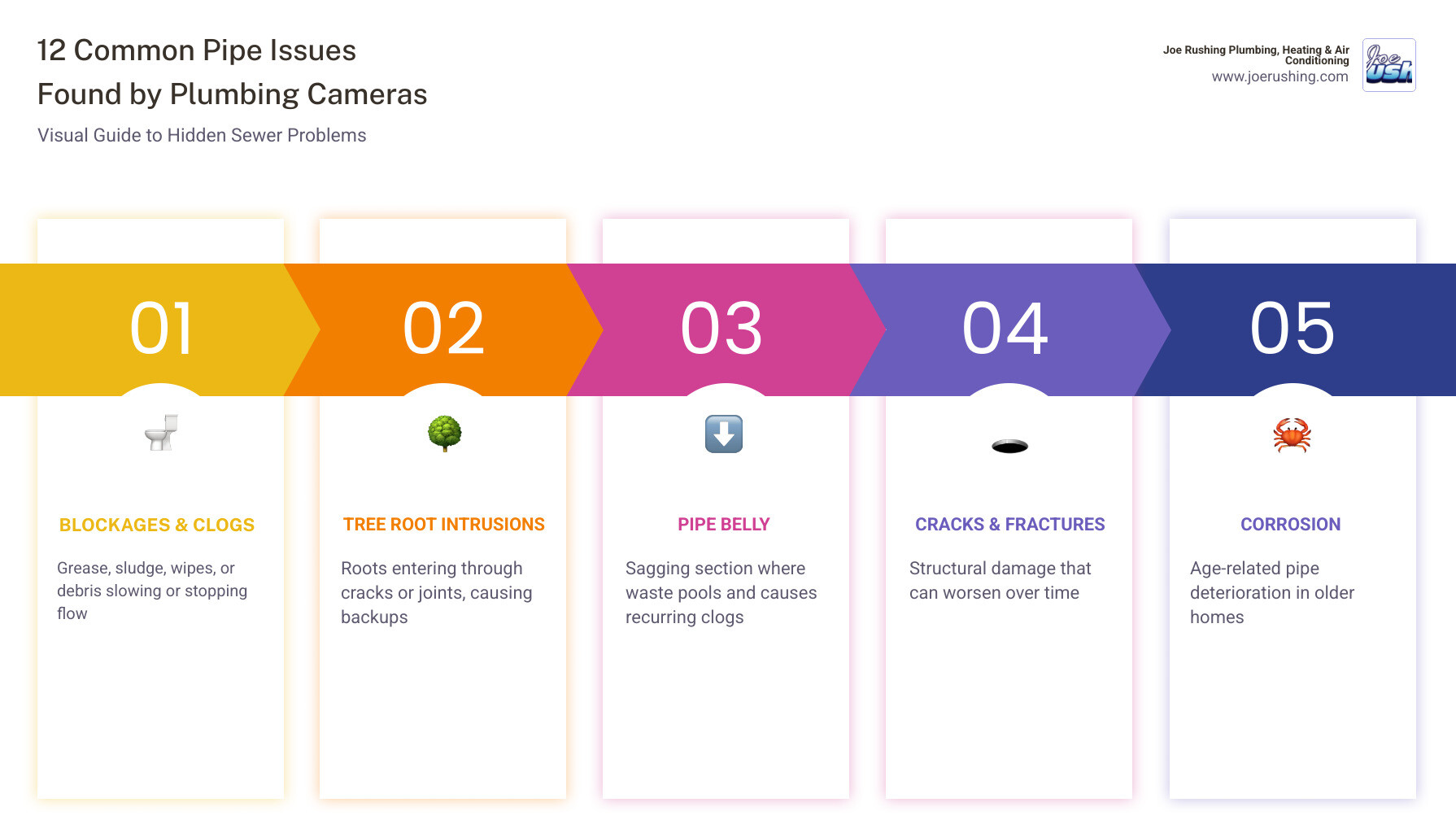
| Blockages and clogs | Grease, sludge, wipes, or debris slowing or stopping flow |
| Tree root intrusions | Roots entering through cracks or joints, causing backups |
| Pipe belly | A sagging section where waste pools and causes recurring clogs |
| Cracks and fractures | Structural damage that can worsen over time |
| Corrosion | Age-related pipe deterioration in older homes |
| Foreign objects | Toys, jewelry, or other items flushed accidentally |
| Misaligned or separated joints | Offset connections that disrupt flow |
| Collapsed pipe sections | Sections too damaged to function |
| Channeling | Erosion grooves worn into old pipe walls |
| Trapped animals | Rats, snakes, or other animals that entered from outside |
| Pipe material identification | Whether your pipes are cast iron, PVC, clay, or galvanized steel |
| Lost valuables | Rings, earrings, or small objects that went down a drain |
Most plumbing problems don't announce themselves with a dramatic burst or an obvious flood. They build quietly — deep underground, inside walls, or beneath a concrete slab — where no one can see them without the right tools. Your sewer line pipes lie several feet below your yard, and what's happening inside them is completely invisible without a camera. That's exactly why a video line inspection has become one of the most practical diagnostic tools available to homeowners dealing with slow drains, recurring backups, or unexplained odors.
I'm Ronda Rushing Brown, a third-generation family business leader with Joe Rushing Plumbing, Heating & Air Conditioning, and over the decades I've seen how a camera inspection changes what's possible when diagnosing what can a plumbing camera find in your pipes — from catching a failing cast iron line before it collapses to recovering a wedding ring a child accidentally flushed. In the sections below, I'll walk you through exactly what these inspections reveal and why that information matters for protecting your home.
What Can a Plumbing Camera Find in Your Pipes? 12 Common Problems Homeowners Should Know
A plumbing camera can reveal a lot more than "there's a clog somewhere." In many Lubbock and Levelland homes, a routine video inspection can show us the exact condition of the line and whether the problem is buildup, damage, age, or something a toddler thought belonged in the toilet.
The most common findings include:
- Grease and sludge buildup
- Soap scum and scale deposits
- Tree root intrusion
- Pipe bellies
- Cracks and fractures
- Corrosion in older pipe materials
- Offset or separated joints
- Channeling in worn pipe walls
- Collapsed pipe sections
- Foreign objects like toys or wipes
- Trapped animals
- Lost valuables

What can a plumbing camera find in your pipes during a routine inspection?
During a standard inspection, we often find the everyday troublemakers first:
- Deep clogs that a plunger will never reach
- Grease buildup narrowing the pipe interior
- Soap residue and mineral scale clinging to pipe walls
- Sludge and paper buildup causing slow drainage
- Standing water that suggests poor slope or a sagging line
- Evidence of recurring backups in the same section of pipe
This matters because a slow drain is not always "just a clog." Sometimes it's a clue that the pipe is damaged, sagging, or partially obstructed farther down the line.
What can a plumbing camera find in your pipes that other methods may miss?
A camera can spot buried defects that guesswork cannot confirm. That includes:
- Hidden sags in underground piping
- Joint separation
- Offset connections where one section no longer lines up with the next
- Early pipe deterioration before a full failure
- Trouble spots below slabs, landscaping, or driveways
This is where visual proof becomes so valuable. Instead of treating symptoms, we can see the cause. For a closer look at that real-time view, see See What Your Plumber Sees with Camera Tech.
How a Plumbing Camera Inspection Works and What the Technology Can Tell You
A plumbing camera inspection is straightforward in concept and powerful in practice. We feed a waterproof camera attached to a flexible rod or cable into an access point such as a cleanout. The camera has built-in lighting, so it can travel through dark pipe interiors and send live video back to a monitor.
Modern equipment can also include a signal transmitter in the camera head. With a locator above ground, we can trace where the line runs and where a problem appears to be located.
According to ASPE, sewer cameras can typically be used in pipes ranging from 2 to 36 inches in diameter, which covers most residential drain and sewer applications.
| Method | What It Does Well | Main Drawback |
|---|---|---|
| Camera inspection | Shows real pipe conditions without digging | May need additional tools to confirm leaks or depth |
| Exploratory digging | Physically exposes the pipe | Invasive, disruptive, and often unnecessary at the start |
What is a plumbing camera inspection and how does the technology work?
Here is the basic setup:
- A small waterproof camera head
- LED lights for visibility
- A flexible cable or rod that moves through the pipe
- A monitor that shows live footage
- Often a locator that helps map the line from above ground
We can inspect a main sewer line, branch drains, and lateral lines depending on access and pipe layout. If you want a more detailed breakdown of the difference between line types, read Deep Dive into Mainline and Lateral Line Camera Inspections.
How a camera inspection helps identify pipe material and overall condition
A camera is also useful for identifying what the pipe is made of and how well it has aged. In older West Texas homes, we may see:
- Cast iron with rust and internal scaling
- Clay pipe with cracked sections or root-prone joints
- PVC in newer repairs or replacements
- Galvanized steel showing age and buildup
- In some older systems, severely worn legacy materials
That matters because pipe life is not unlimited. Supply line materials such as brass, copper, or galvanized steel may last roughly 20 to 70 years, but settlement and wear can shorten that life. A camera helps us assess whether the line is serviceable, deteriorating, or approaching failure. For more on non-invasive diagnostics, visit Pipe Camera Inspection in Lubbock TX: A Homeowner's Guide to Non-Invasive Diagnostics.
The Biggest Problems a Sewer Camera Can Detect Early
The earlier we find a sewer line issue, the more options a homeowner usually has. A camera inspection can catch developing problems before they turn into sewage backups, yard saturation, or large repair projects.
Can a sewer camera identify tree root intrusions and how they entered the pipe?
Yes. A sewer camera can often show both the root mass and the likely entry point. Roots usually do not punch through healthy pipe walls like action movie villains. They take advantage of weaknesses such as:
- Small cracks
- Loose or failed joints
- Separated connections
- Worn clay pipe seams
- Eroded areas caused by channeling
Roots are drawn to moisture, and once they find a tiny opening, they expand inside the line. Over time, they can trap paper, grease, and waste until backups become frequent. A camera lets us see how severe the intrusion is and whether the line may qualify for cleaning, repair, or trenchless restoration. You can learn more at Stop Guessing and Start Seeing with Lubbock Sewer Camera Inspections.
What is a pipe belly and why is it important to find one early?
A pipe belly is a sagging section in an underground drain or sewer line. It usually happens when soil settles or shifts and the pipe no longer maintains the proper slope.
That low spot can collect:
- Wastewater
- Toilet paper
- Grease
- Sediment and debris
Once material starts pooling, recurring clogs become much more likely. Standing wastewater can also increase odor and corrosion risks. A belly is one of the most important issues to catch early because cleaning alone may not solve it for long. If the slope is wrong, the same section can keep causing trouble.
What types of blockages and foreign objects can be seen during an inspection?
A camera can reveal both ordinary clogs and unexpected surprises, including:
- Grease and sludge
- Flushable wipes
- Heavy paper buildup
- Mud or silt
- Mineral scale
- Construction debris
- Small toys flushed by children
- Jewelry such as rings or earrings
- Other foreign objects lodged in bends or narrow sections
In rare cases, cameras can also help identify trapped animals in drain or sewer lines. Rats and snakes can enter from damaged exterior openings or compromised lines. When that happens, the inspection is useful not only for locating the animal but also for finding how it got in so the access point can be sealed afterward.
What a Plumbing Camera Can’t Confirm on Its Own
A camera is one of the best diagnostic tools we have, but it is not magic. Knowing its limits helps homeowners avoid confusion and make better repair decisions.
Can a plumbing camera actually find a leak, or are there limitations?
A plumbing camera can show clues that suggest a leak, but by itself it usually cannot confirm an active exterior leak. The reason is simple: the camera sees the inside of the pipe, while leaking water typically escapes outside the pipe wall.
A camera may show:
- Cracks or fractures
- Corrosion
- Joint separation
- Areas that look suspiciously worn
- Water marks or residue patterns
But there are limitations:
- Buildup can look like a crack when it is not
- Thick-walled pipes can have interior surface defects that do not leak through
- Hairline damage may be hidden by residue
- The exact depth or exterior leak path may require other tools
The research we reviewed noted an estimate that about 95% of plumbing companies in the Dallas area use a camera as their primary leak-location tool. That statistic is a good reminder to set realistic expectations. Cameras are excellent for visual inspection, mapping, and locating blockages, but leak confirmation may require additional testing.
When should a homeowner schedule an inspection before the problem gets worse?
You should consider a video line inspection if you notice:
- Repeated clogs in the same drain
- Slow drains in more than one fixture
- Sewage smells inside or outside
- Gurgling toilets
- Soggy areas in the yard
- Standing water where it should not be
- Backups after heavy use
- Problems returning soon after drain cleaning
- Plumbing concerns after landscaping or renovation work
An inspection is also smart after a repair, because it lets us verify the line is truly clear and structurally sound. If you need help quickly, our team offers responsive service in Lubbock and surrounding West Texas communities. For timing tips, see Don't Wait: How to Get a 24/7 Camera Inspection in Lubbock.
Why Camera Inspections Matter for Home Buying, Repairs, and No-Dig Solutions
Camera inspections are not just for active clogs. They are also valuable when planning repairs, buying a house, and deciding whether trenchless solutions are possible.
Why is a camera inspection recommended before purchasing a new home?
A house can look great on the surface and still hide serious sewer problems underground. A pre-purchase camera inspection helps uncover issues such as:
- Root intrusion
- Cracked clay or cast iron
- Sagging lines
- Corrosion
- Offset joints
- Previous patchwork repairs
- Older pipe materials nearing the end of useful life
For buyers, that information matters because the sewer line is one of the most expensive hidden systems to ignore. A camera inspection gives you visual evidence for maintenance planning and a clearer picture of what you are inheriting. For more homeowner guidance, see The Lubbock Homeowner's Guide to Seeing Through Your Pipes.
How does using a camera save money and prevent unnecessary excavation?
The biggest advantage of a camera inspection is precision. Instead of digging first and asking questions later, we can locate the likely problem area and see what is actually happening.
That helps by:
- Reducing guesswork
- Avoiding unnecessary digging
- Preventing avoidable slab, yard, or landscaping disruption
- Matching the repair method to the actual defect
- Confirming whether a line is blocked, broken, sagging, or simply dirty
In many cases, visual diagnosis is the difference between a targeted repair and a much larger excavation than the situation requires. You can read more about that at Sewer Camera Inspection vs. Exploratory Digging: The Ultimate Showdown.
What is the role of a camera inspection in preparing for trenchless pipe repairs?
Camera inspections play a major role in trenchless planning, especially for no-dig options like our Perma-Liner drain repair process.
Before trenchless work, the inspection helps us evaluate:
- Where the damage begins and ends
- Whether the host pipe is stable enough for lining
- The amount of root intrusion or debris present
- Whether cleaning is needed before installation
- The shape and continuity of the pipe
After the repair, a follow-up camera inspection can verify that the new liner is properly placed and the flow path is clear. That before-and-after record is one reason many homeowners appreciate receiving a report. For more on that process, visit Affordable Sewer Camera Service in Lubbock TX (and Why You Need a Report).
Frequently Asked Questions About What Can a Plumbing Camera Find in Your Pipes
Can a plumbing camera help locate lost valuables or trapped animals?
Yes. If a ring, earring, or other small object goes down a drain, a camera can help identify whether it is still in the trap or farther down the line. It can also guide retrieval planning by showing where the item is lodged.
The same goes for unusual situations involving trapped animals. If a rat or snake has entered through a damaged line or exterior opening, a camera can help locate it and identify the likely entry route. Once the problem is resolved, that damaged access point should be repaired to reduce the chance of a repeat visit from uninvited wildlife.
Can a camera inspection verify that a drain cleaning or repair fully worked?
Absolutely. A post-cleaning or post-repair inspection lets us confirm:
- The blockage is gone
- Heavy buildup has been removed
- Water flow looks normal
- No major damage was missed
- The repair addressed the correct section
This is especially helpful after hydrojetting or trenchless pipe work. A camera gives us a before-and-after record instead of relying on crossed fingers and optimistic listening.
Is a video line inspection worth it for older homes in Lubbock?
Yes, especially in older homes. Aging cast iron, clay joints, and other legacy piping can hide corrosion, scaling, cracks, settlement issues, and root entry points. In West Texas, soil movement can also contribute to sagging and joint problems over time.
For older homes, a camera inspection is often one of the best preventive steps you can take because it tells us what condition the line is in now, not what we hope it looks like. For more local information, see Camera Inspection Lubbock TX Guide.
Conclusion
When homeowners ask us what can a plumbing camera find in your pipes, the honest answer is: quite a lot. From grease clogs and root intrusion to pipe bellies, corrosion, lost valuables, and line material identification, a camera inspection gives us a clear view of problems that would otherwise stay hidden until they become bigger headaches.
At Joe Rushing Plumbing, Heating & Air Conditioning, we use advanced underground camera inspections to help homeowners in Lubbock, Levelland, and across West Texas make informed decisions without unnecessary digging. That is especially important when planning drain cleaning, diagnosing recurring sewer issues, or preparing for Perma-Liner no-dig drain repair.
If something in your plumbing system does not seem right, a visual inspection can turn a mystery into a plan. For the next step, explore our plumbing services.
Need HVAC Help?
Our certified technicians are ready to help with all your heating and cooling needs.
Get Free EstimateMore Articles
View All PostsRelated Articles
Ready to Get Started?
Whether you need a repair, maintenance, or a new system installation, our expert team is here to help.