Discover when to choose sewer line repair vs replacement when to decide for West Texas homes and explore trenchless options after a camera inspection.
Sewer Line Repair vs Replacement: When to Decide
Common Warning Signs Your Sewer Line Needs Attention
Before you can even get to the point of sewer line repair vs replacement when to decide, you have to recognize that a problem exists. In West Texas, our soil can be tough on underground infrastructure. Between the shifting clay and the thirsty roots of our trees, sewer lines are under constant pressure. Often, the signs of a failing line start small and gradually worsen until they become an emergency.
Understanding these red flags early can prevent a total system collapse. We generally categorize these signs into two groups: things you notice inside your home and things you notice out in your yard.
Indoor Signs That Point to a Main Line Problem
If a single sink is draining slowly, you likely have a localized clog in a branch line. However, when the main sewer line is compromised, the symptoms are much more widespread:
- Multiple Drains Acting Up: If your kitchen sink, shower, and laundry line are all draining slowly at the same time, the blockage or break is likely in the main line.
- Recurring Clogs: If you find yourself reaching for the plunger every other week for the same toilet, it’s a sign that the waste isn’t clearing the main line properly.
- Tub and Floor Drain Backups: One of the most common signs of a main line failure is seeing water or sewage push up into the lowest drains in the house, such as a bathtub or a basement floor drain, especially after you flush a toilet or run the washing machine.
- Gurgling Toilets: If your toilet bubbles or "talks" to you when you run water in the sink or shower, air is being trapped in the line by a blockage or a break.
Outdoor Signs That Suggest Underground Sewer Damage
Sometimes the first clues aren't in your bathroom, but under your lawn. Keeping your system healthy often starts with The Homeowner's Guide to Preventing Sewer Line Headaches, but once damage occurs, watch for these:
- Wet Patches and Soggy Spots: If it hasn't rained in Lubbock for weeks but you have a mushy spot in your yard, your sewer line may be leaking.
- The "Lush Green Strip": Sewage acts as a potent fertilizer. If you notice a specific strip of grass that is significantly greener and taller than the rest of your lawn, it’s often because it’s feeding on a leak from the pipe below.
- Unpleasant Odors: A healthy sewer system is airtight. If you smell "sewer gas" or a rotten egg odor near your foundation or in the yard, there is a breach in the line.
- Settling Soil or Sinkholes: In severe cases, a broken pipe can wash away the surrounding soil, leading to localized "dips" in your yard or even cracked walkways and driveways.
How Plumbers Diagnose Sewer Problems Before Recommending a Fix
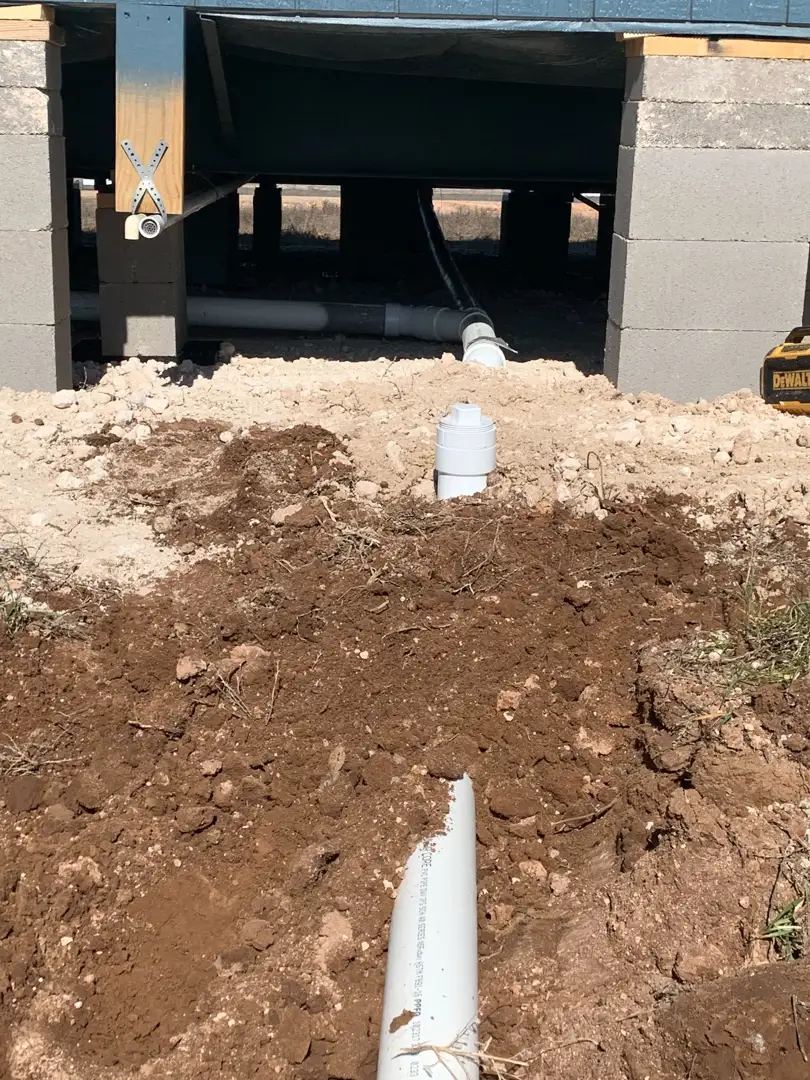
In the old days, plumbers had to rely on "exploratory digging"—literally digging up your yard just to find where the problem was. Today, we use much more sophisticated methods. At Joe Rushing, we believe in "seeing, not guessing."
Why a Camera Inspection Is the First Step in sewer line repair vs replacement when to decide
A professional camera inspection is the gold standard for diagnosis. We thread a high-resolution, waterproof camera through your sewer line to see exactly what is happening in real-time. This is the only way to truly determine sewer line repair vs replacement when to decide.
Without a camera, you are essentially flying blind. An inspection allows us to see if the damage is isolated (like a single root intrusion at a joint) or widespread (like a cast iron pipe that has corroded along its entire length). It also helps us identify "bellies"—sections where the pipe has sagged and is holding water—or complete collapses that no amount of cleaning will fix. For a deeper look at why this matters, check out Sewer Camera Inspection vs Exploratory Digging: The Ultimate Showdown.
What a Sewer Inspection Reveals About Repair vs Replacement
The footage from a camera inspection provides the evidence needed to choose the right path. Knowing who to call for a professional sewer camera inspection in Lubbock, TX is the first step toward a permanent solution. Here is what we look for:
- Tree Root Intrusion: Roots cause up to 80% of sewer issues. We look to see if they are just at the joints or if they have split the pipe open.
- Pipe Material Condition: We can see if your cast iron is scaling and narrowing, or if your clay pipes have developed "spiderweb" cracks.
- Orangeburg Failure: If we see a pipe that looks oval-shaped or squashed, it's likely Orangeburg (a wood-fiber pipe), which almost always requires replacement.
- Joint Separation: Sometimes the pipes are fine, but the ground has shifted, causing the joints to pull apart.
By using these tools, we can stop guessing and start seeing with Lubbock sewer camera inspections, ensuring you don't pay for a replacement you don't need, or a repair that won't last.
sewer line repair vs replacement when to decide: The Core Differences
When you are faced with the choice, it helps to see the options side-by-side. Deciding when to repair vs replace your HVAC or plumbing often comes down to a balance of immediate cost versus long-term value.
| Factor | Sewer Line Repair | Sewer Line Replacement |
|---|---|---|
| Scope | Fixes a specific, localized section. | Replaces the entire line from house to street. |
| Best For | Newer pipes with isolated damage. | Old, corroded, or collapsed systems. |
| Disruption | Minimal to moderate (especially if trenchless). | Moderate to high (traditional) or low (trenchless). |
| Lifespan | Depends on the remaining old pipe. | 50 to 100 years with modern materials. |
| Reliability | Good for the specific spot fixed. | High; eliminates all future weak points. |
When sewer line repair vs replacement when to decide points to repair
Repair is the logical choice when the problem is a "point failure." If the camera shows that 90% of your pipe is in excellent condition, but one section has a crack or a minor root intrusion, a spot repair is often the best move. This is especially true for newer PVC pipes that may have been damaged by heavy equipment or a single aggressive tree root. In these cases, we can often perform a "point repair" or use trenchless lining for that specific section without disturbing the rest of your property.
When sewer line repair vs replacement when to decide points to replacement
Replacement becomes the smarter investment when the system as a whole is failing. If the camera reveals multiple cracks, widespread corrosion, or "bellies" in several locations, patching one spot is like putting a band-aid on a sinking ship. If you have experienced repeated backups—meaning you've had to call a plumber three or four times in a year—the line is telling you it has reached the end of its life. Furthermore, if the pipe has physically collapsed, a repair is no longer an option.
Pipe Material and Age Matter More Than Many Homeowners Realize
The material of your pipes is often the biggest deciding factor. In May 2026, many homes in Lubbock and Levelland are reaching a "mid-life crisis" for their plumbing.
- Cast Iron (50+ years): Common in homes built before 1980. These pipes corrode from the inside out, becoming brittle and rough, which catches debris and leads to clogs.
- Clay (60–70+ years): These are very durable against corrosion but are incredibly brittle. They crack easily when the West Texas soil shifts and are very susceptible to root intrusion at the joints.
- Orangeburg (30–50 years): Made of layers of wood pulp and tar. These are notorious for failing early and essentially "melting" or collapsing over time. They almost never justify a repair.
- PVC/ABS (50–100 years): Modern plastic pipes are the standard for replacement because they don't corrode and have fewer joints for roots to enter.
Traditional Excavation vs Trenchless Sewer Solutions
Once you've decided to replace or perform a major repair, the next question is how. In the past, the only way to fix a sewer line was to dig a massive trench through your yard, driveway, or even your porch. Today, we have better options.
Pros and Cons of Traditional Excavation
Traditional "dig-and-replace" involves using a backhoe to uncover the entire pipe.
- Pros: It allows for a total "reset" of the line. It is the best method if the pipe has a severe "belly" or slope issue that needs to be corrected by re-grading the soil. It is also often necessary if the line is very shallow.
- Cons: It is highly disruptive. It can mean tearing up your landscaping, removing sections of your driveway, or destroying a favorite patio. The restoration time for your yard can take weeks or months.
Pros and Cons of Trenchless Repair and Replacement
At Joe Rushing, we specialize in Perma-Liner no-dig drain repair and trenchless methods like pipe bursting.
- Pros: These methods require only one or two small access pits. We can pull a brand-new pipe through the old one (pipe bursting) or create a new "pipe within a pipe" using an epoxy liner (CIPP lining). This preserves your landscaping, driveways, and structures. It's often completed in just 1–2 days.
- Cons: Not every pipe is a candidate. If a pipe has completely collapsed or has a severe back-slope (uphill), trenchless methods may not be able to correct the underlying structural issue.
Best Uses for Each Method in Lubbock-Area Homes
In our West Texas neighborhoods, the choice often depends on your specific lot. If your sewer line runs directly under a 50-year-old oak tree or a beautiful concrete driveway, trenchless is almost always the preferred route to avoid massive restoration. However, if your line is in an open backyard and only a few feet deep, traditional excavation might be straightforward and effective.
A Simple Homeowner Decision Framework
Making the final call on sewer line repair vs replacement when to decide doesn't have to be overwhelming. Follow these three steps to reach a conclusion.
Step 1: Confirm the Problem, Not Just the Symptoms
Don't authorize any major work based on a "hunch." Insist on seeing the camera footage yourself. A reputable plumber will show you the screen and point out exactly where the cracks, roots, or collapses are located. Make sure the plumber identifies whether the issue is in your main line (the big pipe going to the street) or a branch line (the smaller pipes under your sinks or toilets).
Step 2: Judge Whether You’re Fixing One Spot or a Failing Line
Look at the "percentage of failure." If you have a 50-foot line and there is one bad joint, repair it. If there are five bad spots spread across that 50 feet, replacement is the only thing that makes sense. Think about the future: If you repair one spot today, what is the likelihood that the section five feet away will fail next year? If the pipe is cast iron or clay and over 50 years old, the answer is "very likely."
Step 3: Ask the Right Questions Before Approving Work
Before you sign a contract, ask:
- "What is the expected lifespan of this repair versus a full replacement?"
- "Does this quote include the cost of restoring my yard and driveway?"
- "Is my line a candidate for trenchless Perma-Liner technology?"
- "What kind of warranty do you provide on the new materials and the labor?"
Frequently Asked Questions About Sewer Line Repair vs Replacement
Is sewer line repair or replacement usually covered by homeowners insurance?
This is one of the most common questions we hear. Generally, standard homeowners insurance policies do not cover sewer line repair or replacement caused by "wear and tear," age, or root intrusion. These are considered maintenance issues.
However, insurance may cover the damage if the failure was "sudden and accidental"—for example, if a third-party contractor accidentally dug through your line. Many homeowners in Lubbock are now opting for a "Service Line Endorsement" or a "Sewer Line Rider" on their policies. These typically cost a small annual fee and can provide significant coverage for underground pipe failures. We always recommend checking your specific policy details before a problem starts.
How long do different sewer pipe materials usually last?
- Cast Iron: Typically 50–75 years. In West Texas, mineral buildup (scaling) can shorten this.
- Clay Tile: 50–60 years is common, though the material itself can last longer if the ground doesn't shift.
- PVC/ABS: These modern plastics are designed to last 100 years.
- Orangeburg: Often fails in as little as 30 years. If you have this, replacement is almost inevitable.
What should homeowners in Lubbock and nearby towns do next?
If you’re noticing any of the warning signs we discussed, the clock is ticking. A small leak can quickly turn into a foundation-damaging sinkhole or a messy indoor backup. The first step is to get a professional eyes-on-the-problem.
At Joe Rushing Plumbing, Heating & Air Conditioning, we’ve been serving this community since 1948. We offer advanced camera inspections and specialize in non-invasive solutions like Perma-Liner trenchless repair. Whether you need more info about sewer services in Lubbock or general plumbing help, we are here to provide honest, expert advice.
Conclusion
Deciding on sewer line repair vs replacement when to decide is about balancing the needs of your home today with the value of your property tomorrow. A targeted repair can be a lifesaver for a newer system with a single "hiccup," but for many of our older West Texas homes, a full replacement with modern, root-proof materials is the only way to achieve true peace of mind.
Don't wait for a total backup to take action. By starting with a camera inspection, you can see the truth of what's happening underground and choose the path that protects your home and your budget. Whether you are looking for sewer line repair replacement in Levelland, TX, or need help in Slaton, Brownfield, Plainview, Shallowater, Wolfforth, or Littlefield, our team is ready to help you make the right call. Give us a call today, and let's get your home's most important system back in top shape.
Need HVAC Help?
Our certified technicians are ready to help with all your heating and cooling needs.
Get Free EstimateMore Articles
View All PostsRelated Articles
Ready to Get Started?
Whether you need a repair, maintenance, or a new system installation, our expert team is here to help.