Perform your spring plumbing check after winter cold snaps: spot hidden leaks, test faucets, inspect pipes & call pros for repairs in Lubbock TX.
How to Spot Pipe Problems After a Winter Cold Snap
Why Your Pipes Need a Check-Up After Every Winter Cold Snap
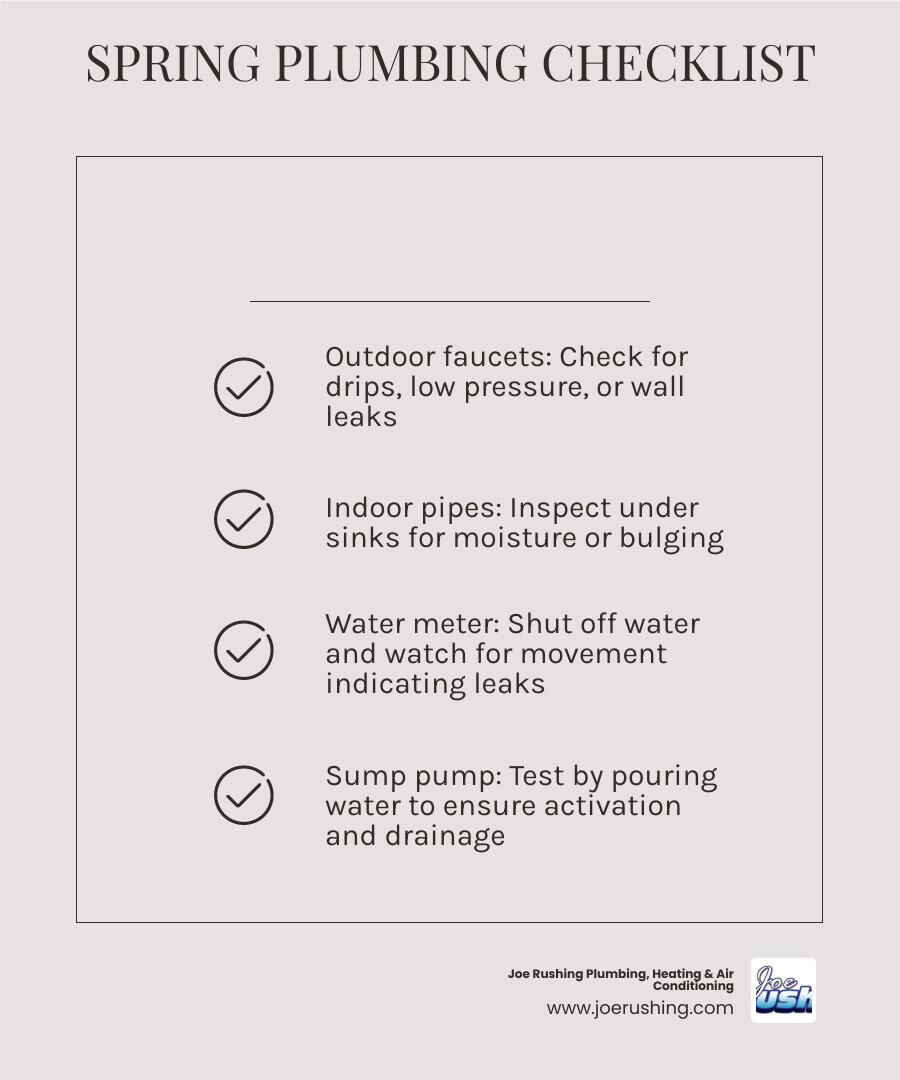
A spring plumbing check after winter cold snaps is one of the most important things you can do to protect your home from hidden water damage. Here is what to inspect right away:
- Outdoor faucets and hose bibs - Look for drips, low pressure, or leaks inside the wall
- Indoor pipes - Check under sinks and in unheated spaces for moisture, corrosion, or bulging
- Water meter - Shut off all water and watch the meter; movement means a hidden leak
- Sump pump - Pour water into the pit to confirm it activates and drains properly
- Water heater - Look for rust, unusual sounds, or sediment buildup
- Drains - Watch for slow flow or gurgling, which can signal a deeper blockage
- Toilets - Use the food coloring test to catch silent leaks wasting up to 200 gallons per day
Even in West Texas, a single hard freeze can do serious damage. Water expands by roughly 9% when it freezes, and that pressure does not always break a pipe outright. Instead, it creates hairline cracks and loosened joints that hold just fine in the cold — then start leaking the moment water flows again in spring. By the time you notice a damp ceiling or a spike in your water bill, the damage is already done.
I'm Ronda Rushing Brown, a third-generation family business leader with Joe Rushing Plumbing, Heating & Air Conditioning, and I've seen how a simple spring plumbing check after winter cold snaps can stop a small crack from turning into a flooded room. In the sections ahead, I'll walk you through exactly what to look for and when to call in a pro.
Why Winter Cold Snaps Cause Hidden Plumbing Damage

It is now April 2026, and as the West Texas sun begins to warm up Lubbock and Levelland, many homeowners assume their plumbing survived the winter unscathed. However, the physics of freezing water is relentless. When water turns to ice, it undergoes molecular expansion, growing by approximately 9 percent. In the confined space of a copper, PVC, or galvanized steel pipe, this expansion creates immense internal pressure.
This pressure doesn't always result in a dramatic "gusher" of a burst pipe. Often, it causes hairline fractures—tiny cracks that are nearly invisible to the naked eye. Furthermore, the freeze-thaw cycles we experience in Texas cause pipes to expand and shrink repeatedly. This movement can loosen joints and fittings, creating "ghost leaks" that only begin to drip once the ice thaws and water pressure returns to normal.
Another factor many homeowners overlook is soil shifting. As the ground freezes and thaws, the earth around your main water and sewer lines moves. This can stress underground connections, leading to cracks that allow tree roots to enter or water to seep out. Understanding these risks is the first step to Prevent Plumbing Emergencies During Texas Winter and the subsequent spring thaw.
Your 60-Minute Spring Plumbing Check After Winter Cold Snaps
You don't need to be a master plumber to perform a basic inspection. In about an hour, you can clear your home of the most common post-winter threats. The most effective way to start is with a "water meter test."
First, ensure every faucet, shower, and appliance in your home is turned off. Locate your water meter and note the reading. Wait about 30 to 60 minutes without using any water, then check the meter again. If the dial or digital reading has moved, you have a "ghost leak" hidden somewhere in your system. If you suspect a leak but can't find it, professional Leak Detection Lubbock TX is the safest next step to prevent structural damage. Early Leak Repairs Lubbock TX Guide strategies can save you thousands in restoration costs later.
Inspecting Indoor Pipes and Fixtures
Start your indoor tour by opening the cabinets under every sink in your kitchen, bathrooms, and laundry room. We are looking for moisture, dampness on the cabinet floor, or a musty odor. Check the supply lines leading to your faucets; if they feel wet or show signs of green corrosion (on copper) or rust, they may have been stressed by the cold.
Next, perform the "dye test" on your toilets. Drop a few drops of food coloring into the tank and wait 15 minutes without flushing. If the color seeps into the bowl, your flapper valve is leaking. A silent toilet leak can waste up to 200 gallons of water every single day! These simple checks are part of maintaining General Plumbing Lubbock TX health throughout the year.
Testing Outdoor Faucets and Irrigation Systems During Your Spring Plumbing Check After Winter Cold Snaps
Outdoor fixtures are the most frequent victims of West Texas cold snaps. Even if you used a foam cover, the pipe behind the wall could be damaged.
Perform the "Thumb Test":
- Turn on the outdoor faucet (hose bib).
- Place your thumb firmly over the opening to stop the flow.
- If the water pressure is so weak that you can easily hold it back with your thumb, there is likely a leak in the pipe inside your wall or crawlspace.
Check your vacuum breakers and sprinkler heads for cracks. Irrigation lines are often buried shallowly and are highly susceptible to freeze-thaw soil shifts. If you notice marshy spots in your yard when the sprinklers are off, you likely need the Pipe Repairs Lubbock TX Guide to address a cracked underground line.
Essential Maintenance for Sump Pumps and Water Heaters
Spring rains in West Texas can be sudden and heavy. Your sump pump is your last line of defense against a flooded basement or crawlspace. To test it, use the 5-gallon bucket test: slowly pour water into the sump pit until the float switch rises. The pump should kick on immediately, move the water out quietly, and shut off once the pit is empty. Check the discharge line outside to ensure water is being directed at least 6 feet away from your foundation.
Your water heater also works overtime during the winter. Cold intake water means the unit has to run longer, which accelerates sediment buildup. This sediment acts as an insulator, making the heater less efficient and potentially causing the tank to overheat and fail. We recommend flushing the sediment at least once a year. While you're there, check the anode rod—the "sacrificial" rod that prevents the tank from rusting. Also, ensure your temperature is set to 120 degrees Fahrenheit; this is the "sweet spot" for safety and efficiency, often discussed during a Spring HVAC Tune-Up Lubbock as part of a total home comfort check.
When to Call a Professional for a Spring Plumbing Check After Winter Cold Snaps
Sometimes, a DIY check reveals problems that require specialized tools. If you notice persistent clogs in multiple fixtures, hear gurgling sounds from your drains, or smell sewage odors near floor drains, you may have a main line issue.
At Joe Rushing, we utilize unique underground camera inspections to see exactly what is happening inside your pipes without digging up your yard. If we find a break, we can often use Perma-Liner no-dig drain repair to fix the pipe from the inside out. For more information on keeping your lines clear, see The Ultimate Guide to Professional Drain Cleaning in Lubbock TX or schedule a standard Drain Cleaning Lubbock TX service.
Signs of Hidden Leaks and Sewer Line Stress During a Spring Plumbing Check After Winter Cold Snaps
Low water pressure is a major red flag. While it could be a simple clogged aerator, it often signals a leak or a damaged pressure regulator. Ideally, your home's water pressure should be between 45 and 60 PSI. If it's over 80 PSI, your pipes are at a significantly higher risk of bursting.
Keep an eye out for wall discoloration, bubbling paint, or musty smells that don't go away. These are classic signs of a leak behind the drywall. If you spot these, don't wait. Our Leak Detection & Repair Lubbock TX team can pinpoint the source quickly. For immediate issues, refer to our Emergency Plumbing Repairs Lubbock TX Guide.
Frequently Asked Questions about Post-Winter Plumbing
Why is my water pressure low after the first spring thaw?
Low pressure in the spring is usually caused by one of three things: sediment buildup in your faucet aerators (carried through the pipes by increased winter flow), a damaged pressure regulator that struggled during the cold, or a hidden leak that is siphoning off pressure before it reaches your faucet.
Can a pipe be damaged if it froze but didn't actually burst?
Absolutely. Freezing creates "stress fractures." Think of it like a rubber band that has been stretched too far; it might not snap today, but the material is weakened. These hairline cracks can fail months later during a period of high water usage in the summer.
How often should I test my sump pump during the spring?
We recommend a monthly check during the rainy season. Most sump pumps have a lifespan of about 7 to 10 years. If yours is approaching that age, consider a proactive replacement or at least installing a battery backup system to ensure it works even if a spring storm knocks out the power.
Conclusion
Performing a spring plumbing check after winter cold snaps is the best way to ensure your home remains a sanctuary rather than a construction zone. From the "Thumb Test" on your outdoor spigots to checking your water meter for "ghost leaks," these small steps prevent massive headaches.
At Joe Rushing Plumbing, Heating & Air Conditioning, we’ve been serving the Lubbock and Levelland communities since 1977. Whether you need an underground camera inspection to find a hidden crack or our specialized Perma-Liner no-dig repair to save your landscaping, we are here to help. Don't let a winter cold snap have the final say in your home’s health. Schedule your professional spring plumbing services today and breathe easy knowing your pipes are ready for the season ahead.
Need HVAC Help?
Our certified technicians are ready to help with all your heating and cooling needs.
Get Free EstimateMore Articles
View All PostsRelated Articles
Ready to Get Started?
Whether you need a repair, maintenance, or a new system installation, our expert team is here to help.