Learn what to do if you smell gas in your house with these immediate safety steps to protect your home and family.
What to Do If You Smell Gas in Your Home
A Gas Smell at Home Is an Emergency — Here's What to Do Right Now
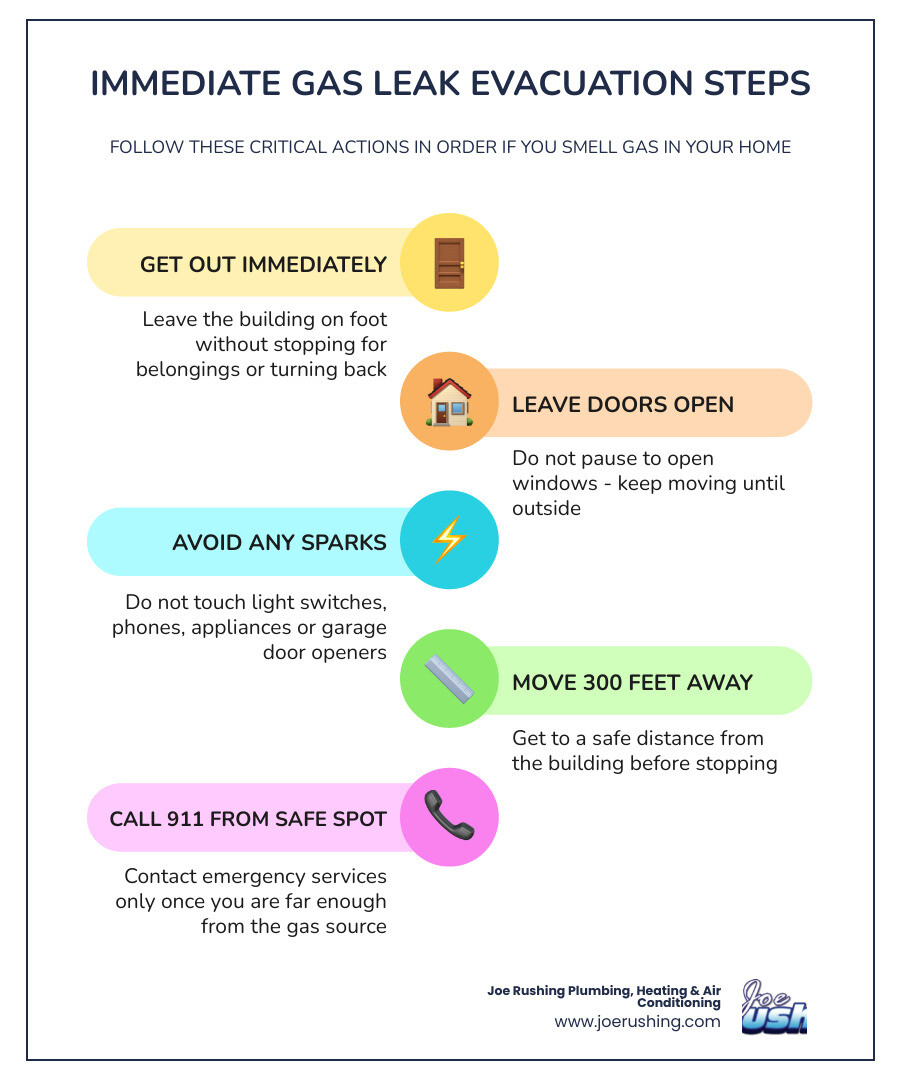
Knowing what to do if you smell gas in your house could save your life. If you're here because you smell gas right now, follow these steps immediately:
- Get out — Leave on foot right away. Do not stop to grab belongings.
- Leave doors open as you exit, but do not stop to open windows.
- Do not touch anything — No light switches, phones, appliances, or garage door openers.
- Move at least 300 feet away from the building.
- Call 911 from a safe distance — not from inside the home.
Once you are safe, do not return inside until emergency personnel give you the all-clear.
Natural gas serves over 189 million American homes — and it is one of the most useful energy sources available. But a leak can turn dangerous in minutes. Natural gas is odorless on its own, so utility companies add a chemical odorant that smells like rotten eggs or sulfur. That smell is your warning signal, and it demands immediate action.
This guide walks you through every step, from the first moment you notice that odor to what happens after the emergency crew arrives.
I'm Ronda Rushing Brown — a Registered Nurse, third-generation leader of Joe Rushing Plumbing, Heating & Air Conditioning, and someone who has helped Lubbock families navigate exactly these kinds of emergencies for decades. My hands-on experience in both healthcare and the trades gives me a clear-eyed view of what to do if you smell gas in your house and why every second counts. Keep reading for the full breakdown so your household is prepared before an emergency ever strikes.
Immediate Safety Steps: What to Do If You Smell Gas in Your House

If you smell rotten eggs, sulfur, or a strong unusual gas odor inside your house, treat it as an emergency every time. Gas leaks can lead to fire, explosion, or oxygen displacement, and none of those are situations where we want to "wait and see."
For homeowners in West Texas, the safest approach is simple: leave first, call second.
If you need professional help after the area is secured, our team provides Gas Line Services in Lubbock, TX and Gas Line Services in Levelland, TX.
Understanding what to do if you smell gas in your house immediately
Here is the safest step-by-step response:
- Leave the home immediately on foot.
- Tell everyone else in the house to get out.
- Leave doors open as you exit if you can do so without delay.
- Do not use light switches, plugs, thermostats, appliances, elevators, flashlights, or garage door openers.
- Do not use a landline or cell phone while still inside or near the house.
- Move at least 300 feet away, or farther if the odor is strong.
- Once you are at a safe distance, call 911 and your gas utility.
- Warn nearby neighbors if the leak could affect them.
- Wait for emergency responders and follow their instructions.
That "no electronics" rule can feel inconvenient, but this is not the time to test your luck. Even a small spark can ignite accumulated gas. It is one of those rare moments in life when doing less is actually doing more.
If you live near Lubbock and surrounding communities, we also serve nearby homeowners with Gas Line Services in Shallowater, TX.
Summary of what to do if you smell gas in your house or building
When in doubt, remember this short version:
- Get out fast
- Leave the building on foot
- Leave doors open while exiting if possible
- Do not search for the source
- Do not try to shut off the meter yourself unless you have been specifically trained and it is clearly safe
- Do not create a spark
- Move upwind if the leak is outdoors and you can tell which way the wind is blowing
- Warn others to stay away
- Call 911 and your gas utility from a safe place
- Do not go back inside until professionals say it is safe
If you smell gas outside your home or apartment building, the response changes slightly. Move away from the area, stay clear, keep others back, and call 911 from a safe distance. Try to note the exact location of the odor if you can do that safely.
For homeowners around the Lubbock area, we also provide Gas Line Services in Wolfforth, TX.
Recognizing the Signs of a Natural Gas Leak
Most people know the classic rotten egg smell, but that is not the only clue. In fact, relying on smell alone is risky.
Natural gas is naturally colorless and odorless. Utilities add an odorant, often associated with rotten eggs or sulfur, so people can detect leaks quickly. Recognizing that odor matters because the sooner you react, the lower the chance of fire, explosion, or serious exposure.
Other signs of a gas leak can include:
- A hissing or whistling sound near a gas appliance, pipe, or meter
- Dirt or dust blowing upward from the ground
- Dead or dying grass, plants, or shrubs near a buried gas line
- Bubbles in standing water
- A white cloud or mist near a line
- Unusually high gas usage without a clear reason
- Burner flames that suddenly look yellow, orange, or red instead of steady blue
If you spot any of these signs, act the same way you would if you smelled gas: get away and call for help.
For local support after emergency crews have made the area safe, we offer Gas Line Services in Brownfield, TX.
Physical symptoms of a gas leak in your house
A gas leak may also show up as physical symptoms, especially in an enclosed space. Natural gas itself is not poisonous in the same way carbon monoxide is, but it can displace oxygen. That means the body may start reacting to lack of breathable air.
Possible symptoms include:
- Headache
- Dizziness
- Nausea
- Fatigue
- Breathing changes or shortness of breath
- Chest discomfort
- Blurred vision
- Confusion
- Trouble concentrating
- Loss of consciousness in severe cases
If anyone in the home is experiencing symptoms and you suspect a gas leak, evacuate immediately and call 911. If someone has collapsed or is in distress, tell the dispatcher that gas exposure may be involved.
We also help homeowners in nearby communities with Gas Line Services in Littlefield, TX.
Why you might not smell a gas leak
Here is a detail many homeowners do not realize: not everyone can smell a leak, even when gas is present.
Reasons this can happen include:
- Diminished sense of smell due to age or health conditions
- Nasal fatigue or olfactory fatigue, where continued exposure makes the odor less noticeable
- Strong cooking, cleaning, or pet odors masking the warning smell
- Illnesses that affect smell, including viral illnesses
- Tobacco, alcohol, or certain medications affecting scent detection
- Rare cases of odor fade, where the odorant becomes less noticeable due to physical or chemical conditions in piping or soil
That is why we never recommend trusting your nose alone. Use all your senses, and add backup protection with detectors.
For homeowners in surrounding West Texas communities, we also provide Gas Line Services in Plainview, TX.
Critical Mistakes to Avoid During a Suspected Leak
Knowing what not to do is just as important as knowing what to do.
During a suspected leak, avoid these common mistakes:
- Do not flip light switches on or off
- Do not unplug chargers or appliances
- Do not use a cell phone inside the home
- Do not use flashlights if they require switching on while inside the area
- Do not light candles, matches, or lighters
- Do not smoke
- Do not start your car in an attached garage or near the leak
- Do not use the garage door opener
- Do not operate thermostats or smart home devices
- Do not search for the exact leak source
- Do not try a DIY repair
- Do not turn the gas meter on or off unless emergency personnel instruct you and you are trained to do so
- Do not stay inside to "air the place out"
That last one surprises people. We understand the instinct to open a few windows and fix it yourself. But this is not like burning toast. If gas is building up, every second inside adds risk.
What about soapy water tests? They can be useful for routine troubleshooting on known, accessible fittings in controlled conditions, but they are not appropriate when you already smell gas strongly in the home. At that point, your job is evacuation, not detective work.
If you need gas line repairs after the emergency is contained, we offer Gas Line Services in Slaton, TX.
Reporting the Emergency and Returning Home Safely
Once you are a safe distance away, report the leak right away.
Your call list should be:
- 911
- Your natural gas utility or propane supplier, depending on the fuel source
Be prepared to share:
- Your address
- Where you noticed the smell
- Whether the odor is inside, outside, or both
- Any sounds like hissing
- Whether anyone is feeling sick
- Whether nearby homes may also be affected
After the report is made, emergency responders and utility personnel may:
- Secure the area
- Shut off the gas supply
- Check for active gas levels
- Inspect appliances, piping, regulators, or meters
- Tag unsafe equipment or lines
- Tell you whether you must stay out of the home
Sometimes you may see safety tags placed on equipment or valves. In general, these tags indicate a safety issue and that only qualified professionals should perform repairs or restore service.
When is it safe to return home?
Only when emergency responders or the utility gives the all-clear. Not when the smell "seems better." Not when a neighbor says it is probably fine. And definitely not when you remember you left your phone charger inside.
If the gas has been shut off, do not try to restore service yourself. A qualified professional should inspect the system, confirm it is leak-free, and restart equipment properly.
If you need post-emergency repair or inspection, our team can help with Gas Line Services in Lubbock, TX.
Natural Gas vs. Propane: Understanding the Differences
Natural gas and propane are both fuel gases, but they do not behave exactly the same way in a leak.
| Feature | Natural Gas | Propane |
|---|---|---|
| Main component | Mostly methane | Propane |
| Natural odor | None | None |
| Added warning smell | Rotten egg or sulfur-like odorant | Rotten egg or sulfur-like odorant |
| Weight in air | Lighter than air | Heavier than air |
| Leak behavior | Tends to rise and disperse upward | Tends to sink and collect in low areas |
| Common home source | Utility gas lines | Tanks or cylinders |
| Emergency contact | Gas utility and 911 | Propane supplier and 911 |
Here is what that means in real life:
- Natural gas often rises, but it can still collect indoors and become dangerous.
- Propane is heavier than air, so it can pool in basements, crawl spaces, and low spots.
- Propane systems may have a tank shutoff valve. If, and only if, it is clearly safe and you know what you are doing, the main propane valve is generally closed by turning it clockwise.
- After a propane leak, the entire system should be inspected by a qualified technician before any appliance is used again.
For either fuel type, the big-picture rule is the same: evacuate first, call from a safe distance, and let trained professionals handle the leak.
Extra protection is smart, too. We recommend:
- UL-listed methane or gas detectors installed according to manufacturer instructions
- Carbon monoxide detectors on every level of the home and near sleeping areas
- Regular inspection of gas appliances, connectors, and vents
- Knowing where your gas shutoff points are before an emergency happens
If you need help with gas piping or safety concerns in West Texas, see our Gas Line Services in Levelland, TX.
Frequently Asked Questions about Gas Leaks
Can I use my cell phone if I smell gas?
No. Do not use your cell phone while inside the home or standing near the leak area. Leave first, move at least 300 feet away, and then call 911. The safest habit is simple: feet first, phone second.
Should I open the windows to ventilate the house?
Only as you are already leaving, and only if doing so does not slow you down or require you to move deeper into the home. Do not stay inside trying to ventilate the house. Getting out is the priority.
Is natural gas toxic to breathe?
Natural gas is considered an asphyxiant. In simple terms, it can push oxygen out of the air in an enclosed space. That can lead to headaches, dizziness, nausea, confusion, breathing problems, and in severe cases, unconsciousness. If symptoms are present, get everyone out and call 911.
Conclusion
A suspected gas leak is never a wait-until-morning problem. If you smell gas in your home, leave immediately, move a safe distance away, and call 911. Do not use switches, phones, appliances, or anything else that could create a spark while you are still inside.
At Joe Rushing Plumbing, Heating & Air Conditioning, we have served Lubbock families since 1948. With 77 years of experience, 24/7 emergency service, licensed and insured technicians, and deep roots as Lubbock's 2nd oldest plumbing company, we understand how important safe, dependable gas line service is for West Texas homeowners.
If you need trusted help after the emergency is under control, visit our Gas Line Services in Lubbock, TX page to learn more.
Need HVAC Help?
Our certified technicians are ready to help with all your heating and cooling needs.
Get Free EstimateMore Articles
View All PostsRelated Articles
Ready to Get Started?
Whether you need a repair, maintenance, or a new system installation, our expert team is here to help.