Compare mini split vs central ac cost comparison: upfront, energy savings, long-term value for Texas summers. Discover efficiency wins now!
Upfront Factors in a mini split vs central ac cost comparison
: What Lubbock Homeowners Need to Know
The mini split vs central ac cost comparison comes down to one key factor: whether your home already has ductwork in good condition. Here's a quick breakdown:
| Factor | Mini Split | Central AC |
|---|---|---|
| Best for homes without ducts | Yes | No (adds significant cost) |
| Best for homes with good ducts | Possible | Yes |
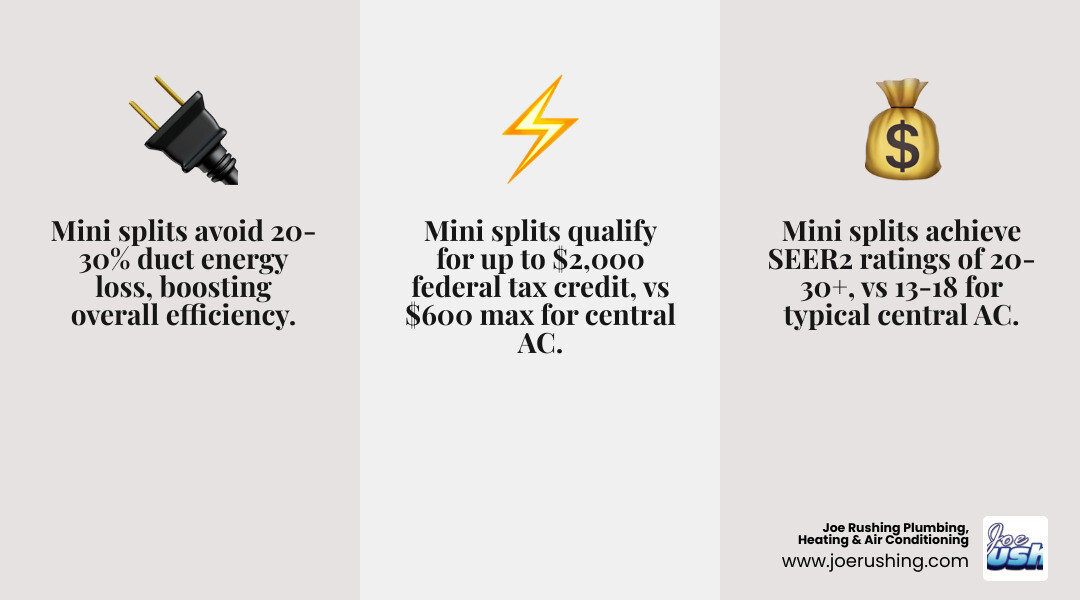
| Energy efficiency (SEER2) | 20-30+ | 13-18 typical |
| Duct energy loss | None | 20-30% |
| Heating capability | Yes (heat pump) | No (cooling only) |
| Federal tax credit | Up to $2,000 | Up to $600 |
| System lifespan | 15-20+ years | 12-15 years |
| Zoned temperature control | Yes | Limited |
With West Texas summers pushing your cooling system to its limits, the system you choose can mean the difference between manageable energy bills and sky-high monthly costs. Most homeowners focus only on the sticker price — but the real cost picture includes installation complexity, energy efficiency, long-term operating costs, and available incentives. Getting that full picture is exactly what this guide is for.
I'm Ronda Rushing Brown, a third-generation businesswoman leading one of the region's longest-running HVAC and plumbing companies, and I've helped countless Lubbock and Levelland homeowners navigate the mini split vs central ac cost comparison firsthand. Let's walk through everything you need to make the right call for your home and your budget.

When we sit down with families in West Texas to discuss a new cooling system, the first thing we look at isn't the unit itself—it's the bones of the house. The upfront investment for these two systems is heavily influenced by what is already hiding behind your walls.
For a central air conditioning system, the equipment is only half the story. If you are starting from scratch or your existing ducts are falling apart, the labor and material involved in AC Installation Replacement Lubbock TX can climb quickly. Central systems require a massive network of metal or flexible tubing to move air. If those don't exist, we have to cut into ceilings, drop soffits, and navigate the structural layout of your home, which adds significant time and labor.
Mini splits, on the other hand, are the champions of simplicity when it comes to structural impact. A Ductless Mini Split Installation & Replacement Lubbock TX usually only requires a small three-inch hole in the exterior wall to connect the indoor air handler to the outdoor compressor. This "non-invasive" approach is very similar to how we handle our unique underground camera inspections—we prefer to see what's happening and fix it without tearing your whole house apart.
How Existing Ductwork Impacts a mini split vs central ac cost comparison
The condition of your ducts is often the "hidden monster" in your HVAC budget. Did you know that the Department of Energy estimates the average ducted system loses 20% to 30% of its conditioned air through leaks and poor insulation? In the scorching heat of a Texas July, that is like paying for a gallon of milk and pouring a quart of it down the drain before you even get home.
If your home has aging ductwork in Wolfforth TX, you have to decide if it's worth repairing or if you're better off bypassing it entirely. Thermal loss in uninsulated ducts running through a 140-degree attic can kill your efficiency before the air even reaches your living room. When we perform an AC Installation Replacement Wolfforth TX, we carefully evaluate if duct sealing or a total ductless transition offers the best value. If your ducts are in great shape, central AC is often the most straightforward upfront choice. If they are leaky, undersized, or non-existent, the mini split often wins on value because it delivers 100% of the cold air exactly where you need it.
Energy Efficiency and Operating Performance
In April 2026, efficiency isn't just a buzzword; it's the law. The industry has fully transitioned to SEER2 (Seasonal Energy Efficiency Ratio 2) ratings, which provide a more accurate look at how systems perform under real-world pressure. When you look at a mini split vs central ac cost comparison, the efficiency gap is staggering.
Central AC units typically range from 13 to 18 SEER2. While that’s a huge step up from units built twenty years ago, it pales in comparison to mini splits, which frequently achieve ratings between 20 and 30+ SEER2. The secret sauce is inverter technology. Traditional central AC units often act like a light switch—they are either 100% on or 100% off. This constant cycling on and off is hard on the equipment and uses a ton of electricity.
Mini splits use variable-speed compressors that "sip" energy. They ramp up to reach the desired temperature and then drop down to a low-energy hum to maintain it. This technology is a big part of why Ductless AC Replacement in Lubbock Made Simple has become such a popular topic. Not only do they use less power, but they are also masters of dehumidification. Because they run in longer, lower-intensity cycles, they are much better at pulling moisture out of the air—a blessing during those humid West Texas stretches.
Monthly Savings with a mini split vs central ac cost comparison
The most immediate impact you’ll feel is on your monthly electric bill. Because mini splits allow for "zoning," you stop wasting money cooling rooms you aren't using. If you spend your day in a home office and your evenings in the living room, why cool the guest bedrooms and the formal dining room all day long?
This room-by-room control is a primary reason Why Lubbock Homeowners Are Splitting Up with Traditional AC. By allowing the rest of the house to drift to a slightly higher, more economical temperature while keeping your immediate space perfectly chilled, you can reduce your monthly cooling costs by 20% to 40%. Central AC, even with smart thermostats, usually struggles to provide this level of targeted comfort without expensive motorized dampers and complex bypass ductwork.
Long-Term Total Cost of Ownership and Maintenance
When you look at the total cost of ownership over 10 to 15 years, the numbers start to even out, but the "experience" of owning each system differs.
| Feature | Central AC | Mini Split |
|---|---|---|
| Lifespan | 12-15 years | 15-20+ years |
| Maintenance | Annual tune-up + Duct cleaning | Annual tune-up + Monthly filter rinse |
| Common Repairs | Fan motors, duct leaks, capacitors | Blower wheel cleaning, sensors |
| Energy Waste | 20-30% (duct leaks) | Near 0% |
Central systems are robust, but they have a shorter average lifespan than modern mini splits. The lack of "cycling" stress on a mini split’s inverter compressor helps it last longer—often 20 years or more with proper care. However, mini splits do require a bit more "hands-on" attention from the homeowner. You’ll need to pop open the indoor units and rinse the small plastic filters every few weeks to keep the airflow clear.
For our neighbors in Levelland TX, we always emphasize that professional maintenance is non-negotiable for both. A Ductless Mini Split Installation Replacement Levelland TX is a precision piece of machinery. While central AC needs its ducts cleaned every few years, mini splits need their indoor blower wheels deep-cleaned to prevent dust buildup.
Long-Term Value in a mini split vs central ac cost comparison
The financial landscape in 2026 has shifted heavily in favor of high-efficiency heat pumps. Under the Inflation Reduction Act, homeowners can claim a federal tax credit of 30% of the project cost, capped at $2,000 per year, for qualifying mini split heat pumps. Compare that to a cooling-only central AC, which usually only qualifies for a $600 credit.
That $1,400 difference in tax savings can go a long way in bridging the gap in upfront equipment costs. When you add in local utility rebates available for Plainview TX residents, the AC Installation Replacement Plainview TX choice becomes as much a financial strategy as a comfort one. Plus, in today's market, energy-conscious buyers view a high-efficiency multi-zone system as a "green" feature, which can significantly boost your home’s resale value and appraisal.
Frequently Asked Questions about Cooling Costs
Do mini splits qualify for better tax credits than central AC?
Yes, significantly. Because most mini splits are technically "heat pumps" (meaning they can both heat and cool), they fall under a higher tier of federal incentives. While a standard central AC might get you a $600 credit, an ENERGY STAR-certified mini split can qualify for up to $2,000. This is part of the government's push to move homes toward more efficient, all-electric heating and cooling solutions.
Can a mini split provide both heating and cooling for year-round value?
Absolutely. This is the "two-for-one" math that many homeowners overlook. A mini split isn't just an air conditioner; it’s a heat pump. It can reverse the cooling process to pull heat from the outside air and move it indoors. Modern "cold-climate" models can keep your home toasty even when West Texas temperatures drop well below freezing. This allows you to potentially replace both an aging AC unit and a separate gas furnace with one sleek system.
Which system is better for home additions or older houses?
Mini splits are almost always the better choice for additions, finished basements, or historic homes. Extending ductwork into a new sunroom or a converted garage can overload your existing central system, leading to poor performance across the whole house. A single-zone mini split handles the new space independently without the need for invasive renovations or bulky ductwork that ruins the aesthetic of a historic home.
Conclusion
Choosing between these two systems isn't about finding the "cheapest" option—it's about finding the one that fits your home's unique footprint and your family's comfort needs. Whether you are leaning toward the whole-home invisibility of central air or the high-efficiency, zoned precision of a mini split, the team at Joe Rushing Plumbing, Heating & Air Conditioning is here to help.
We've been the trusted Lubbock HVAC experts for decades, and we pride ourselves on providing the same precision in our cooling assessments that we do with our Perma-Liner no-dig drain repairs. Don't guess when it comes to your comfort. Contact us today for a professional assessment and let us help you win the battle against the Texas heat with a Ductless Mini Split Installation & Replacement Lubbock TX or a high-efficiency central system tailored just for you.
Need HVAC Help?
Our certified technicians are ready to help with all your heating and cooling needs.
Get Free EstimateMore Articles
View All PostsRelated Articles
Ready to Get Started?
Whether you need a repair, maintenance, or a new system installation, our expert team is here to help.