Stop Hard Water from Killing Your Water Heater Early
Joe Rushing
Discover how hard water shortens water heater lifespan. Learn signs, maintenance & fixes for Lubbock homes. Extend life now!
Stop Hard Water from Killing Your Water Heater Early
How Hard Water Shortens Water Heater Lifespan — And What Lubbock Homeowners Can Do About It
How hard water shortens water heater lifespan is simpler to understand than most people think — and the damage is already happening right now in millions of homes across West Texas:
- Mineral buildup forms scale on heating elements and tank walls, acting like an insulating blanket that blocks heat transfer
- Your heater works harder and longer to reach the same temperature, burning more energy with every cycle
- Components wear out faster — heating elements burn out, anode rods deplete early, and glass linings crack under heat stress
- Lifespan drops dramatically — electric water heaters that should last 13 years may fail in as little as 6.5 years; gas units can drop from 11 years down to 5.5 years
- Energy costs climb steadily — just 1/8 inch of scale can increase water heating costs by 25%, and 1/2 inch can double your energy consumption
If you live in Lubbock or Levelland, this isn't a hypothetical problem. West Texas water is notoriously hard, loaded with calcium and magnesium picked up from the region's limestone-rich geology. That means your water heater is fighting a losing battle every single day — unless you know what to look for and what to do about it.
I'm Ronda Rushing Brown, a third-generation leader of one of the region's longest-running plumbing and HVAC companies, and I've seen how how hard water shortens water heater lifespan for homeowners across our area — often cutting years off an appliance they thought was just "getting old." In the sections below, I'll walk you through exactly what's happening inside your tank, how to spot the warning signs early, and what steps actually make a difference.
Understanding the Science: How Hard Water Shortens Water Heater Lifespan
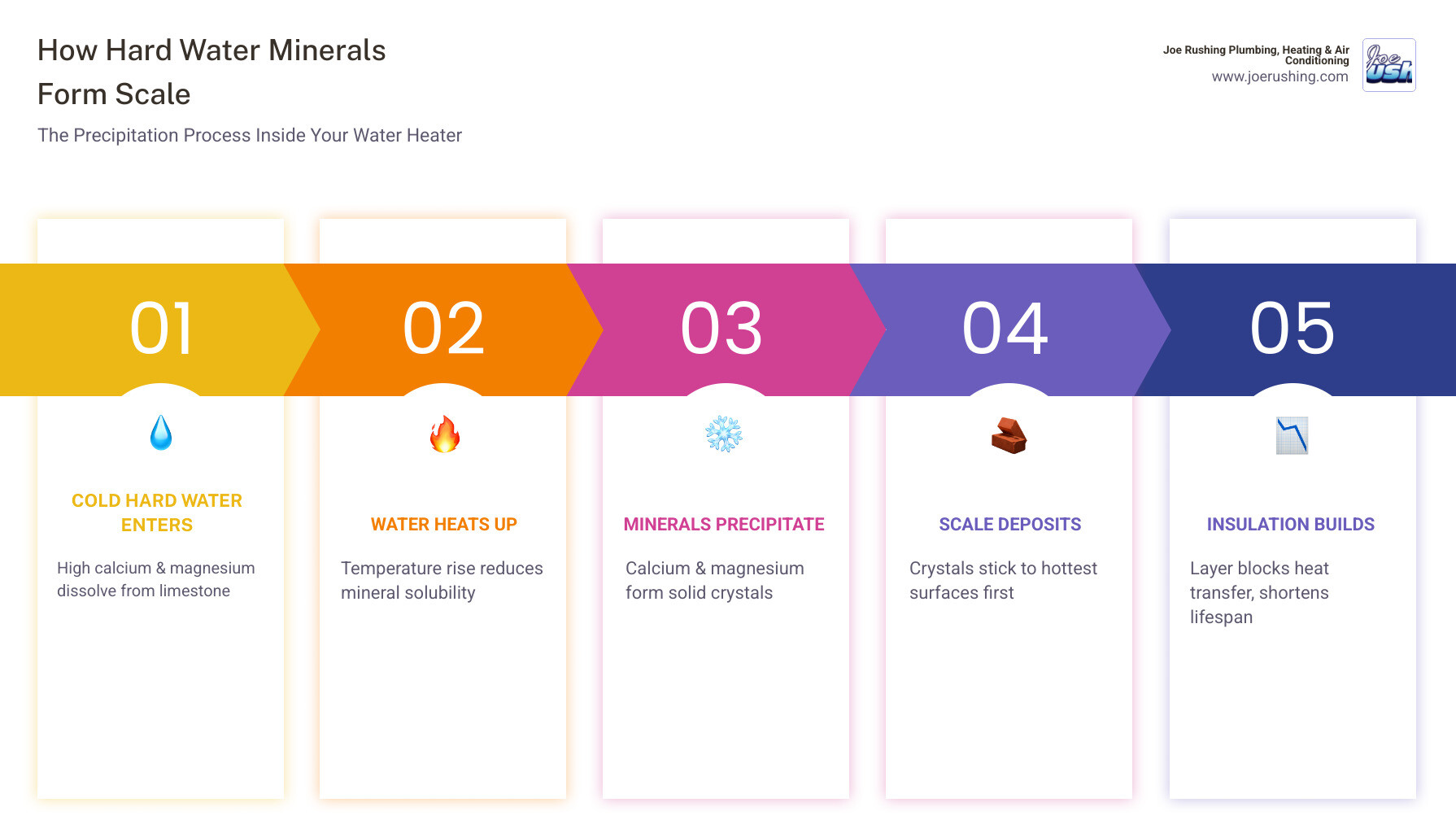
To understand why your water heater is struggling, we have to look at the chemistry of West Texas water. Hard water is defined by its high concentration of dissolved minerals, specifically calcium and magnesium. These minerals enter our water supply as it travels through underground limestone and gypsum deposits common in the Texas Panhandle and South Plains.
When this water enters your Water Heaters, a process called mineral precipitation occurs. As the water temperature rises, the calcium and magnesium lose their solubility. They transform into solid crystals, commonly known as calcium carbonate or limescale. These crystals don't just float around; they seek out the hottest surfaces in the tank—the heating elements in electric models or the bottom of the tank above the burner in gas models.
This scale forms a rock-hard layer of thermal insulation. In a healthy system, heat should transfer directly from the element to the water. With scale in the way, that heat is trapped. This heat transfer interference forces the metal components to reach much higher temperatures than they were designed for, leading to metal fatigue. Eventually, the tank overheats, causing the protective glass lining to become brittle and crack, which is the beginning of the end for your unit.
How hard water shortens water heater lifespan through sediment noise
If you have ever heard your water heater making strange sounds, you aren't imagining things. This phenomenon is often called "kettling." As a thick layer of sediment and scale builds up at the bottom of the tank, water gets trapped underneath it.
When the burner kicks on, that trapped water quickly turns into steam. The popping or rumbling sounds you hear are actually steam bubbles bursting as they fight their way through the heavy sediment layer to reach the rest of the water. If you hear these noises, it is a clear sign that you need Water Heater Repair Installation Lubbock TX before the pressure and heat stress cause a permanent tank failure.
How hard water shortens water heater lifespan by reducing efficiency
Efficiency isn't just a buzzword; it's the difference between a reasonable utility bill and a monthly shock. As we move through April 2026, efficiency standards for appliances are stricter than ever, yet hard water can make even a brand-new, high-efficiency unit perform like a relic from the 1990s.
The insulation effect of scale is incredibly destructive to your wallet. Because the heat has to penetrate a layer of rock before it reaches the water, the burner or element stays on much longer. This creates massive burner stress and significantly increases recovery time—the time it takes for the tank to get back up to temperature after you take a shower.
Consider these startling efficiency loss statistics based on scale thickness:
- 1/16 inch of scale: 12% efficiency loss and up to 15% increase in energy costs.
- 1/8 inch of scale: 25% efficiency loss and a 30% jump in your bills.
- 1/4 inch of scale: 40% efficiency loss; your heater is now working nearly twice as hard.
- 1/2 inch of scale: Up to 60% efficiency loss, effectively doubling your energy consumption.
Warning Signs Your System is Struggling

You don't need X-ray vision to know if how hard water shortens water heater lifespan is affecting your home. Your plumbing system will usually send out several "distress signals" before it quits entirely.
One of the most obvious signs is visible scale. If you see white, crusty, or chalky buildup on your showerheads and faucets, you can be certain that the same "rock" is forming inside your water heater. Other red flags include:
- Fluctuating Temperatures: You might start your shower with hot water, only for it to turn lukewarm within minutes, or the temperature may swing wildly while the heater struggles to maintain a steady output.
- Rising Utility Bills: If your gas or electric bills are climbing but your usage hasn't changed, a scale-clogged water heater is a prime suspect.
- Visible Sediment: If you notice cloudy tap water or "sand-like" particles in your bathwater, that is likely broken-off pieces of scale.
- Reduced Hot Water Volume: A 40-gallon tank can eventually feel like a 20-gallon tank because the bottom third of the unit is filled with solid mineral sediment rather than water.
If you notice these signs, following a Water Heater Flushing Lubbock TX Guide is a great first step to clearing out the loose debris before it hardens into permanent scale.
The Impact on System Longevity and Component Failure
The most painful part of the hard water problem is the shortened lifespan of the equipment. In areas with soft water, a standard tank might last 12 to 15 years. In the hard water conditions of Lubbock and Levelland, that lifespan is often cut in half.
| Water Heater Type | Soft Water Lifespan | Hard Water Lifespan |
|---|---|---|
| Electric Tank | 13 Years | 6.5 Years |
| Gas Tank | 11 Years | 5.5 Years |
| Tankless Unit | 20 Years | 2-3 Years (if untreated) |
This premature failure happens through a "chain reaction" of component breakdowns. First, the anode rod—a sacrificial rod designed to attract corrosive minerals—depletes much faster than normal. Once the anode rod is gone, the minerals begin attacking the tank itself.
The intense heat required to move energy through scale causes the metal tank to expand and contract unevenly. This creates "hot spots" that lead to microscopic cracks in the glass lining. Once water reaches the steel shell of the tank through those cracks, rust forms. Before long, you’re looking for a Water Heater Install Levelland TX Guide because your tank has sprung a leak that cannot be repaired. In electric units, the scale also causes heating element burnout, as the elements literally cook themselves to death inside their mineral cocoons.
Tank vs. Tankless: Different Risks for Different Systems
When comparing Tank vs Tankless Water Heaters Lubbock, many homeowners assume tankless units are immune to hard water because they don't store water. Unfortunately, the opposite is often true.
Tankless water heaters use sophisticated heat exchangers with very narrow passages. Because these units heat water instantly using high-intensity burners, mineral precipitation happens rapidly. The scale can quickly cause flow restriction, clogging the narrow passages and causing the unit to overheat or shut down.
Without proper treatment, a tankless unit in a hard water area can suffer a total heat exchanger failure in just 2 to 3 years. This is why following a Licensed Tankless Installation Lubbock Guide is critical; professional installers know that these systems require specific pre-filtration or softening to reach their 20-year potential.
Proactive Maintenance to Reverse the Damage
The good news is that you aren't helpless. While you can't change the geology of West Texas, you can change how it affects your home. Proactive maintenance is the key to extending your system's life.
- Annual Maintenance: We recommend a professional flush at least once a year. For homes with extremely hard water, every six months is even better. This removes the loose sediment before it can "bake" onto the bottom of the tank.
- Descaling Solutions: For tankless units, we use specialized descaling solutions to circulate through the heat exchanger, dissolving the mineral buildup and restoring full flow.
- Anode Rod Replacement: Checking your anode rod every 2 years is vital. Replacing a $50 rod can save you from replacing a $1,500 tank.
- Thermostat Calibration: We often find heaters set to 140 degrees or higher. Scaling accelerates at higher temperatures. By setting your thermostat to 120 degrees, you significantly slow down the mineral precipitation process without sacrificing comfort.
If you need immediate help, our team provides 24-Hour Water Heater Flushing in Lubbock TX to get your system back in top shape.
Frequently Asked Questions about Hard Water Damage
How often should I flush my water heater in West Texas?
In Lubbock, our mineral levels are high enough that "standard" advice doesn't always apply. While the manufacturer might say once a year, we often recommend quarterly flushing for households with high water usage. Regular sediment removal is the only way to prevent the "kettling" noises and efficiency drops we discussed earlier. You can find step-by-step instructions in our Water Heater Flushing Lubbock TX Guide.
Can a water softener extend my water heater's life?
Absolutely. A water softener uses ion exchange to remove calcium and magnesium before the water even enters your heater. This virtually eliminates scale formation. However, there is a trade-off: softened water can be slightly more "aggressive" toward your anode rod. If you install a softener, you must be even more diligent about monitoring that rod to ensure your tank remains protected.
When is it time to replace a scale-damaged heater?
If your tank is over 8 to 10 years old and is making loud rumbling noises, or if you've already experienced multiple heating element failures, it might be time to consider a new unit. Once the structural integrity of the tank is compromised by rust or cracks in the lining, a leak is inevitable. If you're unsure, check out our Water Heater Installation Lubbock TX Guide to see what modern, hard-water-resistant options are available.
Conclusion
At Joe Rushing Plumbing, Heating & Air Conditioning, we’ve been the Lubbock plumbing experts for generations. We understand the unique challenges that West Texas water poses to your home's infrastructure. Whether you are in Lubbock or need Levelland service, our team is equipped with the latest technology—including underground camera inspections—to diagnose your plumbing issues without tearing up your home.
Don't let hard water silently kill your water heater and drain your bank account. A professional inspection today can add years to your appliance's life and keep your showers hot for years to come. Contact our expert plumbing team today to schedule your maintenance or to discuss the best water treatment solutions for your West Texas home.
Need HVAC Help?
Our certified technicians are ready to help with all your heating and cooling needs.
Get Free EstimateMore Articles
View All PostsRelated Articles
Ready to Get Started?
Whether you need a repair, maintenance, or a new system installation, our expert team is here to help.