How to Prevent Gas Leaks with Proper Maintenance in 5 Easy Steps
Joe Rushing
Learn how to prevent gas leaks with proper maintenance in 5 easy steps for safer Lubbock homes.
How to Prevent Gas Leaks with Proper Maintenance in 5 Easy Steps
Why Knowing How to Prevent Gas Leaks with Proper Maintenance Could Save Your Family's Life
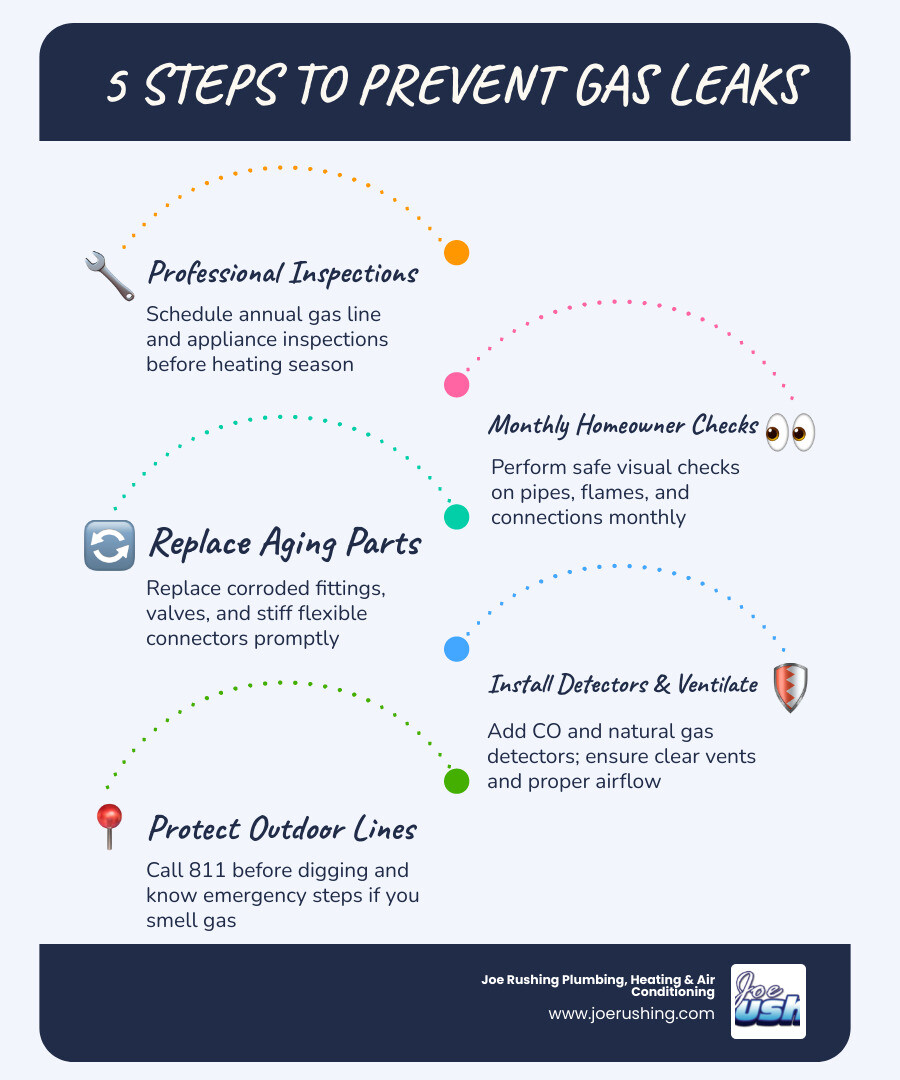
Knowing how to prevent gas leaks with proper maintenance is one of the most important things you can do as a homeowner — and it's simpler than most people think. Here's a quick overview of the five steps:
- Schedule annual professional gas line and appliance inspections
- Perform safe monthly visual checks between service visits
- Replace aging fittings, valves, and flexible connectors before they fail
- Install carbon monoxide and natural gas detectors and ventilate appliances properly
- Protect outdoor lines by calling 811 before digging, and know exactly what to do if you suspect a leak
Natural gas powers millions of American homes reliably every day — but when something goes wrong, the consequences can be serious. U.S. fire departments respond to an average of 125,000 gas leak calls every year, a number that has climbed 25% since 2007. Here in Lubbock, TX, the combination of aging infrastructure, shifting West Texas soil, and high seasonal demand on gas furnaces means local homeowners face real and preventable risks every year.
The good news? Most gas leaks don't happen without warning. Corroded fittings, aging flexible connectors, and neglected appliances are behind the majority of incidents — and routine maintenance catches these problems before they become emergencies.
I'm Ronda Rushing Brown, a Registered Nurse and third-generation leader of Joe Rushing Plumbing, Heating & Air Conditioning, with 77 years of family history serving Lubbock homeowners — and I've seen how learning how to prevent gas leaks with proper maintenance protects families from harm. Let's walk through the five steps that can keep your home and your loved ones safe.
how to prevent gas leaks with proper maintenance: Know the Risks Before the 5 Steps
Before we talk maintenance, it helps to know where gas leaks usually start. Natural gas systems are dependable when installed and maintained correctly, but every joint, valve, connector, appliance, and buried line is a possible weak point over time.
In homes around Lubbock, Levelland, and West Texas, we pay close attention to:
- Aging gas lines
- Loose or worn fittings
- Corroded joints and valves
- Flexible appliance connectors
- Furnace, water heater, range, and fireplace connections
- Improper appliance installation
- Underground line damage from digging
- Soil movement that stresses buried piping
- Renovation damage from screws, nails, or cutting tools
Natural gas itself is odorless, so utility providers add an odorant called mercaptan to give it that familiar rotten egg smell. That odor is helpful, but it is not the only sign to watch for. Small leaks may happen in attics, crawlspaces, exterior lines, or well-ventilated areas where smell is not obvious right away.
Over 1,400 gas leak incidents occur annually in the U.S., often tied to aging or poorly maintained lines. That is why prevention matters. Many gas lines and appliances inside or attached to your home are the homeowner's responsibility, while utility-owned lines are handled separately. If you are unsure where responsibility begins and ends, we can help you understand what parts of your system need professional attention.

Most Common Causes of Residential Natural Gas Leaks
The most common residential natural gas leaks are usually caused by wear, movement, corrosion, or installation problems. In plain English: parts get old, connections loosen, and sometimes work around the home accidentally damages a line.
Common causes include:
Aging pipes Older black iron, galvanized, or other gas piping can develop corrosion, especially at joints, threaded connections, or areas exposed to moisture.
Loose unions and fittings Vibration from appliances, normal expansion and contraction, or poor installation can allow fittings to loosen over time.
Corroded shutoff valves A shutoff valve should turn smoothly by hand. If it is rusted, stiff, leaking, or requires a wrench to operate, it needs professional attention.
Cracked, kinked, or outdated flexible connectors Flexible connectors behind ranges, water heaters, furnaces, dryers, and fireplaces should never be crushed, sharply bent, reused improperly, or left in service after visible damage.
Appliance connection issues Furnaces, water heaters, stoves, dryers, and fireplaces all have gas connections that need proper sealing, support, and testing.
Shifting soil and underground damage West Texas soil movement can stress buried gas lines. Yard work, fence posts, landscaping, patios, and mailbox installations can also nick underground lines.
DIY mistakes or code issues Gas piping is not a "close enough" system. Unapproved materials, wrong fittings, poor pipe sizing, and skipped pressure testing can create dangerous conditions.
Key Warning Signs Homeowners Should Never Ignore
Gas leak warning signs can be obvious or subtle. If you notice any of the following, take it seriously:
- Rotten egg or sulfur smell
- Hissing, whistling, or blowing sounds near a gas line or appliance
- Dead or discolored grass above an underground line
- Bubbling water in wet soil, puddles, or standing water
- Dirt or dust blowing from the ground
- Yellow or orange appliance flames instead of steady blue flames
- Unexplained increase in gas use
- Headaches, dizziness, nausea, fatigue, or flu-like symptoms indoors
- Pets acting unusually agitated, sleepy, or sick
- Visible rust, dents, or damage on gas piping
- Pilot lights that repeatedly go out
One important note: do not rely on smell alone. Odor fatigue can happen when your nose becomes used to an odor, and some people have a reduced sense of smell. That is one reason detectors and professional inspections matter.
If you are trying to understand whether a leak may be present, our guide to leak detection in Lubbock, TX explains how professionals locate hidden leaks safely.
Step 1: Schedule Professional Gas Line and Appliance Inspections
The first and most important step is scheduling professional gas line and appliance inspections. For most homes, once a year is the right baseline. We especially recommend scheduling before heating season, when furnaces and gas heaters begin working harder.
Professional inspections matter because many leak risks are not visible to the untrained eye. A connection may look fine but fail a pressure test. A furnace may run but have venting or combustion concerns. A flexible connector may appear intact from the front while being kinked or corroded behind the appliance.
During a proper gas safety visit, a licensed professional can check gas lines, appliance connections, shutoff valves, venting, burner performance, and carbon monoxide risks. Regular HVAC maintenance and inspections can detect gas leaks early and prevent many incidents that simple upkeep could have avoided.
For more on choosing qualified local help, see our guide to the best leak detection specialists in Lubbock, TX.
how to prevent gas leaks with proper maintenance: Annual Inspection Schedule
A good inspection schedule looks like this:
- Once every year for most homes with gas appliances
- Before winter or heating season for furnaces and heating equipment
- After appliance replacement, such as a new furnace, water heater, dryer, range, or fireplace
- After remodeling work near walls, floors, ceilings, attics, or appliance locations
- After storm damage or suspected soil movement
- After any underground work near gas lines
- Immediately if you notice gas odor, corrosion, hissing, poor flames, or physical symptoms
- More often for older systems, especially if lines or appliances are 15 years old or older
Manufacturer guidance and local code requirements should always be followed. If you are unsure when your system was last inspected, assume it is time. Gas systems are not the place for "we'll get to it eventually" energy.
What a Professional Gas Safety Visit Should Include
A professional gas safety visit should be thorough, documented, and focused on prevention. Depending on your home's system, it may include:
- Visual inspection of accessible gas piping
- Checking appliance connectors and flexible lines
- Inspecting shutoff valves for corrosion or stiffness
- Looking for rust, scaling, dents, or poor support
- Scanning with electronic gas detection equipment
- Pressure testing when appropriate
- Verifying exposed joints with approved leak testing methods
- Reviewing burner flame color and appliance performance
- Checking venting and combustion air
- Looking for carbon monoxide risks
- Reviewing gas load if appliances were added or upgraded
- Documenting concerns and recommended repairs
At Joe Rushing Plumbing, Heating & Air Conditioning, we use our plumbing, heating, and air conditioning experience together because gas safety often touches more than one system. A water heater, furnace, vent, flue, and gas line all need to work together safely.
Step 2: Do Safe Monthly Homeowner Maintenance Between Service Visits
Professional inspections are essential, but homeowners can still do safe, simple monthly checks between service visits. The key word is safe. Look, listen, smell, document, and keep areas clean. Do not disassemble gas lines, move appliances aggressively, tighten fittings, or attempt repairs.
Safe monthly tasks include:
- Look at exposed gas lines for rust, dents, or damage
- Check that shutoff valves are accessible
- Keep storage, boxes, and flammables away from gas appliances
- Change HVAC filters regularly
- Clean around furnaces and water heaters
- Remove lint from dryer traps after each use
- Keep appliance vents clear
- Check that flames are mostly blue on properly operating burners
- Watch for yellow or orange flames
- Note unusual odors, sounds, or pilot light problems
- Keep a simple maintenance calendar
- Make sure children know not to touch gas valves or appliance controls
And, because we are plumbers, we must say it: if your "temporary storage area" around the water heater has become a cardboard box jungle, it is time to clear the safari.
how to prevent gas leaks with proper maintenance: Safe Homeowner Checks
Your monthly homeowner check should take only a few minutes. Walk through the home and look at areas where gas appliances are located:
- Furnace area
- Water heater area
- Kitchen range
- Gas dryer
- Fireplace
- Outdoor meter area
- Exposed garage or attic piping, if safely accessible
Look for:
- Rust spots
- Dents
- Loose-looking connectors
- Kinked flexible lines
- Moisture near pipes
- Soot or discoloration
- Unusual appliance flames
- Blocked ventilation openings
- Items stored too close to equipment
Write down anything unusual. Photos can help you track whether corrosion, discoloration, or damage is getting worse. If anything looks suspicious, call a licensed professional rather than trying to fix it yourself.
How to Safely Test Exposed Connection Points
A soapy water test can help identify leaks at exposed connection points, but it has limits. It is only for accessible joints when there is no active gas odor and no emergency condition.
Here is how to do it safely:
- Turn off the appliance connected to the joint you are checking.
- Make sure there are no open flames, cigarettes, sparks, or hot surfaces nearby.
- Mix water with a small amount of standard dish soap. Do not use ammonia-based cleaners.
- Lightly brush or spray the solution onto the exposed joint or fitting.
- Watch for growing bubbles. Bubbles can indicate escaping gas.
- If bubbles form, stop immediately, leave the area, and call for professional help.
- If you smell gas at any point, stop testing and evacuate.
Never use matches, lighters, candles, or any flame to test for a gas leak. That is not testing; that is auditioning for a disaster movie.
A soap test also does not replace professional leak detection. It may miss small leaks, hidden leaks, underground leaks, or leaks inside appliances. For safe repair guidance, visit our home leak repairs Lubbock, TX tips.
Step 3 and Step 4: Replace Aging Parts and Add Detection, Ventilation, and Placement Safeguards
Steps 3 and 4 work together: replace parts before they fail, and add layers of protection in case something goes wrong.
Old gas fittings, corroded valves, stiff shutoffs, and damaged flexible connectors should be replaced by a licensed professional. At the same time, carbon monoxide detectors, natural gas detectors, proper ventilation, and correct appliance placement help protect your family from hazards that may not be obvious.
| Safety device or safeguard | What it helps detect or prevent | Where it belongs | Maintenance reminder |
|---|---|---|---|
| Carbon monoxide detector | CO from incomplete combustion, blocked vents, cracked heat exchangers, or exhaust problems | On every level and near sleeping areas | Test monthly, replace batteries as needed, follow end-of-life date |
| Natural gas detector | Natural gas accumulation before or during a leak condition | Near gas appliances, following manufacturer placement instructions | Test monthly and replace at end of service life |
| Proper ventilation | Combustion air problems and exhaust buildup | Around furnaces, water heaters, dryers, and gas appliances | Keep vents and intakes clear |
| Correct appliance clearance | Fire hazards and overheating | Around water heaters, furnaces, dryers, and fireplaces | Keep storage and flammables away |
| Professional pressure testing | Confirms repaired or new gas piping holds properly | Gas line system or repaired section | Performed after gas work |
When to Replace Gas Fittings, Valves, and Flexible Connectors
Gas fittings, shutoff valves, and flexible connectors should be replaced when they show signs of wear, damage, or unsafe operation.
Call a professional if you notice:
- Visible corrosion or scaling
- Rust on fittings or valves
- Cracks in a connector
- Kinked or crushed flexible lines
- Loose connector ends
- A shutoff valve that will not turn by hand
- A valve that requires a wrench to move
- Repeated gas odor near an appliance
- Damage after renovation work
- Old connectors during appliance replacement
- A furnace, water heater, or range being upgraded
Replacement is not just "swap the part and hope." After gas work, the system must be properly sealed, tested, and verified. That may include pressure testing, leak detection, and appliance operation checks. For more repair information, see our leak repairs Lubbock, TX guide.
Carbon Monoxide and Natural Gas Detectors: What They Prevent
Carbon monoxide detectors and natural gas detectors are not the same, and both can be useful.
A carbon monoxide detector alerts you to CO, a dangerous gas that can result from incomplete combustion, blocked flues, cracked heat exchangers, or venting problems. CO is odorless and can cause headaches, dizziness, nausea, confusion, and worse.
A natural gas detector alerts you to the presence of natural gas. It provides another layer of warning, especially for people who may not smell mercaptan or for leaks that develop slowly.
Best practices include:
- Install CO detectors on every level of the home
- Place CO detectors near sleeping areas
- Follow manufacturer instructions for natural gas detector placement
- Do not place detectors inside vents or directly in appliance exhaust
- Test detectors monthly
- Replace batteries as recommended
- Replace detectors at the end of their rated service life
- Consider smart alerts for added backup when you are away
Detectors do not prevent every leak, and they do not replace maintenance. Think of them like seat belts: essential protection, but not a reason to drive through the garage door.
Proper Ventilation and Appliance Placement Basics
Gas appliances need air, clearance, and a safe path for exhaust. Poor ventilation can lead to carbon monoxide hazards, poor appliance performance, and unsafe combustion.
Follow these basics:
- Keep furnace and water heater areas clear
- Do not block combustion air openings
- Keep flammable materials away from appliances
- Maintain proper clearance around water heaters and furnaces
- Clean dryer lint traps after each use
- Keep exhaust flues and vent pipes connected and unobstructed
- Check outdoor vent termination points for debris, nests, or blockage
- Do not store paint, solvents, or chemicals near gas appliances
- Use appliances only for their intended purpose
- Never use a gas oven to heat your home
Appliance placement matters too. Gas appliances in garages, closets, and utility rooms must have proper clearance, protection, and ventilation. If an appliance was moved, replaced, or boxed in during a remodel, have it inspected.
Step 5: Prevent Outdoor Line Damage and Act Fast During a Suspected Leak
The final step is protecting outdoor gas lines and knowing what to do if you suspect a leak. Many serious gas emergencies begin with preventable digging damage. Fence posts, landscaping, patios, mailbox posts, tree planting, and even small yard projects can strike buried lines.
Call 811 before digging. It is simple, it helps utility lines get marked, and it can prevent a very bad day.
Why Calling 811 Before Digging Near Gas Lines Matters
Calling 811 before digging allows buried utility lines to be marked before work begins. In Texas, homeowners should contact 811 before excavation projects and allow the required time for markings before digging.
This matters because:
- Gas lines may be shallower than expected
- Soil movement can change line depth over time
- Old records may not reflect every condition on the property
- Contractors and homeowners can accidentally strike lines
- Hand digging may still be needed near marked utilities
- Damage can happen even during small projects
Call 811 before:
- Installing a fence
- Planting trees or large shrubs
- Building or expanding patios
- Installing mailbox posts
- Adding landscape edging
- Digging for drainage work
- Starting any project that breaks ground
If a line is marked, respect the markings and dig carefully. If you expose, scrape, dent, or damage a gas line, stop work and call for help.
Immediate Response if You Suspect a Gas Leak
If you suspect a gas leak, do not investigate like a detective in a mystery novel. Your job is to get out safely.
Take these steps immediately:
- Leave the home or area right away.
- Take children, adults, and pets with you.
- Do not flip light switches on or off.
- Do not use outlets, appliances, thermostats, or electronics.
- Do not use a phone inside the home.
- Do not open or close a garage door using an electric opener.
- Do not smoke, strike matches, or use lighters.
- Do not start a vehicle if it is near the gas odor.
- Do not relight pilot lights.
- Move to a safe distance.
- Call 911 from outside the home.
- Contact your gas provider from a safe location.
- Wait for official clearance before re-entering.
- Schedule licensed repair before using the system again.
If gas service is shut off, do not turn it back on yourself. Gas systems must be checked and cleared safely. For more emergency guidance, see our emergency leak repairs Lubbock tips.
Conclusion: Final FAQs and Lubbock Gas Line Safety Next Steps
Preventing gas leaks is not about fear. It is about routine maintenance, smart habits, and knowing when to call a professional. When you understand how to prevent gas leaks with proper maintenance, you can reduce risk, protect your family, and keep your home running safely.
At Joe Rushing Plumbing, Heating & Air Conditioning, we have served Lubbock homeowners since 1948. As Lubbock's 2nd oldest plumbing company, we bring 77 years of experience, licensed and insured service, 24/7 emergency availability, and a long-standing commitment to protecting homes across Lubbock, Levelland, and West Texas. Our licenses include TACLA024534C and M-12583, and our team is proud to provide reliable plumbing, heating, air conditioning, leak detection, camera inspection, and gas line support.
If you need help with a suspected gas issue, aging fittings, appliance connections, or preventive maintenance, do not wait for a small problem to become an emergency. You can schedule gas line service in Lubbock, TX with our team.
How often should homeowners schedule professional inspections?
Most homeowners should schedule a professional gas line and appliance inspection once a year, ideally before heating season. Older systems, especially those around 15 years or more, may need more frequent checks.
You should also schedule an inspection:
- After appliance replacement
- After renovations
- After underground work
- After storm damage or soil movement
- After noticing corrosion
- After smelling gas
- After seeing yellow or orange flames
- After unexplained gas usage changes
Proactive safety is always better than emergency response.
Can homeowners repair gas leaks themselves?
No. Homeowners should not repair gas leaks themselves. Gas line repair requires proper materials, code compliance, pressure testing, and professional verification. DIY gas work can create fire, explosion, and carbon monoxide hazards.
Homeowners can safely:
- Perform visual checks
- Keep appliance areas clean
- Maintain detector batteries
- Know where shutoff valves are
- Call 811 before digging
- Evacuate during suspected leaks
Leave repairs, replacements, pressure testing, and appliance gas work to licensed professionals.
Do small gas leaks go away on their own?
No. A small gas leak is a mechanical problem, and mechanical problems do not heal themselves. A tiny leak can worsen as fittings loosen, corrosion spreads, soil shifts, or appliance connections continue to vibrate.
Even a small leak can create:
- Fire risk
- Explosion risk
- Health symptoms
- Carbon monoxide concerns if combustion is affected
- Appliance performance problems
- Unsafe gas accumulation
If you suspect a leak, treat it seriously. Leave the area if there is active odor, call emergency services from outside, notify your gas provider, and have the system professionally inspected and repaired before using it again.
Need HVAC Help?
Our certified technicians are ready to help with all your heating and cooling needs.
Get Free EstimateMore Articles
View All PostsRelated Articles
Ready to Get Started?
Whether you need a repair, maintenance, or a new system installation, our expert team is here to help.