Don't Let the Dust Settle on Your Spring Air Filter Replacement
Joe Rushing
Replace your spring air filter for dusty climates now! Boost HVAC efficiency, cut allergens & protect against West Texas dust storms.
Don't Let the Dust Settle on Your Spring Air Filter Replacement
Why Spring Is the Most Critical Time for Air Filter Replacement in Dusty Climates
Spring air filter replacement for dusty climates is one of the most important home and vehicle maintenance tasks you can do in April — especially if you live in West Texas. Here's what you need to know right now:
Quick Answer: Spring Air Filter Replacement in Dusty Climates
- Replace HVAC filters every 30–60 days in high-dust areas (vs. every 90 days in moderate climates)
- Replace vehicle engine air filters every 7,500–15,000 miles under dusty "severe" conditions
- Replace cabin air filters every 12,000–15,000 miles in desert climates
- Use a MERV 13 pleated filter for home HVAC systems to capture particles as small as 0.3 microns
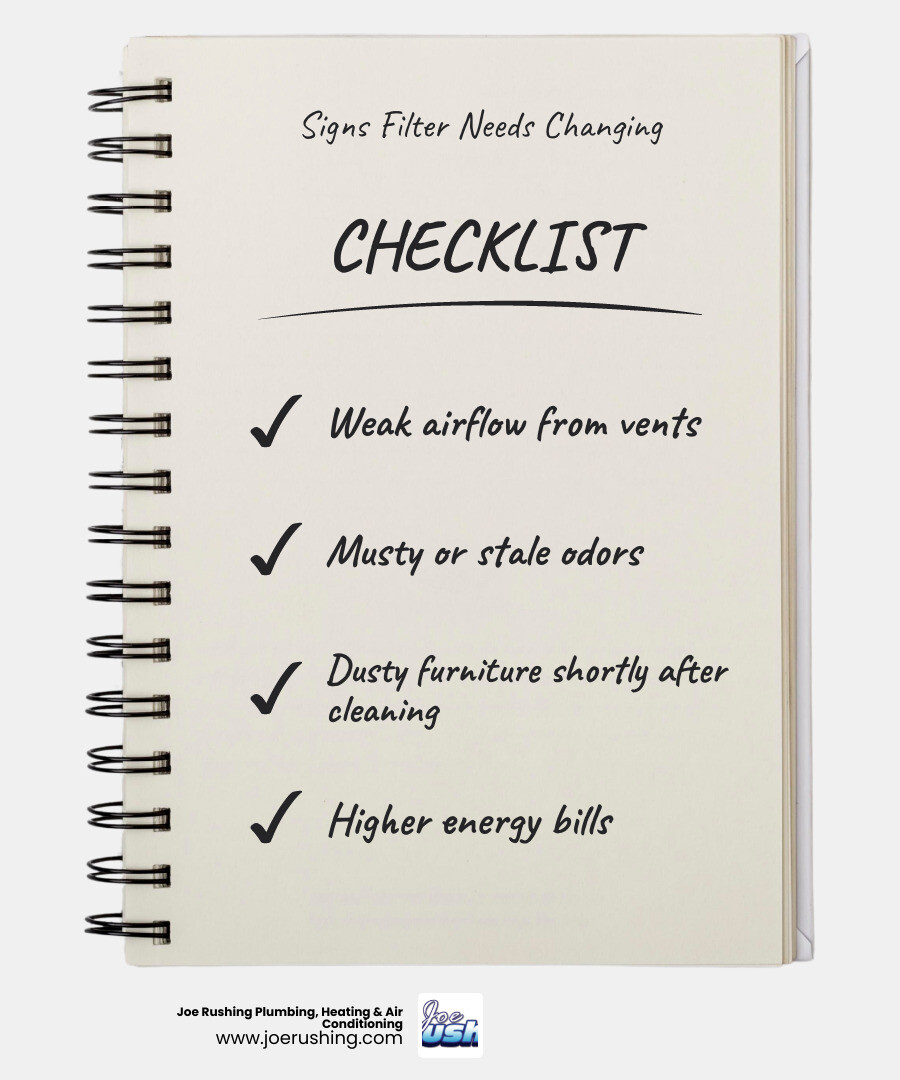
- Watch for these signs your filter needs changing:
- Weak airflow from vents
- Musty or stale odors
- Dusty furniture shortly after cleaning
- Higher energy bills
- Allergy symptoms worsening indoors
Spring in the Lubbock and Levelland area means something most people outside of West Texas don't fully appreciate: relentless wind, swirling topsoil, agricultural dust, and seasonal pollen all hitting at once. Your air filters — both at home and in your vehicle — take the full force of that assault. A filter that might last three months in a mild climate can clog in a matter of weeks here. And when filters fail, the consequences go well beyond a little extra dust on the furniture. Clogged filters force your HVAC system to work harder, drive up your energy bills, and can even cause long-term damage to sensitive components. The good news is that staying ahead of it is straightforward once you know what to look for and when to act.
I'm Ronda Rushing Brown, a third-generation family business leader with Joe Rushing Plumbing, Heating & Air Conditioning and a Registered Nurse who understands how air quality affects both your home's systems and your family's health. My years of hands-on experience serving West Texas homeowners have shown me that spring air filter replacement for dusty climates is one of the simplest — and most overlooked — ways to protect your home and your health. Let's walk through exactly what you need to know to get it right this season.
Why Spring Air Filter Replacement for Dusty Climates Is Essential
In West Texas, we don't just have "weather"; we have "elements." As we move into April 2026, the combination of high-speed winds and dry soil creates a perfect storm for your filtration systems. Unlike more humid regions where moisture keeps dust grounded, our arid climate keeps microscopic particles suspended in the air for longer periods. This means your HVAC system is essentially a giant vacuum cleaner, pulling in every bit of West Texas that blows past your front door.
Neglecting your filters during this transition period can lead to a "domino effect" of mechanical failures. When a filter is packed with sand and silt, your system experiences restricted airflow. This forces the blower motor to work double-time, leading to overheating and premature wear. Scheduling a Spring HVAC Tune Up Lubbock is a great way to ensure your system hasn't already suffered from the early spring dust storms.
Sources of Spring Dust and Pollen
Where does it all come from? It’s a mix of indoor and outdoor contributors. Inside your home, humans are actually a major source of dust; we shed about 500 million skin cells every single day! Combine that with pet dander and fibers from carpets or textiles, and you already have a high baseline of indoor debris.
Outside, the West Texas spring adds microscopic soil particles, agricultural minerals, and a heavy dose of pollen spores. These particles are often smaller than 10 microns, meaning they are invisible to the naked eye but more than capable of penetrating deep into your filter material. Improving your Indoor Air Quality starts with understanding that your filter is the first line of defense against this microscopic invasion.
Impact on HVAC and Engine Longevity
Dust isn't just "dirt"—in our region, it often contains abrasive silica, aluminum, and iron oxides. When these minerals bypass a low-quality or clogged filter, they act like sandpaper on the internal components of your HVAC system or car engine.
In your home, dust buildup on evaporator coils can cause the system to freeze up or lose its ability to dehumidify. In your vehicle, fine dust can coat the Mass Air Flow (MAF) sensor. A dirty MAF sensor can lead to poor fuel economy or even a total sensor failure, which can be quite expensive to replace. Maintaining General Indoor Air Lubbock TX is as much about protecting your wallet as it is about breathing clearly.
Signs Your Filters Need Immediate Attention
Sometimes your house or car will try to tell you that it's struggling. You don't always have to wait for a specific date on the calendar to know it's time for a spring air filter replacement for dusty climates.
One of the most obvious signs is the "dusting frequency." If you find yourself wiping down your coffee table on Tuesday only to find a fresh layer of "pet glitter" and silt on Wednesday, your HVAC filter is likely saturated and can no longer trap incoming particles. You might also notice musty odors or a stale smell when the air kicks on—this is often mold spores or bacteria trapped in a damp, dirty filter.
Warning Signs in Your Home HVAC System
If you’re noticing any of the following, it’s time to check that filter immediately:
- Weak Airflow: Hold your hand up to a vent. If the air feels like a faint breeze rather than a strong push, the filter is likely choked.
- Whistling or Wheezing: Unusual noises coming from your return air vent often indicate the system is "starving" for air.
- Allergy Flare-ups: If your sneezing fits only happen when you're sitting in the living room, your filter has stopped protecting your Indoor Air Quality Solutions Lubbock TX.
- Spiking Bills: A clogged filter can increase energy consumption significantly as the system runs longer cycles to reach the desired temperature.
Warning Signs in Your Vehicle
Your car feels the dust just as much as your home does. Look out for:
- Reduced Fuel Economy: If you’re visiting the pump more often, a clogged engine air filter might be disrupting your air-fuel ratio.
- Sluggish Acceleration: A "gasping" engine can't provide the power you need when merging onto the highway.
- Foggy Windshields: A clogged cabin air filter restricts the defroster's ability to clear moisture from the glass.
- Cabin Odors: If your car smells like a dusty attic every time you turn on the AC, the cabin filter is the culprit.
Choosing the Right Filter: MERV 13 vs. HEPA
Not all filters are created equal, and in a dusty climate, the "cheap blue fiberglass" filters simply won't cut it. They are designed to stop "boulders" (like large lint), but they let the "bullets" (microscopic dust and pollen) fly right through into your lungs and your equipment.
| Filter Type | Efficiency (0.3 - 1.0 Microns) | Best Use Case |
|---|---|---|
| MERV 8 | < 20% | Basic dust protection in low-dust areas |
| MERV 13 | ~98% | Optimal for West Texas homes & allergies |
| HEPA | 99.97% | Standalone air purifiers (often too restrictive for HVAC) |
Understanding MERV Ratings for Dust Control
MERV stands for Minimum Efficiency Reporting Value. For spring air filter replacement for dusty climates, we generally recommend a MERV 13 rating. These filters are high-efficiency pleated models that can capture up to 98% of particles as small as 0.3 microns. This includes bacteria, dust mite debris, and the fine agricultural dust common in Lubbock and Levelland. Because they are pleated, they have more surface area to trap dust without immediately "choking" your airflow.
Filter Types for High-Dust Environments
- Pleated Media: These are the gold standard for residential HVAC. The folds increase the surface area, allowing for better filtration and longer life than flat filters.
- Activated Carbon: Great if you have pets or live near industrial areas, as the carbon layer helps neutralize odors.
- Washable Filters: While eco-friendly, they often have lower MERV ratings and can grow mold if not dried perfectly before reinstallation. We generally recommend high-quality disposables for our climate.
- OEM vs. Aftermarket: For vehicles, OEM (Original Equipment Manufacturer) filters are designed specifically for your engine's airflow requirements. Some high-flow aftermarket filters are washable but require careful oiling to be effective.
Step-by-Step Guide to Spring Air Filter Replacement for Dusty Climates
Ready to tackle the task? Whether it’s your home or your car, the process is one of the most rewarding DIY maintenance jobs you can do.
How to Replace Your Home HVAC Filter
- System Shutdown: Always turn your HVAC system off at the thermostat before changing the filter. You don't want the fan to kick on and suck unfiltered dust (or the filter itself!) into the unit while the slot is open.
- Locate and Remove: Open the return air grille or the slot on the side of your furnace/air handler. Slide the old filter out gently—try not to shake it, or you'll release a cloud of dust back into the room.
- Inspect the Housing: Take a damp cloth and wipe away any dust buildup inside the frame or on the grille.
- Check the Arrow: Every filter has an airflow arrow printed on the side. This arrow must point toward the HVAC unit (away from the room). Installing it backward reduces efficiency and can damage the filter media.
- Secure the Seal: Ensure the filter fits snugly. Gaps around the edges allow "bypass," where dusty air skips the filter entirely.
Frequency of Spring Air Filter Replacement for Dusty Climates
Standard advice says to change your filter every 90 days. In West Texas, ignore that advice. During the peak of spring wind and dust, you should be checking your home filter every 30 days. If it looks grey or "fuzzy," swap it out.
For your vehicle, the "severe service" schedule is your best friend. Instead of waiting for 30,000 miles, plan on replacing your engine air filter every 7,500 to 15,000 miles. Your cabin air filter should be refreshed every 12,000 to 15,000 miles to keep your interior air fresh during those long drives across the plains.
Frequently Asked Questions about Spring Air Filters
What does it mean to 'burp your house' in a dusty climate?
"Burping your house" is a term some locals use for a deep ventilation cycle. On a rare calm spring day with low pollen counts, you might open the windows to let fresh air circulate. However, in dusty climates, we recommend "burping" the air through your HVAC system instead. By running the "Fan Only" mode with a fresh MERV 13 filter, you can scrub the indoor air clean without letting the West Texas grit inside.
Can I clean a paper air filter with compressed air?
We strongly advise against this. While it might look like you're blowing the dust off, high-pressure air can create microscopic tears in the paper or synthetic fibers. This effectively ruins the filter’s ability to trap small particles, allowing abrasive dust to fly straight into your engine or HVAC coils. If it's dirty, replace it.
Why do desert dust particles damage engines faster than regular dust?
Our local dust is high in silica (quartz) and other abrasive minerals. These particles are incredibly hard. If they get past a low-quality filter, they can score cylinder walls and damage piston rings, leading to oil consumption and loss of engine compression. It’s essentially like feeding your engine a diet of liquid sandpaper.
Conclusion
Taking care of your spring air filter replacement for dusty climates is the single best way to ensure your home remains a sanctuary from the West Texas elements. By choosing the right MERV 13 filters and staying on a strict 30-to-60-day replacement schedule, you protect your equipment, lower your bills, and—most importantly—breathe easier.
At Joe Rushing Plumbing, Heating & Air Conditioning, we’ve been serving the Lubbock and Levelland communities for generations. Whether you need help with water damage, our specialized Perma-Liner no-dig drain repairs, or a thorough underground camera inspection to find hidden issues, we are here to provide efficient, non-invasive solutions. Don't let the spring dust get the best of your home. Schedule your professional indoor air quality service today and let our experts ensure your system is ready for the heat of the coming summer.
Need HVAC Help?
Our certified technicians are ready to help with all your heating and cooling needs.
Get Free EstimateMore Articles
View All PostsRelated Articles
Ready to Get Started?
Whether you need a repair, maintenance, or a new system installation, our expert team is here to help.