Don't Let the Dust Settle on Your HVAC and Plumbing Systems
Joe Rushing
Learn how to prepare your home systems for dust season in West Texas. Protect HVAC, plumbing from haboobs with expert tips!
Don't Let the Dust Settle on Your HVAC and Plumbing Systems
What Every West Texas Homeowner Needs to Know Before Dust Season Hits
Knowing how to prepare your home systems for dust season can mean the difference between a fully functioning home and a costly breakdown after a haboob rolls through Lubbock or Levelland. Here's a quick overview of the most important steps:
- Replace HVAC filters with high-efficiency HEPA or MERV 11-13 filters before dust season begins (June 15 to September 30)
- Seal gaps around doors, windows, vents, and attic access points with weatherstripping and caulk
- Turn off your HVAC system during an active dust storm to prevent dust from being pulled into the unit
- Clear debris around your outdoor condenser unit and cover it with a breathable cover during storms
- Schedule a professional HVAC inspection before dust season hits to catch small problems early
- Run your system in recirculation mode when storms are nearby to reduce outdoor dust intake
- Check plumbing drainage around your home's exterior to prepare for monsoon-related flash flooding
- Run an air purifier with a HEPA filter indoors to capture fine particulate matter that slips past seals
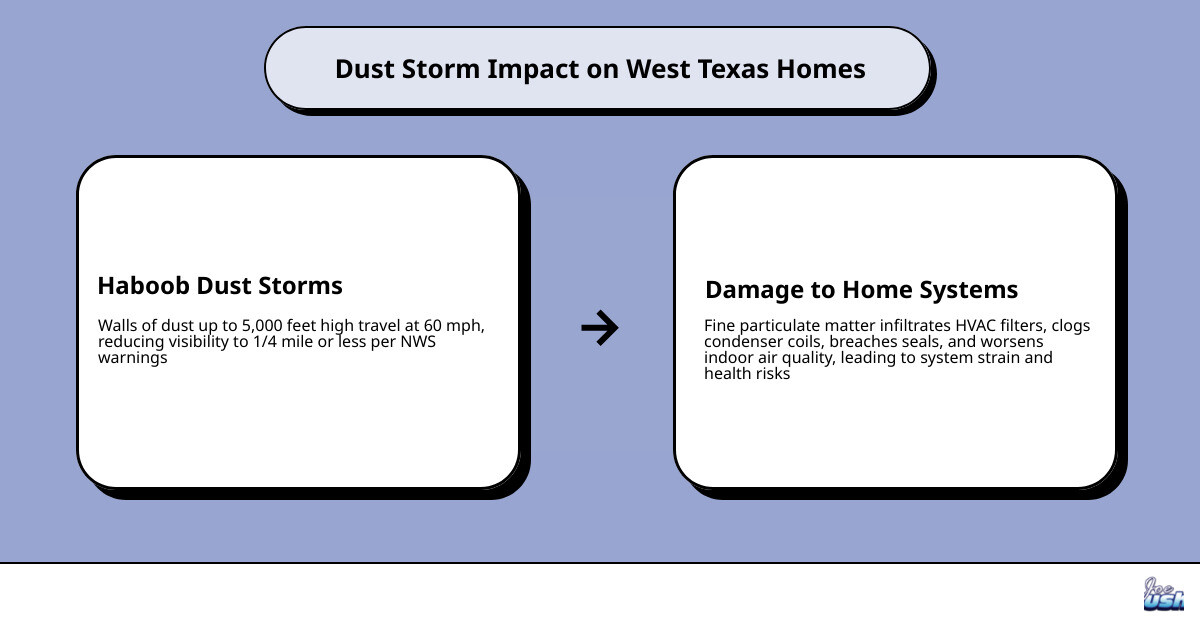
West Texas dust storms are no small thing. Haboobs in this region can tower up to 5,000 feet high, travel at speeds reaching 60 mph, and turn a clear afternoon into a near-blackout in minutes. When a wall of dust that size hits your home, your HVAC system, plumbing, and building envelope take the brunt of it — often without you realizing the damage until something stops working.
The fine particulate matter in these storms is relentless. It works its way through microscopic gaps, clogs filters faster than normal, coats condenser coils, and lingers indoors long after the sky clears. For homeowners on the South Plains, dust season preparation isn't optional — it's essential maintenance.
I'm Ronda Rushing Brown, a third-generation leader at Joe Rushing Plumbing, Heating & Air Conditioning, a Registered Nurse, and a lifelong West Texan who has spent decades watching dust seasons test homes and the systems that keep them running. My hands-on experience with HVAC and plumbing in this region gives me a practical, no-nonsense perspective on how to prepare your home systems for dust season the right way. Let's walk through everything you need to know before the next haboob heads your way.
Understanding Dust Season and Its Impact on West Texas Homes
In April 2026, we are already looking ahead to the peak of our regional weather challenges. While many people associate the "monsoon" strictly with Arizona, West Texas experiences its own version of this seasonal shift. Officially running from June 15 to September 30, this period brings the heat, the humidity, and the infamous haboobs.
The National Weather Service (NWS) issues Dust Storm Warnings when visibility drops to a quarter-mile or less. In Lubbock and Levelland, these events aren't just a nuisance for your car's paint job; they are a significant health risk. Fine particulate matter can penetrate deep into the lungs, exacerbating asthma, allergies, and other respiratory conditions.
Because we spend about 90% of our time indoors during the sweltering Texas summer, our home systems act as the primary shield against these outdoor pollutants. If your HVAC system isn't ready, that "shield" might actually be pulling the dust right into your living room. Implementing Indoor Air Quality Solutions Lubbock TX is the first step in ensuring your family breathes clean air, regardless of what's happening outside.
How to Prepare Your Home Systems for Dust Season

The best defense is a good offense. Before the first wall of sand appears on the horizon, you need to harden your home's "envelope." This means identifying every possible entry point where dust can infiltrate.
- Weatherstripping and Caulking: Inspect the seals around every door and window. If you can see daylight or feel a draft, dust can get in. Replace worn weatherstripping and use high-quality caulk to seal cracks in window frames.
- Attic Access and Vents: Don't forget the attic stairs! Often, these are poorly sealed, allowing dusty attic air to settle into your hallways.
- Pet Doors: If you have a "doggie door," ensure the flaps seal tightly. These are notorious for letting in fine silt during high-wind events.
By tightening these seals, you reduce the workload on your AC and keep your home much cleaner. For more tips on getting your home ready for the extreme West Texas heat, check out our guide on How to Get Your West Texas Home Ready for a Sizzling Summer.
Best Practices for Filter Maintenance and how to prepare your home systems for dust season
Your air filter is the unsung hero of dust season. Most standard 1-inch filters are designed to be changed every three months, but during a West Texas dust season, that timeline often shrinks to every 30 days.
We recommend looking at the MERV (Minimum Efficiency Reporting Value) rating. For most residential systems in Lubbock, a MERV 11 to 13 filter strikes the perfect balance between capturing fine particles (down to 0.3 microns) and allowing enough airflow so your system doesn't overheat. HEPA filters are the gold standard, capturing 99.7% of particles, but ensure your specific HVAC unit is rated to handle the increased resistance of a HEPA filter before installing one.
A clogged filter doesn't just let dust through; it chokes your system, leading to frozen coils and expensive blower motor failures. Think of it as Spring Cleaning for Your Pipes and AC—it’s a simple task that prevents a massive headache later.
Professional Inspections and how to prepare your home systems for dust season
While DIY steps are great, there are parts of your system you simply can't see without professional tools. An annual maintenance visit is vital for system longevity. During a professional tune-up, we look at:
- Evaporator Coils: If dust gets past your filter, it sticks to the wet coils, creating a "mud" that kills efficiency.
- Blower Motors: Dust accumulation can cause motors to run hot and fail prematurely.
- Duct Integrity: We use specialized cameras to check for leaks in your ductwork. If your ducts are leaking in the attic, your AC is literally sucking in dust and blowing it into your bedrooms.
Investing in The Complete Guide to Annual AC Maintenance: Is It Worth It? will show you exactly how these inspections pay for themselves in energy savings and avoided repairs.
Protecting Your HVAC System During a Dust Storm
When the sky turns orange and the wind picks up, your home enters "survival mode." One of the most common questions we get is whether to keep the AC running.
The answer: Turn it off.
If you leave the system running during the height of a haboob, you are essentially using a giant vacuum to pull high-velocity sand into your home and your equipment. If you must keep it on for temperature reasons, ensure it is set to "Recirculation Mode." This closes the fresh air intake and only moves the air already inside your home.
Modern smart thermostats with air quality sensors can be a lifesaver here, alerting you to rising particulate levels so you can take action even if you aren't looking out the window. For more on protecting your unit from the elements, read How to Prep Your AC Before the Summer Sun Tries to Melt You.
Maintaining the Outdoor Unit
Your outdoor condenser unit is tough, but it isn't invincible. The fins on the condenser coils are delicate; when they get packed with West Texas silt, the unit can't release heat. This leads to the system "short cycling" or failing altogether.
- Debris Clearance: Keep a two-foot "dead zone" around your unit—no tall grass, weeds, or shrubs that can trap dust.
- Breathable Covers: If a storm is imminent and you've turned the system off, a breathable cover can prevent the bulk of the sand from entering the cabinet. Important: Always remove the cover before turning the AC back on!
- Post-Storm Care: After the wind dies down, gently hose off the outdoor unit with a garden hose (never a pressure washer, which can bend the fins) to remove the layer of silt.
Regular AC Maintenance Tune-Up Lubbock TX ensures these components stay clean and functional year-round.
Indoor Air Quality Upgrades
Sometimes, standard filtration isn't enough for sensitive family members. This is where advanced indoor air quality (IAQ) upgrades come into play.
- UV-C Lights: These are installed inside your ductwork to kill mold spores and bacteria that might thrive in the damp environment of your AC coils.
- Ionization and Air Scrubbers: These systems "charge" dust particles, causing them to clump together so they are heavy enough to fall out of the air or be caught by your filter.
- Humidity Control: Maintaining a humidity level between 30% and 50% is the "sweet spot." It helps weigh down dust particles and prevents the growth of dust mites.
Check out our A-Z Guide to AC Maintenance Frequency for South Plains Homes to see where IAQ upgrades fit into your home's health plan.
Beyond the AC: Plumbing and Exterior Maintenance
While we talk a lot about air, dust season in West Texas is often followed by sudden, intense rain. This makes your plumbing and exterior drainage just as important as your AC.
| Task | DIY | Professional | Why It Matters |
|---|---|---|---|
| Gutter Cleaning | X | Prevents water from backing up under roof shingles. | |
| Roof Inspection | X | Checks for loose shingles that high winds can rip off. | |
| Drain Protection | X | Keeps dust and debris from clogging exterior yard drains. | |
| Sump Pump Test | X | Ensures your basement or crawlspace won't flood during a monsoon. | |
| Camera Inspection | X | Identifies underground pipe damage before the rain starts. |
At Joe Rushing, we specialize in non-invasive solutions like our Perma-Liner no-dig drain repair and underground camera inspections. These are essential if you suspect that years of dust and root intrusion have compromised your home's drainage. You can see our full range of Services to help protect your home from the ground up.
Frequently Asked Questions about Dust Season Preparation
Should I turn off my HVAC system during a dust storm?
Yes, if possible. Turning off the system prevents the "vacuum effect" that pulls fine silt into your ductwork and internal components. If the heat is too extreme, at least ensure the system is not pulling in "fresh" (dusty) outdoor air. This protects your blower motor and evaporator coils from internal contamination.
How often should I change my air filters during dust season in Lubbock?
We recommend checking them every 30 days. In West Texas, a single large haboob can "load" a filter with as much dust as three months of normal operation. If the filter looks gray or fuzzy, change it immediately to maintain airflow efficiency.
What are the most common mistakes homeowners make before a haboob?
The biggest mistake is leaving windows "cracked" for fresh air. In seconds, a dust storm can deposit a layer of silt over everything you own. Other common errors include forgetting to clear loose items from the yard (which become projectiles) and neglecting to hose off the outdoor AC unit after the storm, leading to overheating.
Conclusion
Preparing for dust season in Lubbock and Levelland is about more than just keeping the house clean; it's about protecting the major investments you've made in your home. From your HVAC's delicate internal sensors to the integrity of your plumbing drains, the "fine" dust of West Texas is a formidable foe.
At Joe Rushing Plumbing, Heating & Air Conditioning, we've seen it all. Whether you need a pre-season AC tune-up, an air quality overhaul, or help fixing water damage after a monsoon flood, we're here to help. Our unique underground camera inspections and Perma-Liner no-dig repairs mean we can fix your home's "veins and arteries" without tearing up your beautiful Texas landscaping.
Don't wait for the horizon to turn brown. Contact us today for Indoor Air Quality Solutions Lubbock TX and ensure your home is ready for whatever the 2026 dust season throws your way.
Need HVAC Help?
Our certified technicians are ready to help with all your heating and cooling needs.
Get Free EstimateMore Articles
View All PostsRelated Articles
Ready to Get Started?
Whether you need a repair, maintenance, or a new system installation, our expert team is here to help.