Central Air vs Mini Split for Older West Texas Homes
Joe Rushing
Compare adding cooling without ductwork options for older West Texas homes: Mini-splits vs high-velocity, window & portable AC. Find the best!
Central Air vs Mini Split for Older West Texas Homes
Why West Texas Homeowners Are Rethinking How They Cool Older Homes
Adding cooling without ductwork options compared is one of the most common challenges facing homeowners in Lubbock and Levelland — especially those living in pre-1970s homes that were never built with central air in mind.
Here is a quick look at your main options:
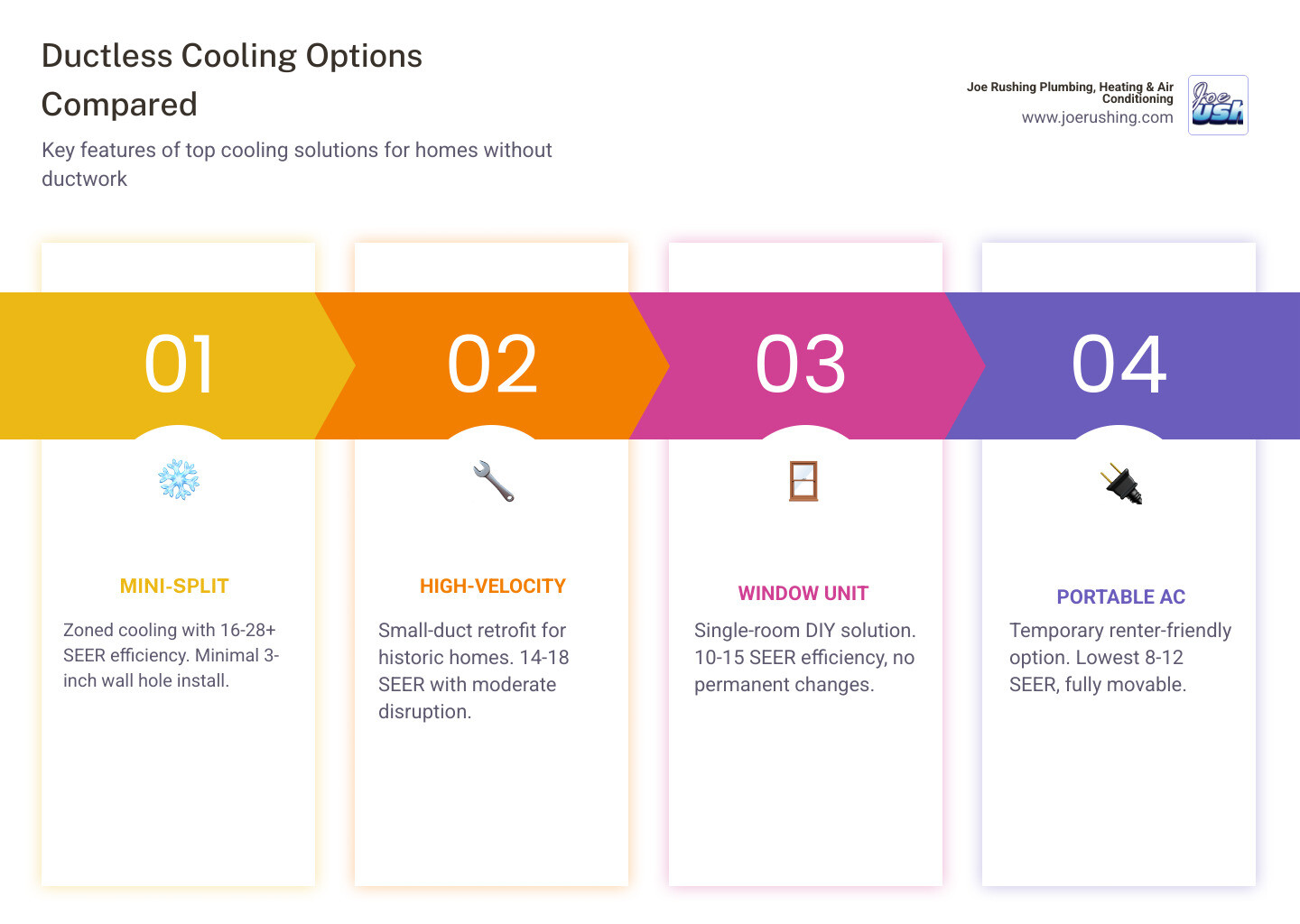
| Cooling Option | Best For | Efficiency (SEER) | Installation Disruption |
|---|---|---|---|
| Ductless Mini-Split | Whole-home or zoned cooling | 16-28+ | Minimal (3-inch wall hole) |
| High-Velocity Small-Duct | Historic homes needing central-style cooling | 14-18 | Moderate (small flexible ducts) |
| Window AC Unit | Single-room, temporary use | 10-15 | None (DIY) |
| Portable AC | Renters, temporary needs | 8-12 | None (DIY) |
If your home has plaster walls, original hardwood floors, or historic character you want to protect, tearing open walls to run traditional ductwork is rarely the right answer. West Texas summers are brutal — Lubbock regularly sees triple-digit heat — and older homes tend to use significantly more energy per square foot than newer construction. Without a smart cooling strategy, that combination hits your comfort and your utility bills hard.
The good news is that modern ductless and low-disruption cooling systems have come a long way. Whether you want to cool a single room or your entire home, there are real, proven options that work well in the West Texas climate — without sacrificing your home's character or your budget.
I'm Ronda Rushing Brown, third-generation owner of Joe Rushing Plumbing, Heating & Air Conditioning, and I've spent years helping Lubbock and Levelland homeowners navigate adding cooling without ductwork options compared — finding the right fit for older homes where one wrong decision can mean wasted money or a system that never quite keeps up. In the sections ahead, we'll walk through every major option so you can make a confident, informed choice.
Adding Cooling Without Ductwork Options Compared: The Top Contenders
When we sit down with a homeowner in Levelland or Lubbock, the first question is usually: "Do I really have to live with window units forever?" The answer is a resounding no. Modern HVAC technology has evolved to provide "invisible" or low-profile comfort that rivals or even beats traditional central air.
Ductless Mini-Split Systems
Ductless Mini-Split Systems are the gold standard for homes without existing ductwork. These systems consist of an outdoor condenser unit connected to one or more indoor air handlers via a small conduit. Because they don't rely on bulky ducts, they eliminate the 20% to 30% energy loss associated with leaky ductwork. In a climate like ours, where the dust and wind can compromise traditional systems, having a sealed, ductless path for refrigerant is a massive advantage.
High-Velocity HVAC
High-velocity systems use "small-duct" technology. Instead of large, rectangular metal ducts, they use 2-inch diameter flexible tubing that can be snaked through walls and ceilings with minimal demolition. They are excellent for homeowners who want the look of central air (small, circular vents) without the destructive remodeling.
Window AC Units
We often call these the "band-aid" fix. While they are affordable upfront, they are noisy, block your natural West Texas sunlight, and pose a security risk. They also tend to be the least efficient option, often struggling to keep up when the Lubbock sun is beating down on a 105-degree afternoon.
Portable AC Units
Portable units are usually a last resort. They sit on the floor and vent through a hose out the window. While they offer mobility, single-hose models actually create negative pressure, pulling hot outside air into your home through cracks and gaps, which can reduce their effective cooling by up to 40%.
Efficiency and Performance When Adding Cooling Without Ductwork Options Compared
Efficiency isn't just a buzzword; it’s the difference between a comfortable summer and a utility bill that makes you want to move. When adding cooling without ductwork options compared, the SEER (Seasonal Energy Efficiency Ratio) ratings tell the story.
General Ductless in Lubbock, TX systems often boast SEER ratings ranging from 16 to 28+, with some high-end models even reaching the 30s. Compare that to window units (10-15) or portable units (8-12), and you see why mini-splits are the efficiency champions.
Much of this efficiency comes from Inverter Technology. Unlike traditional AC units that are either "all on" or "all off," inverter-driven compressors can vary their speed to match the exact cooling demand of the room. This prevents the energy-wasting "start-stop" cycle and provides much more consistent temperatures.
Installation Complexity When Adding Cooling Without Ductwork Options Compared
Installation is where the rubber meets the road. For a traditional central air retrofit, you might be looking at a week or more of construction, dust, and disrupted lives.
With a Ductless AC Replacement in Lubbock Made Simple, the process is remarkably non-invasive. We typically only need to drill a single 3-inch hole in the exterior wall to run the refrigerant lines, electrical wiring, and condensate drain. Most multi-zone installations are completed in just 1 to 2 days.
However, the most critical step in any installation is the Manual J load calculation. We don't just guess based on square footage. We look at your home’s insulation, window orientation, and West Texas climate factors. An oversized unit will "short-cycle," turning off before it can properly dehumidify the air, leaving you feeling clammy. An undersized unit will simply run forever and never get the room cool.
Why Ductless Mini-Splits Lead for Older Lubbock Homes

Lubbock is home to beautiful historic neighborhoods where plaster-over-lath walls and solid brick exteriors are common. These materials are a nightmare for traditional ductwork but a perfect match for ductless.
Architectural Preservation
Ductless AC Installation in Lubbock, TX for Older Homes allows us to preserve the high ceilings and ornate crown molding that make older homes so special. You don't have to build "soffits" or drop your ceilings to hide ductwork. Wall-mounted units are the most common, but we also offer floor-mounted units (great for replacing old radiators) and ceiling cassettes that sit nearly flush with the ceiling.
Whisper-Quiet Operation
If you're used to the roar of a window unit, a mini-split will be a revelation. Indoor units typically operate at 19 to 32 decibels. For context, a whisper is about 30 decibels. You’ll likely have to look at the lights on the unit to even tell if it's running. This is a huge benefit for bedrooms and home offices.
Superior Dehumidification and Air Quality
Lubbock isn't as humid as the Gulf Coast, but we still deal with plenty of moisture during monsoon season and summer storms. Ductless systems are masters of dehumidification. Because the inverter technology allows them to run at lower speeds for longer periods, they spend more time pulling moisture out of the air.
Furthermore, because there are no ducts to collect dust, pet dander, or the inevitable West Texas "haboob" silt, your indoor air quality improves. Most modern mini-splits feature multi-stage filtration that can capture 99.9% of allergens. Ductless Mini-Split Maintenance & Tune-Up in Lubbock, TX ensures these filters stay clean and your air stays fresh.
High-Velocity Systems vs. Traditional Central Air Retrofits
If you absolutely want the "central air look" with traditional registers, a high-velocity system is your best alternative. These systems use a specialized blower that forces air through 2-inch flexible tubing.
- Small-Duct Technology: The tubes are small enough to be snaked through the voids in your walls or between floor joists without major demolition.
- Aesthetic Impact: The vents are small, circular disks that can be painted to match your ceiling or walls, making them nearly invisible.
- Aspiration Principle: High-velocity systems don't just "dump" air into a room. They use a high-speed stream that creates a gentle suction, pulling the room's air into the stream for better mixing and fewer "hot spots."
Ductless Mini-Split Installation & Replacement in Lubbock, TX remains the more popular choice for most of our clients because it is generally more efficient and less expensive to install than high-velocity systems, but high-velocity is a fantastic premium option for historic preservation.
Comparing Long-Term Value and Performance
When you look at Why Lubbock Homeowners Are Splitting Up with Traditional AC, the long-term math is hard to ignore.
- Lifespan: A well-maintained mini-split can last 15 to 20 years, whereas window and portable units usually tap out after 7 to 10.
- Operational Savings: Ductless systems can save you $1,000 to $2,000 annually in running costs compared to ducted systems or window units, especially in older homes that leak air.
- Home Value: Permanent HVAC upgrades like mini-splits or high-velocity systems add real equity to your home. Appraisers and buyers in West Texas view these as premium features, whereas window units are often seen as a liability.
Maximizing Comfort and Efficiency in the West Texas Climate
Living in West Texas means preparing for extremes. We often see 40-degree temperature swings in a single day.
Heat Pump Technology
Modern mini-splits are "heat pumps," meaning they can both heat and cool your home. They don't "create" heat; they move it. Even when it’s cold outside, there is thermal energy in the air. A mini-split can extract that heat and bring it indoors. ENERGY STAR certified mini-splits use up to 60% less energy than standard heating systems.
Cold Climate Performance
A common myth is that heat pumps don't work in the cold. While that was true 20 years ago, modern "cold climate" models can maintain full heating capacity down to 5°F and continue providing heat even when temperatures drop below zero. For our typical Lubbock winters, they are more than capable of keeping you cozy.
Home Preparation
To get the most out of adding cooling without ductwork options compared, we recommend a "whole-home" approach. Pre-1940 homes in our area often leak so much air it's like leaving a window open year-round. Before we install your new system, consider:
- Air Sealing: Closing gaps around windows, doors, and attic hatches.
- Insulation: Adding blown-in insulation to your attic can reduce your cooling load by 15% to 30%.
- Electrical Upgrades: Older homes may need a dedicated circuit or a panel upgrade to handle the new equipment safely.
If your system ever struggles during a dust storm or a sudden freeze, our Ductless Mini-Split Repair Service in Lubbock, TX is always available to get you back to peak performance.
Frequently Asked Questions about Ductless Cooling
Can a mini-split handle West Texas heat and winter cold snaps?
Absolutely. Modern inverter-driven mini-splits are designed to operate in extreme temperatures. They can handle the 100°F+ Lubbock summers with ease and provide reliable heat during our winter cold snaps. Because they don't lose energy through ducts, they often perform better than central air during peak demand.
Are there federal tax credits or rebates available in 2026?
Yes! Under the Inflation Reduction Act, homeowners can qualify for a federal tax credit (Section 25C) that covers 30% of the equipment and installation costs for qualifying heat pumps, up to $2,000 per year. Additionally, many local utility companies in West Texas offer rebates ranging from $500 to $2,000 for switching to energy-efficient ductless systems.
How long does the installation process typically take?
For a single-zone system (one room), installation usually takes about 4 to 6 hours. For a whole-home multi-zone system (3 to 5 rooms), it typically takes 1 to 2 days. There is very little mess, and we don't have to tear out your ceilings or walls.
Conclusion
Adding cooling to a home without ductwork doesn't have to be a headache or a compromise. By adding cooling without ductwork options compared, it becomes clear that ductless mini-splits offer the best balance of efficiency, whisper-quiet comfort, and architectural preservation for our unique West Texas homes.
At Joe Rushing Plumbing, Heating & Air Conditioning, we’ve been serving the Lubbock and Levelland communities for generations. We understand the specific challenges of our climate — from the relentless sun to the blowing dust. We don't just sell boxes; we provide engineered comfort solutions tailored to your home's specific needs. Whether you’re looking to cool a historic bungalow, a new room addition, or a converted garage, we’re here to help.
Ready to upgrade your home comfort? Contact our experts today! We’ll perform a professional Manual J load calculation and help you discover the perfect ductless solution for your West Texas home.
Need HVAC Help?
Our certified technicians are ready to help with all your heating and cooling needs.
Get Free EstimateMore Articles
View All PostsRelated Articles
Ready to Get Started?
Whether you need a repair, maintenance, or a new system installation, our expert team is here to help.