Learn when a slow drain means a serious problem in Lubbock homes and how to fix it before backups or sewer damage occur.
A – Z Guide to Slow Drain Serious Problems
Why Knowing When a Slow Drain Means a Serious Problem Could Save Your Home
When a slow drain means a serious problem, the signs are usually right in front of you — you just need to know what to look for. Here's a quick reference:
A slow drain is likely a serious problem when you notice:
- Multiple drains slowing at the same time — indicates a main sewer line issue, not just a local clog
- Gurgling sounds from toilets or other fixtures — air pressure is being disrupted deep in the system
- Sewage odors coming from drains — sewer gases are escaping, which points to a blockage or damaged pipe
- Water backing up in a different fixture — for example, running the washing machine causes the tub to fill up
- A single drain that keeps coming back slow — even after you've tried to clear it, a deeper blockage may be forming
- Slow drains that get worse after heavy rain — can signal tree root intrusion or a compromised sewer line
- Black water or visible sewage backup — this is a plumbing emergency; stop using water and call immediately
Most people brush off a slow drain. The water still goes down — eventually — so it feels like a minor annoyance rather than a warning. But that slow swirl in your sink or shower is often your plumbing system's first signal that something bigger is building beneath the surface. A partial blockage can quietly grow into a full clog, and a full clog can put pressure on your pipes, trigger sewage backups, and open the door to water damage, mold, and costly structural repairs. In Lubbock and Levelland, where shifting West Texas soil, hard water, and aging sewer lines are common realities, a slow drain deserves more than a wait-and-see approach.
This guide walks you through everything you need to know — from spotting the difference between a minor buildup and a main line failure, to understanding when it's safe to grab a plunger versus when it's time to call a licensed plumber.
I'm Ronda Rushing Brown, a third-generation leader at Joe Rushing Plumbing, Heating & Air Conditioning and a Registered Nurse who understands that when a slow drain means a serious problem, catching it early is just like catching a health issue early — it's always better than waiting for a crisis. With 77 years of serving Lubbock-area homeowners since 1948, our team has seen how a "minor" slow drain can quietly escalate into an emergency, and this guide is built on that experience.
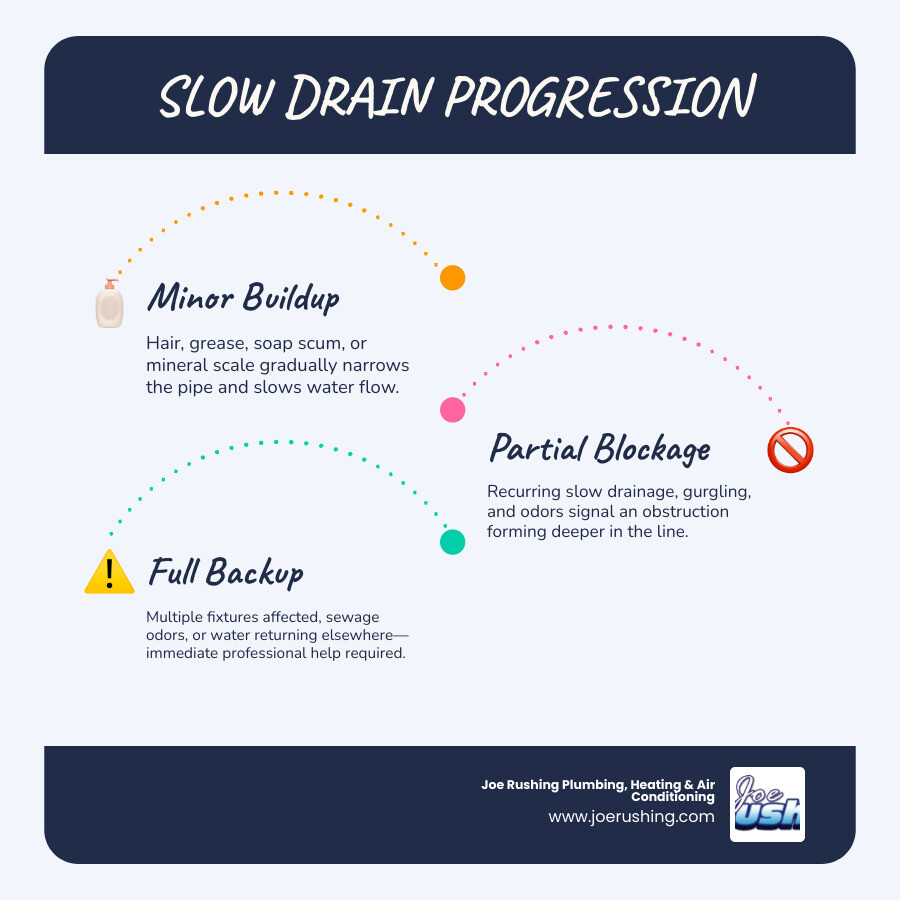
When a slow drain means a serious problem terms simplified:
- drain cleaning and sewer line maintenance tips
- sewer line repair vs replacement when to decide
How to Tell when a slow drain means a serious problem
A slow drain usually means water is meeting resistance somewhere. That resistance may be a small local clog in one fixture, or it may be a deeper restriction in a shared drain branch, main sewer line, or venting system.
The key is the pattern.
| What you notice | More likely local issue | More serious warning sign |
|---|---|---|
| One bathroom sink drains slowly | Hair, soap residue, stopper buildup, P-trap clog | Keeps returning after cleaning |
| Kitchen sink drains slowly | Grease film, food debris, disposer residue | Dishwasher or nearby drains also back up |
| Shower or tub drains slowly | Hair and soap scum near drain | Toilet bubbles or floor drain backs up |
| Multiple fixtures slow down | Less likely to be local | Possible main sewer line restriction |
| Gurgling noises | Sometimes vent-related | Air trapped by deeper blockage |
| Sewage odor | Dry trap or localized buildup | Sewer gas from blockage or damaged line |
| Water backs up elsewhere | Not typical for a simple clog | Urgent main line warning |
A single slow sink can be annoying. Multiple slow fixtures are the plumbing equivalent of several dashboard lights flashing at once. And unlike your car, your house will not politely pull over. It will usually wait until guests arrive.
One-fixture clues: when a slow drain means a serious problem
If only one sink, shower, or tub is slow, the problem is often close to that fixture. Common one-fixture causes include:
- Hair wrapped around a bathroom drain stopper
- Soap scum and toothpaste film narrowing a sink drain
- Grease residue in a kitchen sink line
- Food debris or coffee grounds caught in the trap
- A clogged pop-up stopper
- A partial blockage in the P-trap
This type of slow drain is usually less urgent if the water still drains, there is no sewage smell, and no other fixture is acting up. That said, a one-fixture issue can still become serious when it keeps coming back.
For example, if your bathroom sink is slow every few weeks even after cleaning the stopper, buildup may be farther down the branch line. If your kitchen sink slows repeatedly, grease may be hardening inside the pipe, gradually shrinking the opening until water can no longer pass freely.
For more local drain troubleshooting, see Lubbock's Best Drain Unclogging and Repair Secrets Revealed.
Whole-home clues: when a slow drain means a serious problem
A slow drain becomes more concerning when the symptoms spread beyond one fixture. Whole-home clues often point to a shared drain branch or main sewer line problem.
Watch for:
- Toilets bubbling when a sink, tub, or washing machine drains
- A shower or tub backing up when the washing machine discharges
- Kitchen sink gurgling when another fixture is used
- Multiple sinks draining slowly at the same time
- Sewage odor near floor drains, tubs, or toilets
- Water appearing in a low fixture, such as a shower or floor drain
- Slow drains throughout the home after heavy rain
These signs suggest wastewater may not be leaving the home correctly. A main line restriction can affect every fixture because all drain lines eventually connect into the same sewer pathway.
If you are dealing with widespread backups, stop running water if possible and review our Emergency Plumbing Repairs Lubbock TX Guide.
Warning signs that turn a slow drain into an emergency
Call for urgent plumbing help if you notice any of the following:
- Sewage backing up into tubs, showers, toilets, sinks, or floor drains
- Black water or wastewater entering the home
- Multiple fixtures backing up at once
- A toilet that is unusable and will not drain
- Water coming up in one fixture when another fixture runs
- Strong sewer odors that do not go away
- Gurgling from several drains or toilets
- Drain problems worsening quickly
- Wet walls, soft flooring, or ceiling stains near plumbing
- Signs of a pipe leak along with slow drainage
- Standing water near electrical outlets, appliances, or panels
- Moldy smells after repeated overflows
- A floor drain backup in a low area of the home
If water damage is already happening, the drain problem is no longer just a drain problem. It is a home protection issue. Our team can help with plumbing repairs and water damage concerns, and you can learn more in the 24 Hour Pipe Repair Lubbock TX Guide.
A-Z Causes of Slow Drains That Can Become Serious

Slow drains have many possible causes, from ordinary household buildup to underground pipe damage. Some are simple. Some are sneaky. Some are the reason plumbers own cameras that go underground.
Everyday buildup that narrows the pipe over time
The most common slow drain problems begin with everyday materials that should not build up in pipes, but often do.
In kitchens, the usual suspects are:
- Grease
- Cooking oils
- Food scraps
- Coffee grounds
- Starches such as rice, pasta, and potato pieces
- Soap and detergent residue
Grease is especially troublesome because it may go down as a liquid, then cool and stick to the inside of the pipe. Over time, food particles cling to that sticky coating. The pipe opening narrows, water slows, and eventually the drain may stop completely.
In bathrooms, slow drains often come from:
- Hair
- Soap scum
- Toothpaste film
- Shaving residue
- Skin oils
- Biofilm
- Mineral deposits
West Texas hard water can contribute to scale inside fixtures and piping. Scale does not always create a clog by itself, but it can make the inside of the pipe rougher and narrower, giving hair, soap, and debris more places to grab onto.
Structural and underground problems behind recurring slow drains
If a slow drain keeps returning, the problem may not be what is going down the drain. It may be the condition of the pipe itself.
Serious structural causes include:
- Tree root intrusion
- Cracked sewer lines
- Offset pipe joints
- Crushed pipe sections
- Collapsed pipe
- Aging sewer line materials
- Soil shifting
- Foundation movement
- Pipe bellies or low spots
- Poor slope that lets debris settle
Tree roots are a common concern because roots naturally seek moisture. If a sewer line has a small crack or loose joint, roots can enter and expand inside the pipe. Once roots are inside, they catch toilet paper, grease, and debris, creating recurring slow drains and backups.
West Texas soil movement can also stress underground lines. As soil expands, contracts, settles, or shifts, pipes may sag, separate, or lose proper slope. A sagging pipe creates a low spot where water and waste collect instead of flowing away cleanly.
This is where non-invasive diagnosis matters. Our underground camera inspections allow us to see what is happening inside the line without unnecessary digging. For a deeper look at this process, visit The Lubbock Homeowner's Guide to Seeing Through Your Pipes.
Venting and installation issues that mimic clogs
Not every slow drain is caused by a physical clog. Drain lines also need air movement to flow properly. Plumbing vents help balance air pressure so wastewater can move smoothly through the system.
A venting issue may cause:
- Gurgling drains
- Slow sink or tub drainage
- Sewer gas smells
- Water being pulled from traps
- Bubbling toilets
- Sluggish flow without an obvious clog
Improper installation can create similar symptoms. If a drain line has poor slope, is undersized, or has awkward turns, water may not carry waste away efficiently. Debris settles, buildup forms, and the drain slows again and again.
If the symptoms seem odd - like a clean drain that still gurgles - it is time for a professional evaluation. Plumbing should not sound like it is trying to talk back.
What Homeowners Should Do: DIY Fixes, Professional Diagnosis, and Repair Options
The right response depends on the symptoms. Some minor slow drains are safe to troubleshoot. Others need professional tools before the situation gets worse.
Safe DIY steps for a minor slow drain
If one fixture is slow, there are no odors, no backups, and no other drains are affected, you can try a few safe steps:
- Remove visible debris from the drain.
- Clean the pop-up stopper or drain cover.
- Use a sink strainer to catch hair or food particles.
- Flush the drain with hot water and a small amount of dish soap.
- Use a plunger with the overflow opening sealed.
- Clean the P-trap if you are comfortable doing so.
- Try a baking soda rinse followed by hot water.
- Use enzyme-based maintenance products when appropriate.
Avoid harsh chemical drain cleaners. They can damage older piping, harm seals, create safety hazards, and fail to remove the real cause of the blockage. Chemical cleaners may make you feel productive for ten minutes, but your pipes may have a different opinion.
Also avoid putting these down drains:
- Grease
- Coffee grounds
- Eggshells
- Food scraps
- Wipes, even if labeled flushable
- Paper towels
- Cotton swabs
- Dental floss
When to stop DIY and call a plumber
DIY is for simple, isolated, early-stage symptoms. Call a plumber when you notice:
- A slow drain that keeps coming back
- Multiple slow drains
- Gurgling noises
- Sewage odor
- A toilet bubbling when other fixtures run
- Water backing up into the tub or shower
- Slow drains after rain
- A drain that stops completely
- Suspected root intrusion
- Signs of pipe damage or leaks
- Wet flooring, wall stains, or moldy odors
Professional drain cleaning can clear deeper buildup and help prevent the issue from turning into a full backup. Learn more in The Ultimate Guide to Professional Drain Cleaning in Lubbock TX.
How camera inspections find the real problem
A camera inspection takes the guesswork out of drain and sewer problems. We send specialized video equipment into the line to view the pipe from the inside.
A camera inspection can identify:
- The exact blockage location
- Grease buildup
- Root intrusion
- Cracks
- Offset joints
- Collapsed sections
- Pipe bellies
- Corrosion or scaling
- Foreign objects
- Improper slope
- The overall condition of the drain or sewer line
This is especially helpful when a drain problem keeps coming back. Snaking a line may open a path, but if the pipe is cracked, sagging, or packed with roots, the symptoms can return. A camera inspection helps us recommend the right solution instead of guessing.
For urgent inspection needs, see Don't Wait: How to Get a 24/7 Camera Inspection in Lubbock. You can also learn more about the service in Best Camera Inspection in Lubbock TX.
How hydro jetting and no-dig repair solve deeper drain problems
When buildup is deep or heavy, hydro jetting may be the right cleaning method. Hydro jetting uses high-pressure water to scour the inside of the pipe and help restore proper flow.
Hydro jetting can help remove:
- Grease
- Sludge
- Soap buildup
- Mineral scale
- Debris
- Some root intrusion
Unlike basic snaking, which may punch a hole through the clog, hydro jetting cleans more of the pipe wall. That makes it useful for recurring buildup when the pipe is still structurally sound.
If the pipe itself is damaged, cleaning alone may not solve the issue. That is where pipe repair comes in. Joe Rushing Plumbing, Heating & Air Conditioning offers Perma-Liner no-dig drain repair, a trenchless option designed to repair certain damaged underground lines without tearing up more of your yard than necessary.
As a Perma-Liner certified team, we focus on efficient, non-invasive solutions whenever the pipe condition allows it.
How to Prevent Slow Drains from Turning Into Major Plumbing Problems
The best drain emergency is the one that never gets invited into your home. Prevention starts with daily habits, then continues with observation and timely service.
Daily habits that protect drains
Use these drain-safe habits:
- Put sink strainers in kitchen and bathroom drains.
- Throw food scraps in the trash.
- Wipe grease from pans before washing them.
- Never pour cooking oil down the sink.
- Avoid flushing wipes, paper towels, cotton products, or hygiene products.
- Brush hair before showering to reduce drain buildup.
- Clean drain covers regularly.
- Run hot water after kitchen sink use.
- Use the garbage disposer carefully and rinse well.
- Stagger laundry loads if drains are already sluggish.
- Pay attention to odors.
- Listen for gurgling.
- Act early when a drain starts slowing.
Small habits matter because most serious clogs begin as small buildup. Pipes rarely go from perfect to disaster overnight. They usually give warnings first.
Maintenance signs to track before calling for service
Before you call, it helps to know what you are seeing. Track:
- Which drain is slow
- How long it has been happening
- Whether it is getting worse
- Whether nearby fixtures are affected
- Whether odors appear
- Where gurgling occurs
- Whether water backs up elsewhere
- Whether toilets bubble
- Whether symptoms happen after rain
- Any previous drain cleaning or repairs
- Photos or videos of backups, if safe to take
This information helps us narrow down whether the issue is local, branch-related, or main-line related. It also helps us decide whether drain cleaning, camera inspection, hydro jetting, or repair should come next.
Local Lubbock and Levelland factors homeowners should watch
Homes in Lubbock, Levelland, and the surrounding West Texas area face a few local conditions that can affect drains and sewer lines:
- Shifting soil that stresses underground piping
- Mature trees with roots seeking moisture
- Older sewer lines in established neighborhoods
- Hard water scale buildup
- Sudden temperature swings
- Yard settling
- Slab movement
- Long dry periods followed by heavy rain
These factors do not mean every slow drain is a major sewer issue. They do mean homeowners should take recurring or whole-home symptoms seriously. A camera inspection can be especially helpful when underground conditions may be part of the problem.
Frequently Asked Questions about Slow Drain Serious Problems
What does a slow drain usually indicate about my plumbing system?
A slow drain usually means there is a restriction somewhere in the plumbing system. The restriction may be a partial blockage from hair, grease, soap scum, food debris, or mineral buildup. It may also be caused by a venting problem, pipe damage, poor slope, root intrusion, or a main sewer line issue.
If one drain is slow and everything else works normally, the issue may be localized. If multiple drains are slow, or you notice gurgling, odors, or backups, the problem may be deeper in the system.
How can I tell if a slow drain is localized or a main sewer line problem?
A localized drain problem usually affects one fixture only. For example, one bathroom sink drains slowly, but the toilet, tub, kitchen sink, and laundry drain all work normally.
A main sewer line problem is more likely when you notice:
- Multiple drains slowing at once
- Toilets bubbling
- Water backing up into tubs or showers
- Gurgling from several fixtures
- Sewage odors
- Floor drain backups
- Drain problems after heavy rain
- Backups when the washing machine discharges
The biggest clue is water showing up where it should not. If using one fixture causes another fixture to back up, call a plumber.
What happens if I ignore a slow drain?
Ignoring a slow drain gives the blockage time to grow. A partial clog can become a full blockage, and a full blockage can lead to backups, pressure on pipes, hidden leaks, water damage, mold growth, wood rot, pest problems, and unsafe wastewater exposure.
If the slow drain is caused by tree roots, a cracked pipe, a collapsed section, or poor slope, waiting allows the underlying problem to worsen. Early diagnosis is always easier on your home than waiting for a backup.
Conclusion: Take Slow Drains Seriously Before They Become Bigger Problems
A slow drain is not always an emergency, but it is always information. It tells you water is not moving the way it should. Sometimes the fix is simple. Sometimes it is your first warning of a serious sewer line problem.
At Joe Rushing Plumbing, Heating & Air Conditioning, we have served Lubbock-area homeowners since 1948. With 77 years of experience, 24/7 emergency service, licensed and insured technicians, TACLA024534C and M-12583, a BBB A+ rating, Nextdoor Neighborhood Favorite 2019 recognition, Perma-Liner certification, advanced camera inspection technology, and water damage support, we are here to help protect your home and family.
If your slow drain keeps coming back, affects multiple fixtures, smells like sewage, gurgles, or causes water to back up, do not wait for it to turn into a bigger problem.
Need HVAC Help?
Our certified technicians are ready to help with all your heating and cooling needs.
Get Free EstimateMore Articles
View All PostsRelated Articles
Ready to Get Started?
Whether you need a repair, maintenance, or a new system installation, our expert team is here to help.